
Macaroni and cheese has long been a comfort food staple in American kitchens, evolving from baked, custard-style casseroles to the ultra-creamy stovetop versions many of us grew up with. This slow cooker version leans on the convenience of canned dairy—specifically evaporated milk—to mimic the slow-reduced richness you’d get from a classic béchamel, but with almost no hands-on work. It’s the kind of recipe you turn to on busy weeknights, game days, or potlucks when you want something familiar, indulgent, and reliably crowd-pleasing. Using just five ingredients, this method delivers a velvety, deeply cheesy sauce that clings to every noodle, without the risk of curdling or graininess that sometimes comes with traditional slow-cooked dairy.
This mac and cheese is rich and satisfying, so I like to balance it with something crisp and fresh on the side. A simple green salad with a bright vinaigrette cuts through the creaminess nicely, as do roasted or steamed vegetables like broccoli, green beans, or Brussels sprouts. If you’re building a bigger spread, it fits in beautifully alongside barbecue-style mains—pulled pork, roast chicken, or smoked sausages are all naturals. For a more casual, family-style dinner, pair it with sliced tomatoes, a tray of roasted carrots, and some crusty bread to swipe up any extra cheese sauce.
5-Ingredient Slow Cooker Mac & Cheese (Canned Dairy Method)
Servings: 6
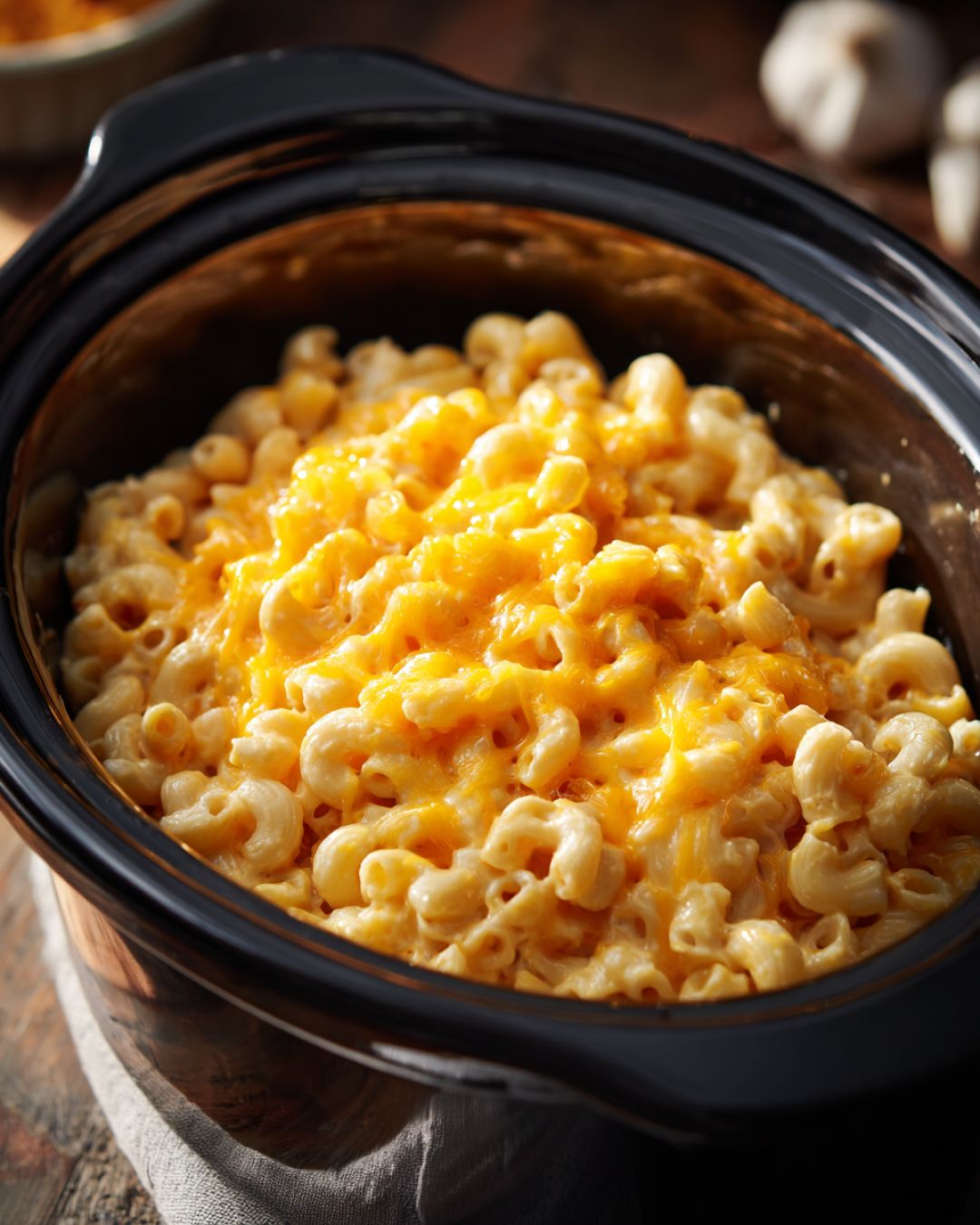
Ingredients
12 oz elbow macaroni, uncooked
2 cups shredded sharp cheddar cheese, packed
1 can (12 oz) evaporated milk
2 cups whole milk
2 tbsp unsalted butter, cut into small pieces
Kosher salt, to taste (optional)
Freshly ground black pepper, to taste (optional)
Directions
Coat the inside of a 4- to 6-quart slow cooker lightly with butter or nonstick cooking spray to help prevent sticking.
Add the uncooked elbow macaroni directly to the slow cooker and spread it into an even layer.
Sprinkle the shredded sharp cheddar cheese over the pasta, reserving a small handful if you’d like to add extra on top at the end.
Pour in the evaporated milk and whole milk, then scatter the butter pieces over the surface.
Stir everything together thoroughly so the pasta is well-coated and the cheese is evenly distributed in the milk mixture.
Cover and cook on LOW for 1½ to 2½ hours, stirring every 30 minutes to prevent clumping and to help the cheese melt evenly. The exact time will depend on your slow cooker; the pasta should be tender and the sauce thickened and creamy.
Once the macaroni is al dente and the sauce has thickened, taste and season with kosher salt and freshly ground black pepper as needed. If you reserved cheese, sprinkle it over the top, cover, and let it sit on WARM for 5–10 minutes to melt.
Serve warm straight from the slow cooker. If the sauce thickens as it sits, you can loosen it with a splash of hot milk and stir until creamy again.
Variations & Tips
Because this recipe is so streamlined, it’s an easy canvas for small tweaks that change its personality. For a smokier profile, swap half of the sharp cheddar for smoked cheddar or gouda; both melt nicely and add depth. If you prefer a bit of tang, stir in 2–3 tablespoons of cream cheese or a handful of grated Parmesan at the end of cooking, letting the residual heat melt it into the sauce. To introduce some texture without complicating the method, toast breadcrumbs in a skillet with a little butter and sprinkle them over each serving rather than baking the whole dish. You can also fold in add-ins after the pasta is tender: steamed broccoli florets, cooked bacon, or shredded rotisserie chicken all work well and turn this into more of a one-bowl meal. For a slightly lighter version, use 2% milk instead of whole and a reduced-fat evaporated milk, understanding the sauce will be a bit less rich but still pleasantly creamy thanks to the canned dairy’s concentrated proteins. Finally, keep in mind that every slow cooker runs a bit differently—if you find the edges cooking faster than the center, stir a little more frequently and err on the shorter side of the cooking window to avoid overcooked pasta.
