
This 4-ingredient oven baked salmon belly recipe is the kind of weeknight dish that feels indulgent but takes almost no effort. Salmon belly, with its rich fat marbling, comes from the underside of the fish and is prized in Japanese and Scandinavian cooking for its silky texture and deep flavor. Here we simply toss raw salmon belly strips into a roasting pan with four pantry staples—olive oil, soy sauce, garlic powder, and black pepper—then let the oven do the rest. It’s the kind of simple, repeatable recipe that quickly becomes a weekly request.
These salmon belly strips are rich and savory, so pair them with something bright and simple: steamed jasmine or brown rice, a lemony green salad, or quickly roasted vegetables like asparagus, green beans, or broccoli. A squeeze of fresh lemon over the hot salmon balances the fat beautifully, and a spoonful of plain yogurt or sour cream on the side makes a nice, cool contrast. For a more substantial meal, tuck the strips into warm tortillas with shredded cabbage and a drizzle of hot sauce or serve over garlicky mashed potatoes with a side of sautéed spinach.
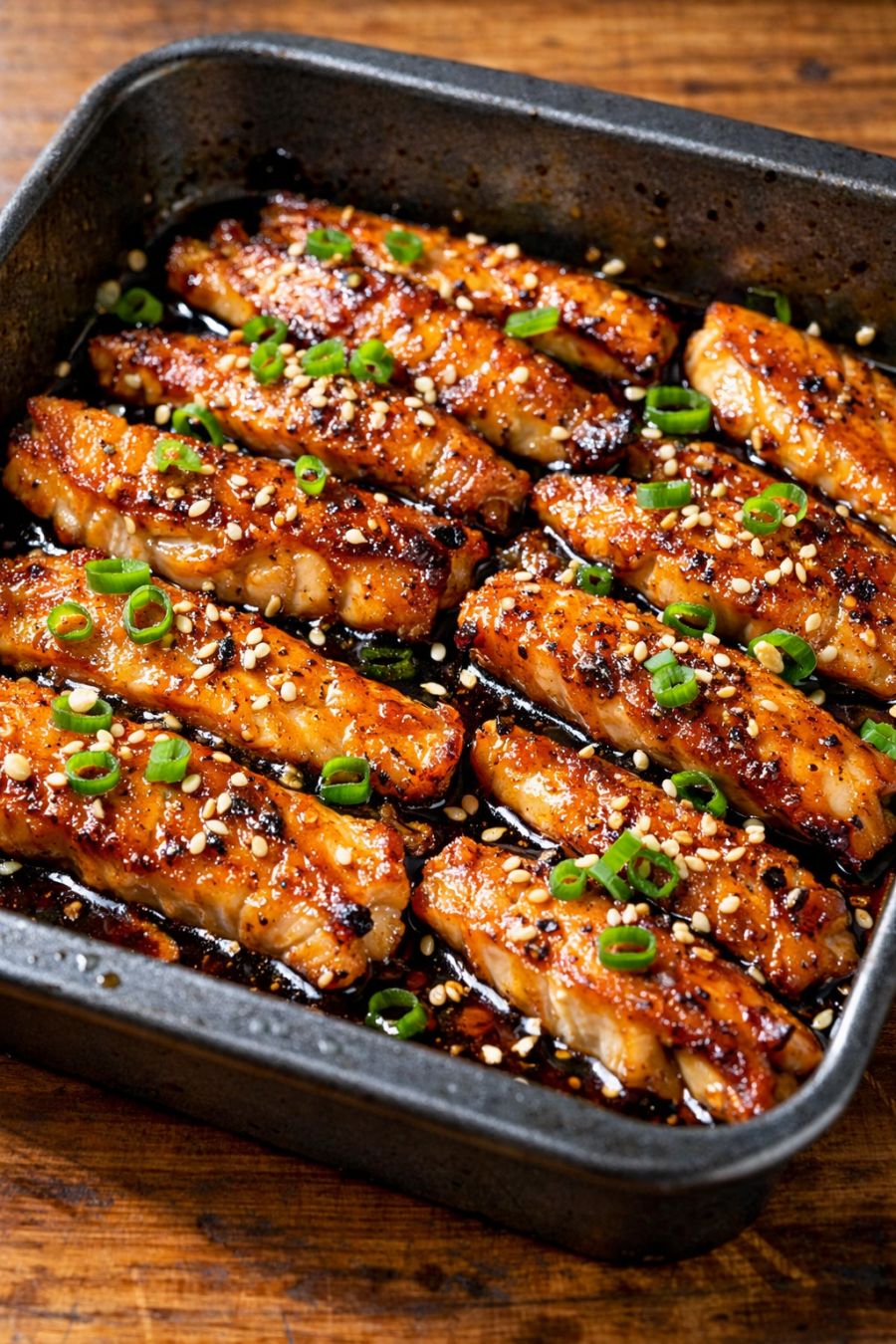
4-Ingredient Oven Baked Salmon Belly Strips
Servings: 3–4
Ingredients
1 1/2 pounds raw salmon belly strips, skin on or off, patted dry
2 tablespoons olive oil
1 1/2 tablespoons soy sauce (regular or low-sodium)
1 teaspoon garlic powder
1/2 teaspoon freshly ground black pepper
Directions
Preheat your oven to 400°F (200°C). Place a rack in the middle position so the salmon cooks evenly without scorching.
Lightly grease a dark metal roasting pan with a small amount of the olive oil, or line it with parchment for easier cleanup. Spread the raw salmon belly strips in a single layer in the pan, with a little space between pieces so they roast rather than steam.
Drizzle the remaining olive oil and the soy sauce evenly over the salmon belly strips. Use your hands or a spoon to gently turn the strips so each piece is lightly coated and glossy.
Sprinkle the garlic powder and black pepper evenly over the salmon belly strips. If any pieces look under-seasoned, flip them and season the other side as well so every bite has flavor.
Slide the roasting pan into the preheated oven and bake for 10–14 minutes, depending on the thickness of the strips. Thinner strips will be ready closer to 10 minutes, thicker or overlapping pieces may need the full 14.
Begin checking at the 10-minute mark. The salmon belly is done when the flesh turns opaque, flakes easily with a fork, and the fat along the edges is just starting to render and sizzle. Avoid overbaking; the goal is moist, tender pieces with slightly crisped edges.
Remove the pan from the oven and let the salmon rest for 3–5 minutes in the hot pan. This brief rest allows the juices to settle and the residual heat to finish cooking the centers without drying them out.
Transfer the salmon belly strips to a serving platter, spooning any flavorful juices from the roasting pan over the top. Serve immediately with your favorite sides and, if you like, a wedge of lemon for brightness.
Variations & Tips
You can spin this basic method in several directions while still relying on pantry staples. For a sweeter, more teriyaki-like finish, whisk 1–2 teaspoons of brown sugar or honey into the soy sauce before drizzling it over the salmon. If you enjoy a bit of heat, add 1/4–1/2 teaspoon of crushed red pepper flakes or a pinch of cayenne along with the black pepper. A teaspoon of smoked paprika or chili powder will lend a gentle smokiness without needing a grill. For a citrusy version, grate a little lemon or orange zest over the strips right before baking, then serve with extra citrus wedges at the table. If you prefer crispier edges, switch the oven to broil for the last 1–2 minutes of cooking, watching closely so the fat renders and browns without burning. Food safety notes: keep raw salmon belly refrigerated until you’re ready to cook, and do not leave it at room temperature for more than 1–2 hours total. Use separate cutting boards and utensils for raw fish, and wash your hands, knives, and any surfaces that touch the raw salmon with hot, soapy water. Cook the salmon until it is opaque and flakes easily; if you use a thermometer, aim for an internal temperature of 125–130°F (52–54°C) for moist, medium doneness or up to 145°F (63°C) if you prefer it fully cooked according to USDA guidelines. Refrigerate leftovers within 2 hours and eat them within 1–2 days, reheating gently to avoid drying the fish out.
