
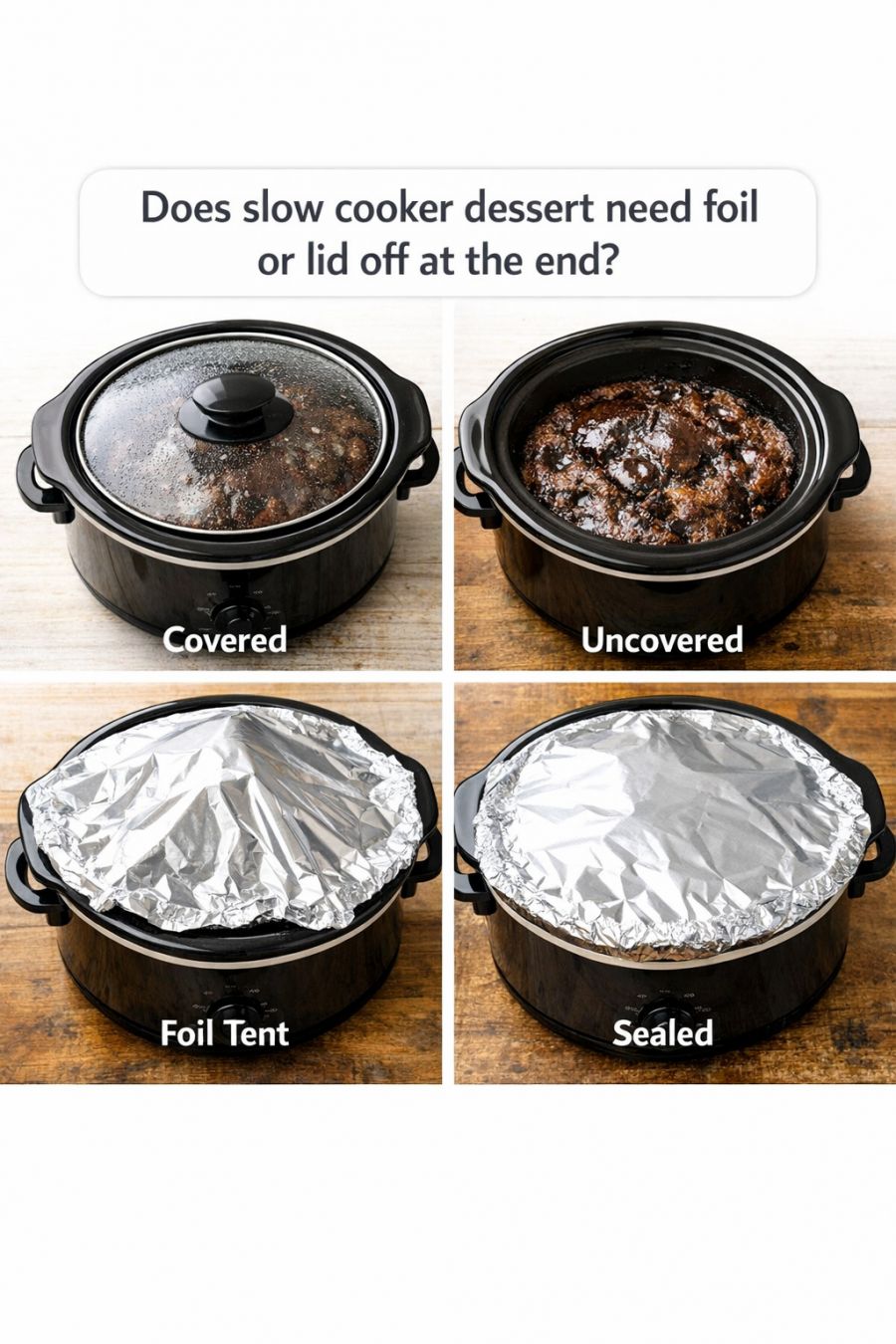
The slow cooker, a staple in many kitchens, is celebrated for its convenience and ability to tenderize the toughest cuts of meat. However, its prowess isn't limited to savory dishes; it can also create delectable desserts. As more home chefs turn to slow cookers for sweet treats, a common question arises: should foil be used, or should the lid be left off at the end of cooking?
The decision isn't straightforward and depends on the recipe and desired outcome. Understanding the slow cooker's mechanics and the role of moisture can help determine the best approach. This article delves into this debate, offering guidance for those seeking the perfect slow cooker dessert.
Advertisement
1. Why Slow Cooker Desserts Raise the Lid Vs. Foil Debate
The debate over whether to use foil or leave the lid off in slow cooker desserts stems from the slow cooker's design. Unlike an oven, a slow cooker relies on a tightly sealed environment to cook food. This design retains moisture, which can be both a blessing and a curse for desserts.
For recipes requiring a crisp top or reduced moisture, such as cakes or bread puddings, the excess steam can hinder the desired texture. Conversely, for desserts like sticky toffee pudding, moisture is an asset. Thus, the decision to use foil or remove the lid directly influences the dessert's final texture and moisture content.
2. How Moisture Works Inside a Slow Cooker
Moisture plays a critical role in slow cooker desserts. As the appliance heats, the water content in ingredients evaporates, condenses on the lid, and drips back down. This cycle maintains a moist environment ideal for tender meats but can sometimes lead to soggy desserts.
Understanding this moisture cycle is essential. Too much moisture can result in a dessert that is overly wet or lacks structure. Managing steam is key, whether by cracking the lid or using foil to tent the dessert, allowing some moisture to escape while retaining enough to ensure the dessert remains tender.
3. When To Keep the Lid On From Start to Finish
In many cases, keeping the lid on throughout the cooking process is beneficial, especially for moist desserts like custards or puddings. These desserts rely on steam to achieve their creamy texture.
For example, a chocolate lava cake or a bread pudding benefits from the consistent, moist environment that a sealed lid provides. The steam helps set the custard-like base without drying it out, ensuring a luscious, silky texture.
4. The Case for Cracking the Lid Near the End
Cracking the lid slightly during the last 30 minutes of cooking can be a game-changer for desserts that need a bit of drying out or a firmer top crust. This technique allows excess steam to escape, which can help firm up the top layer of a cake or crisp the edges of a bread pudding.
Many bakers find success by slightly offsetting the lid, leaving a small gap for steam to vent. This method gives control over the dessert's final texture without fully exposing it to the air, which could lead to drying out too much.
5. What Foil Tenting Actually Does to a Slow Cooker Dessert
Foil tenting is a technique used to balance moisture retention with venting in slow cooker desserts. By loosely covering the dessert with foil, you allow some steam to escape while preventing the top from becoming overly dry.
This method is particularly useful for recipes like cheesecake, where you want a set but not dry top. The foil acts as a barrier to direct condensation but allows enough ventilation to avoid a soggy crust.
6. Fully Covered Vs. Uncovered Finish: Testing Moisture and Texture
Testing the results of fully covered versus uncovered finishes in slow cooker desserts reveals notable differences. A fully covered dessert tends to be more moist and sometimes overly so, which works well for recipes demanding a soft, custardy finish.
On the other hand, uncovering the dessert towards the end can enhance texture, providing a firmer or crisper top. This is ideal for cakes and bread that benefit from a slightly drier finish. Experimentation with specific recipes can guide you to the best approach for your desired outcome.
7. Tightly Sealed Foil at the End: Does It Trap Too Much Steam?
Tightly sealing foil over a slow cooker dessert at the end of cooking can trap more steam, which is beneficial for maintaining moisture but can lead to overly wet results. This method is best reserved for desserts that thrive on moisture, like certain types of pudding or toffee cakes.
However, for those seeking a firmer texture, it may lead to disappointment. It's crucial to balance the seal—a tight seal is good for moisture retention, but consider loosening it if the dessert requires a dryer surface.
8. Viral Slow Cooker Dessert Hacks: Do They Stand Up to Testing?
Recently, several viral slow cooker dessert hacks have emerged, promising quick fixes for perfect results. Many suggest using foil or cracking the lid for the last portion of cooking to improve texture.
Testing these methods reveals mixed results. While some hacks offer genuine improvements, others may not deliver on their promises. The key is understanding the science behind them and applying them judiciously based on the specific dessert being prepared.
9. Matching the Method to the Dessert: Puddings, Cakes, and Breads
Different desserts require different approaches in a slow cooker. Puddings generally benefit from consistent moisture, so keeping the lid on or using foil is often ideal.
Cakes, however, might require a bit more attention. For a light, airy texture, cracking the lid near the end can help reduce excess moisture. Breads often require a combination of methods—beginning with the lid on and ending with a cracked lid or foil tent can result in a tender interior and a firmer crust.
10. Visual and Texture Cues That Tell You When To Remove the Lid
Observing visual and texture cues can be crucial in determining when to adjust the lid or foil on a slow cooker dessert. For instance, if a cake appears too wet on the surface or is not setting, it may be time to crack the lid.
Look for signs like the edges pulling away from the sides of the cooker or a slight firming of the top. These hints suggest that a bit of venting is needed to achieve the perfect finish.
11. Common Mistakes With Foil and Lids in Slow Cooker Baking
One common mistake is keeping the lid sealed tight throughout the entire cooking process for all desserts, which can lead to overly moist or mushy results. Another frequent error is using foil too tightly or too loosely without considering the type of dessert.
Understanding the requirements of each dessert type and adjusting the lid or foil accordingly can prevent these mishaps and lead to more successful outcomes.
12. Expert-Backed Guidelines for Your Next Slow Cooker Dessert
Experts recommend tailoring your approach based on the dessert's needs. For moist, creamy desserts, keep the lid on or use a loose foil tent. For firmer or crisp-topped desserts, consider cracking the lid near the end.
Advertisement
Experimentation is key. Start with trusted recipes and make small adjustments, noting the results. Over time, you'll develop an intuitive sense of what works best for each type of dessert, leading to consistently satisfying results.