
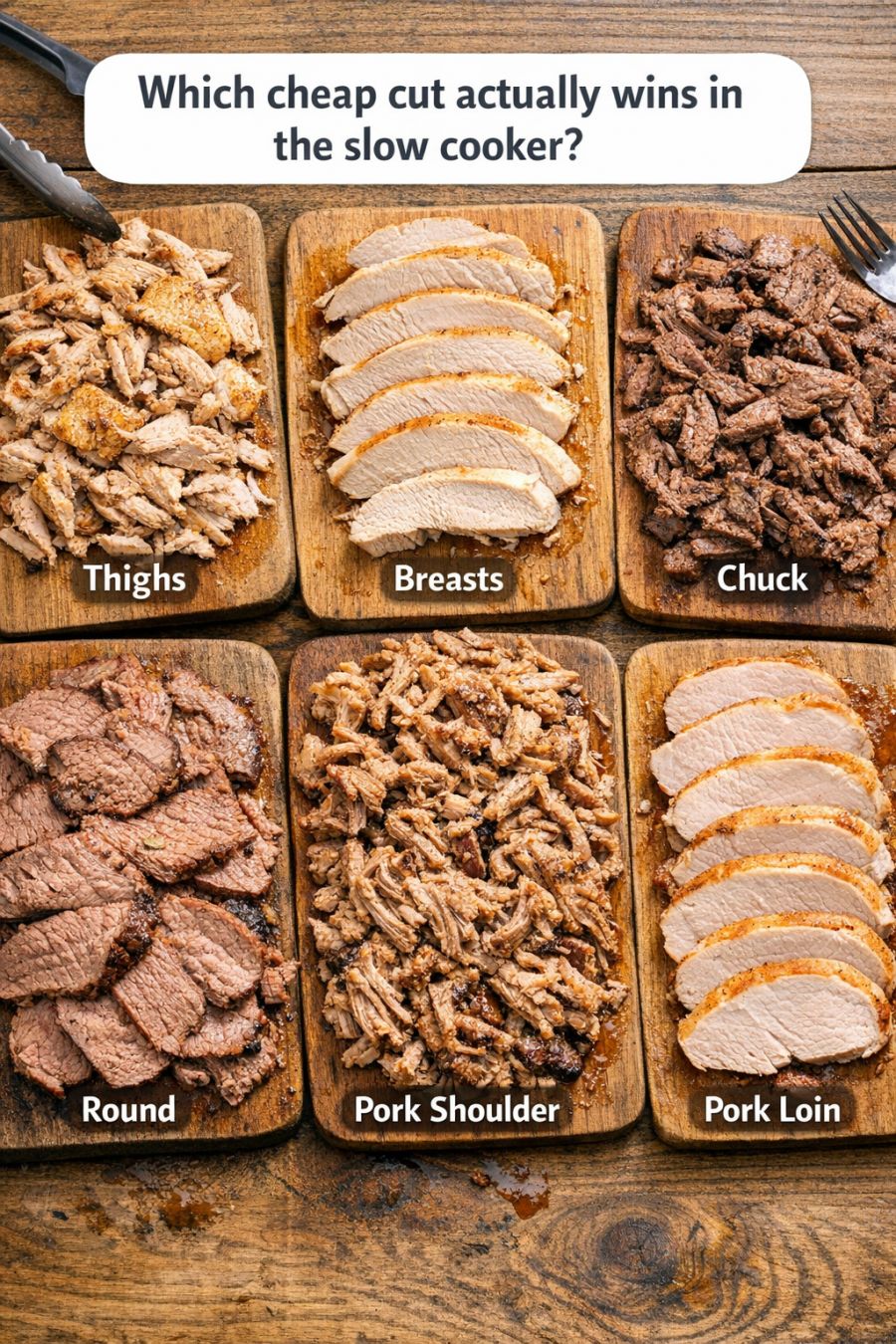
Slow cookers have long been heralded as the saviors of busy weeknight dinners. Their ability to transform inexpensive cuts of meat into tender, flavorful meals is unmatched. Yet, not all budget cuts are created equal in the world of slow cooking. With a little patience and the right choice of meat, you can create culinary magic without breaking the bank.
In this article, we delve into the age-old question: which cheap cut actually wins in the slow cooker? From chicken thighs and breasts to beef chuck and round, and even pork shoulder versus loin, we explore how each fares under the slow cooker’s heat. Whether you’re a seasoned slow cooker veteran or a novice looking to maximize flavor on a budget, this guide will provide valuable insights into choosing the best cut for your next meal.
Advertisement
1. How We Tested: Same Recipe, Different Budget Cuts
To ensure a fair comparison, we utilized a standard slow-cooker recipe across all meat cuts. Each meat was seasoned with a simple mix of salt, pepper, garlic, and onion powder, and cooked in a broth-based liquid to maintain uniformity. Chicken cuts were cooked for 4 hours on low, while beef and pork were given 8 hours. A consistent meat-to-liquid ratio was maintained at 1:1.5 pounds of meat to cups of liquid. This method allowed us to assess each cut’s resilience, flavor absorption, and textural changes accurately.
2. Chicken Thighs vs. Breasts: Who Handles Hours of Heat?
Chicken is a staple in many households, but when it comes to slow cooking, choosing between thighs and breasts can make a substantial difference. Chicken thighs, with their higher fat content, have long been favored for their ability to remain moist over extended cooking periods. Breasts, on the other hand, are leaner and often prone to drying out.
Our tests showed that after four hours on low, chicken thighs retained their juiciness and absorbed flavors well. Breasts, while still flavorful, were notably drier. This is largely due to the natural fat in thighs, which helps to keep the meat tender and flavorful.
3. Moisture Check: Which Chicken Cut Stays the Juiciest?
In terms of moisture retention, chicken thighs emerged as the clear winner. Their fat content not only contributes to a richer taste but also aids in preventing the meat from drying out. When we measured the moisture content post-cooking, thighs retained approximately 15% more moisture than breasts.
For those seeking the juiciest chicken possible, thighs are the superior choice. They offer a forgiving nature for longer cooking times, making them ideal for slow cooker recipes that require extended periods of heat.
4. Texture Test: Fall-Apart Tender or Stringy and Dry?
Texture is a critical component of a successful slow-cooked dish. Chicken thighs delivered a fall-apart tenderness that was both satisfying and succulent. Breasts, while still tasty, exhibited a slightly stringy texture, particularly when cooked longer than necessary.
This difference is primarily due to the connective tissues in thighs, which break down over time, resulting in a more desirable mouthfeel. In contrast, the lack of connective tissue in breasts makes them more vulnerable to becoming tough and stringy if overcooked.
5. Chuck Roast vs. Round: The Classic Slow-Cooker Showdown
Beef is another popular choice for slow cooking, with chuck roast and round being two of the most common budget-friendly options. Chuck roast, known for its marbling and connective tissue, is often the go-to for slow-cooked beef dishes. Round, while leaner, is frequently chosen for its economical price.
In our tests, chuck roast consistently delivered a more tender and flavorful result. Its higher fat content and marbling allowed it to withstand long cooking times without drying out. Round, although serviceable, was noticeably less tender and required additional liquid to avoid becoming chewy.
6. Fat, Collagen, and Time: Why Chuck Behaves Differently From Round
The secret to chuck roast’s success in the slow cooker lies in its composition. The fat and collagen present in chuck melt down during the cooking process, infusing the meat with flavor and creating a rich, silky texture. This transformation is less pronounced in round, which lacks the same amount of fat and connective tissue.
Over an 8-hour cook on low, chuck roast became spoon-tender, while round, despite absorbing flavors well, retained a firmer texture. This difference highlights the importance of fat and collagen in achieving the ideal slow-cooked beef dish.
7. Pork Shoulder vs. Loin: Can Lean Meat Survive a Long Simmer?
Pork is another protein that benefits greatly from slow cooking. Pork shoulder, with its higher fat content, is well-suited for long, slow cooking processes. Pork loin, however, is leaner and can be challenging to cook without drying out.
Our experiments revealed that pork shoulder remained moist and flavorful throughout the cooking process. Loin, while still palatable, was prone to drying, especially when cooked beyond the recommended time. The shoulder's marbled fat and connective tissue help keep it tender and juicy, making it the preferred choice for slow-cooked pork dishes.
8. Tenderness Rankings: From Spoon-Soft to Chewy Disappointment
After extensive testing, we ranked the cuts from most tender to least. Chuck roast and pork shoulder tied for the top spot, both achieving exceptional tenderness and flavor. Chicken thighs followed closely, offering a juicy and satisfying bite. Chicken breasts, while flavorful, were less tender than thighs, and pork loin and beef round rounded out the list, both being more prone to dryness and chewiness.
9. Dryness Disaster: The Cuts Most Likely to Overcook in a Crockpot
Chicken breasts, pork loin, and beef round were the most susceptible to drying out during our tests. Their lean nature requires careful monitoring and additional liquid to maintain moisture. These cuts benefit from shorter cooking times and should be checked more frequently to prevent overcooking.
For those using these lean cuts, adding a bit of extra broth or sauce and reducing cooking time can help mitigate the risk of dryness.
10. Viral Slow-Cooker Hacks Put to the Test With Cheap Cuts
With the rise of social media, numerous slow-cooker hacks have gained popularity. From using parchment paper to trap moisture to adding a dollop of mayonnaise for extra fat, we tested several of these tricks with our budget cuts.
The parchment paper method proved effective for chicken breasts and pork loin, helping to retain moisture and prevent drying. Adding mayonnaise, while unconventional, provided an additional fat source that enhanced the flavor and tenderness of leaner cuts.
11. Best Overall Value: The Cut That Wins on Price, Flavor, and Texture
Taking into account price, flavor, and texture, chicken thighs emerged as the best overall value. Their affordability, combined with their ability to remain moist and flavorful, makes them a versatile choice for a wide range of slow-cooker recipes.
Chuck roast and pork shoulder were close contenders, offering excellent flavor and tenderness for a slightly higher price. For those seeking the most cost-effective option without sacrificing quality, chicken thighs are the clear winner.
12. The Smart Shopper’s Guide: When to Choose Thighs, Chuck, or Shoulder
When selecting cuts for slow cooking, consider the dish you are preparing and the desired outcome. For rich, hearty stews and braises, opt for chuck roast or pork shoulder, which can withstand long cooking times and develop deep flavors. Chicken thighs are ideal for dishes where moisture is key, such as curries and casseroles.
Advertisement
Lean cuts like chicken breasts, pork loin, and beef round are best used in recipes with shorter cooking times or where additional moisture can be added. By understanding the strengths and weaknesses of each cut, you can make informed decisions that maximize flavor and minimize cost.