
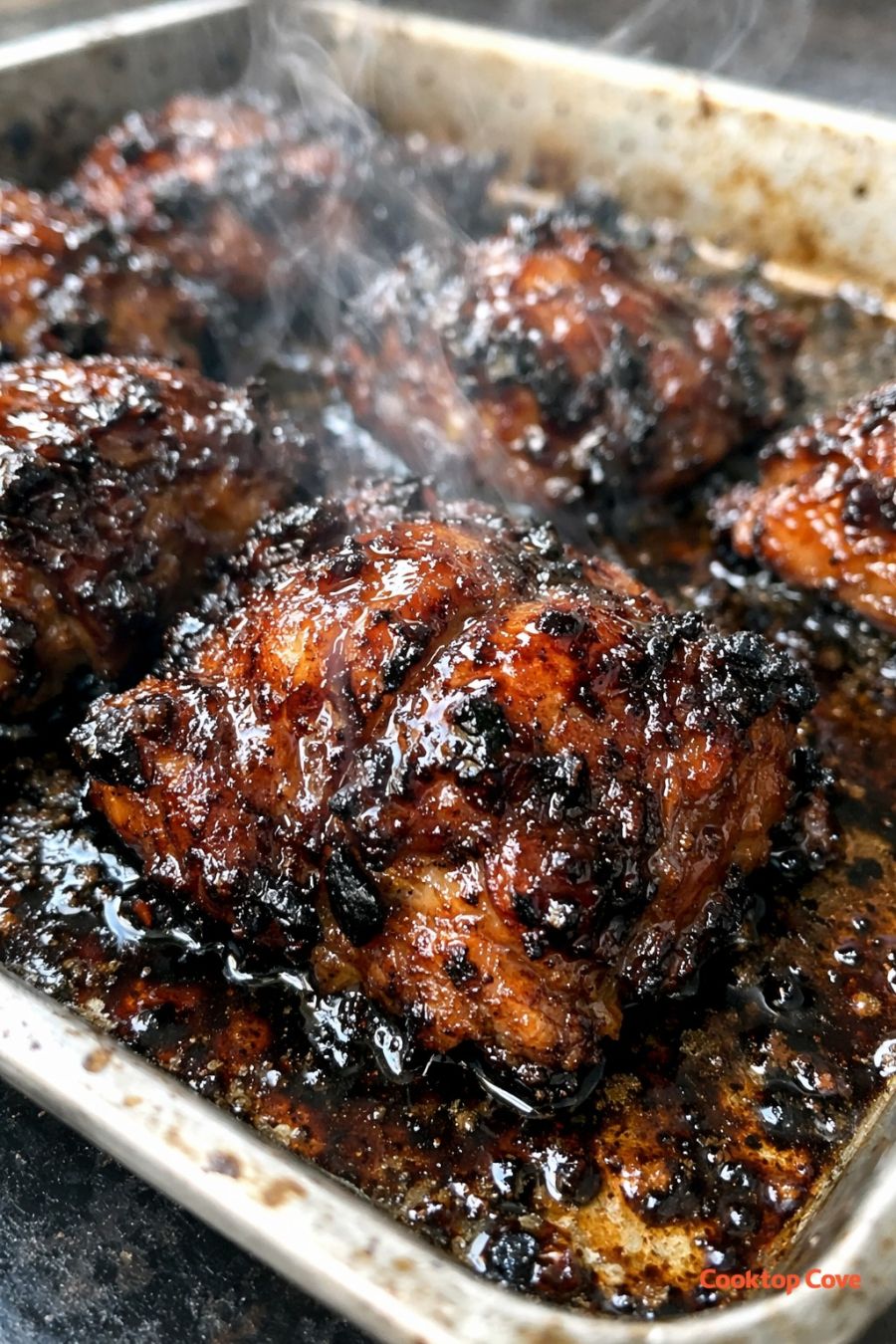
This 3-ingredient oven beef is my go-to when I want a hearty, holiday-worthy dinner handled hours ahead of time with almost no active work. You whisk together a dark, glossy, umami-rich marinade, pour it over a single big piece of beef, and let the oven do the rest. The inspiration is a mash-up of Midwestern pot roast practicality and the shiny, lacquered roasts you see in Asian barbecue shops—deeply savory, a little sweet, and irresistibly caramelized around the edges. It’s perfect for kickoff weekend or any night when you’d rather watch the game than hover over the stove.
Serve thick slices of the beef with its dark pan juices spooned over the top. I like it alongside creamy mashed potatoes or buttered egg noodles to catch all that glossy sauce, plus something green with a bit of crunch—a simple arugula salad, roasted Brussels sprouts, or green beans with lemon. A crusty baguette or dinner rolls are great for swiping up the sticky, umami-rich drippings. If you’re pouring drinks, a medium-bodied red wine (like a Côtes du Rhône or Merlot) or a malty amber beer plays really nicely with the caramelized edges.
3-Ingredient Dark Glossy Oven Beef
Servings: 6
Ingredients
3 to 3 1/2 pounds beef chuck roast (boneless)
3/4 cup soy sauce (regular, not low-sodium)
3/4 cup dark brown sugar, packed
Directions
Heat the oven to 325°F (165°C). Place a rack in the middle of the oven so there’s room for a roasting pan or metal baking dish.
In a small bowl, whisk together the soy sauce and dark brown sugar until the sugar is mostly dissolved and the mixture looks dark, glossy, and slightly syrupy. This is your entire marinade and cooking sauce.
Place the beef chuck roast in a metal baking dish or shallow roasting pan just large enough to hold it with a little space around the sides. A metal pan encourages caramelization and gives you those deep, lacquered edges.
Pour the soy-sugar mixture evenly over the beef, turning the roast once or twice with tongs to coat all sides. Position the beef fat-side up so the fat bastes the meat as it cooks. Spoon some of the sauce over the top.
Cover the pan tightly with heavy-duty aluminum foil, crimping the edges so steam can’t easily escape. This traps moisture and helps the beef become tender while the sauce reduces into a glossy coating.
Bake the covered beef at 325°F (165°C) for 2 1/2 hours. Every hour or so, carefully peel back a corner of the foil (watch for hot steam), baste the beef with the darkening sauce, then reseal the foil and return to the oven.
After 2 1/2 hours, remove the foil. The beef should be starting to get tender, and the sauce will be darker and slightly thicker but still fluid. Spoon some of the sauce over the top of the roast.
Return the pan to the oven, uncovered, and continue baking for 30 to 45 minutes, basting once or twice, until the beef is very tender when pierced with a fork and the surface has a shiny, dark, caramelized coating with some sticky, umami-rich edges. The sauce in the pan should be glossy and slightly syrupy, not burned; if it seems to be reducing too quickly, add a splash of water and gently stir.
Transfer the roast to a cutting board and let it rest for 10 to 15 minutes so the juices redistribute. Meanwhile, skim any excess fat from the surface of the pan juices with a spoon. Taste the sauce; if it’s too intense, you can dilute it with a few tablespoons of hot water and stir to combine.
Slice the beef across the grain into thick slices or pull it into large chunks, depending on how tender it is. Arrange on a platter or directly in the metal baking dish and spoon the dark, glossy pan juices over the top. Serve hot, with extra sauce passed at the table.
Variations & Tips
You can swap the chuck roast for other well-marbled, slow-roasting cuts like beef brisket (flat cut) or bottom round roast; just know that leaner cuts may be a bit less forgiving and slightly less succulent. If you want a touch more complexity while still keeping the spirit of the recipe, you can choose naturally brewed or aged soy sauce for deeper flavor, or use a mix of regular and dark soy sauce for an even more inky, lacquered finish. For a subtle smoky note without adding more ingredients, brown the roast briefly in a hot, dry cast-iron skillet before placing it in the baking pan; this is optional but can boost the roasted flavors. If you prefer a more shreddable texture, extend the covered cooking time by 30 to 45 minutes before uncovering, checking that there’s still at least a thin layer of liquid in the pan so the sugars don’t burn. Leftovers reheat beautifully; slice or shred the beef and warm it gently in a covered dish with a spoonful of water or broth to keep it moist. For food safety, start with a fresh, cold roast and keep it refrigerated until you’re ready to cook. Avoid marinating the beef at room temperature for extended periods; if you’d like to marinate ahead, you can pour the soy-sugar mixture over the beef in the baking pan, cover tightly, and refrigerate for up to 12 hours, then let it sit at room temperature for about 30 minutes while the oven heats. Use a clean cutting board and knife reserved for cooked meat when slicing after roasting, and don’t reuse any utensils that touched the raw beef without washing them first. If you’re concerned about doneness, you can check the internal temperature with an instant-read thermometer: for a sliceable but tender roast, aim for about 190°F (88°C); for a more shreddable texture, closer to 200°F (93°C). Always refrigerate leftovers within 2 hours of cooking and use within 3 to 4 days, reheating to at least 165°F (74°C) before serving.
