
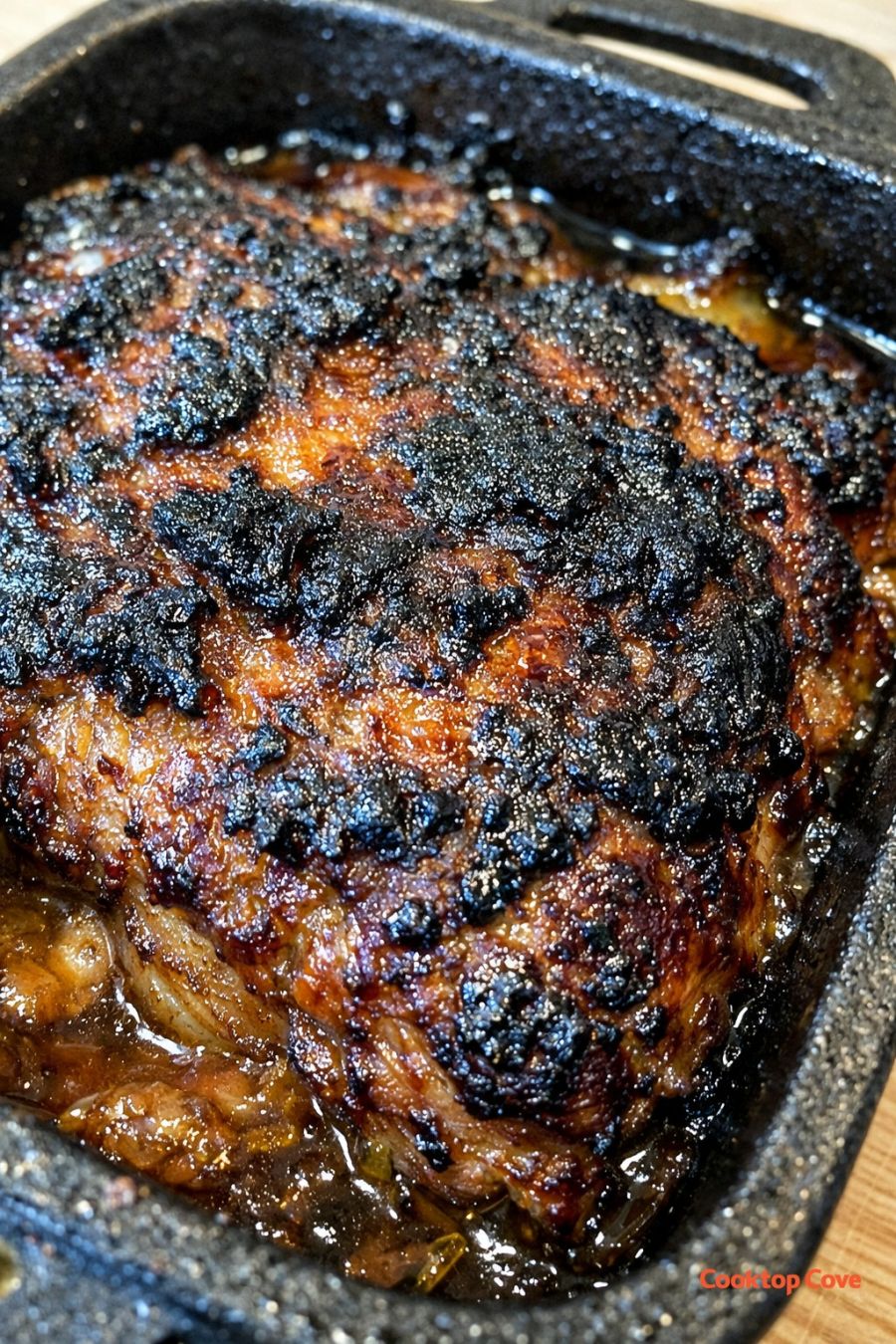
This Mid-June Gathering Bake is my kind of weeknight magic: three ingredients, one pan, and a deeply charred, crispy top that tastes like you fussed for hours. It’s inspired by the old Midwestern pantry casseroles I grew up with, but pared down to the bare essentials so you can pull it together with what’s already on your shelves. Think of it as a flexible, stress-free dinner that turns a couple of cans and a bag of pasta into something rich, caramelized, and absolutely crowd-pleasing. The long roast in a dark cast iron pan gives you those gorgeous, almost-black, crunchy edges that make people hover near the stove, waiting for it to come out of the oven.
Serve this bake straight from the cast iron pan at the center of the table with a big, bright salad—anything crisp and acidic will balance the richness nicely. I like a simple mix of lettuce, thinly sliced red onion, and a sharp vinaigrette. A plate of cut fruit or melon on the side keeps it feeling summery, and warm crusty bread is great for swiping up the caramelized sauce around the edges. If you drink wine, a light, chilled red or a dry rosé works well; otherwise, sparkling water with citrus slices cuts through the charred, cheesy top beautifully.
Mid-June 3-Ingredient Gathering Bake
Servings: 4
Ingredients
12 oz (about 3 1/2 cups) dry short pasta (penne, rigatoni, shells, or any pantry shape)
24–26 oz jar (about 3 cups) thick tomato pasta sauce or marinara (any style you have on hand)
8 oz (about 2 cups, packed) shredded melting cheese (mozzarella, provolone, or a blend)
Directions
Heat the oven to 425°F (220°C). Place a 10–12 inch dark cast iron skillet or roasting pan on the middle rack while the oven heats so the pan gets hot. This preheating step helps create that deeply caramelized, crispy edge later.
Par-cook the pasta: Bring a large pot of well-salted water to a boil. Add the dry pasta and cook for about 5–6 minutes—just until the outside is slightly softened but the center is still quite firm (firmer than al dente). Drain well. This undercooking keeps the pasta from going mushy as it finishes in the oven.
In a large bowl, combine the drained, hot pasta with the entire jar of tomato pasta sauce. Stir until every piece of pasta is well coated. The mixture should look a bit saucy; if it seems dry, add 2–4 tablespoons of water to loosen it slightly, since the pasta will continue to absorb moisture as it bakes.
Carefully remove the hot cast iron pan from the oven and lightly grease it if your pan tends to stick (a teaspoon of oil or a quick rub with a paper towel and a bit of oil is enough). Pour the pasta and sauce mixture into the hot pan and spread it into an even layer, pressing it gently into the corners so everything is snug.
Top the pasta evenly with the shredded cheese, making sure to cover the surface completely and right up to the edges. Those exposed edges where cheese meets pan are where you’ll get the most dramatic char and crunch.
Bake uncovered at 425°F (220°C) for 20–25 minutes, until the sauce is bubbling around the edges and the cheese is fully melted and starting to turn golden in spots. At this point the pasta should be cooked through but still hold its shape.
For the heavily charred, crispy top, switch the oven to broil on high. Move the pan to the upper third of the oven. Broil for 3–7 minutes, watching very closely. You want the cheese to blister, darken, and develop almost black, lacy edges, especially around the sides of the pan. Rotate the pan once or twice if your broiler heats unevenly. Pull it as far as you like into that deep char, but avoid burning the entire surface.
Carefully remove the pan from the oven and let the bake rest for at least 8–10 minutes before serving. This brief rest allows the bubbling sauce to settle and the cheese to firm up slightly, so you get clean scoops with distinct layers of saucy pasta and crisp, caramelized top. Serve directly from the cast iron pan while it’s still warm and crackly.
Store any leftovers, cooled to room temperature, in a covered container in the refrigerator for up to 3 days. Reheat in a hot oven or toaster oven until the top re-crisps and the center is steaming; the microwave will soften the top, so use the oven if you want that crunch back.
Variations & Tips
This recipe is intentionally minimal so you can raid the pantry and still have a reliable, comforting dinner, but it’s also a great canvas for odds and ends. If you want to add protein without increasing the ingredient count, choose a pasta sauce that already includes meat, like a jarred Bolognese or sausage marinara. To sneak in vegetables, use a chunky vegetable marinara or a sauce with added greens. For extra depth of flavor, mix smoked mozzarella or a bit of provolone into the cheese; a sharper cheese will brown more aggressively and give you an even more pronounced char. If your pantry pasta shapes are mixed (half a box of shells, some penne, a bit of rotini), go ahead and combine them—just cook to the timing of the smallest shape and keep them quite firm before baking.
For a spicier version, choose an arrabbiata or chili-spiked tomato sauce. If you prefer a milder, sweeter bake, pick a basil-heavy marinara. You can also make this in a smaller or larger pan; a smaller, deeper pan will give you a softer center, while a wider pan increases the surface area and maximizes the crispy, heavily charred top. If your broiler runs hot, keep the oven door slightly ajar and watch constantly to avoid burning the entire surface; pull the pan the moment the cheese has dark brown, blistered patches and blackened edges.
Food safety notes: Always handle the cast iron pan with thick, dry oven mitts—both the handle and sides stay extremely hot for a long time. Keep the handle turned inward so no one accidentally bumps it. When par-cooking pasta, avoid letting it sit at room temperature for more than 1–2 hours before baking; if you need to prep ahead, toss the drained pasta with a bit of oil and refrigerate it, then combine with sauce just before baking. Leftovers should be cooled, covered, and refrigerated within 2 hours of cooking, and reheated until steaming hot throughout (165°F/74°C) before serving again.
