
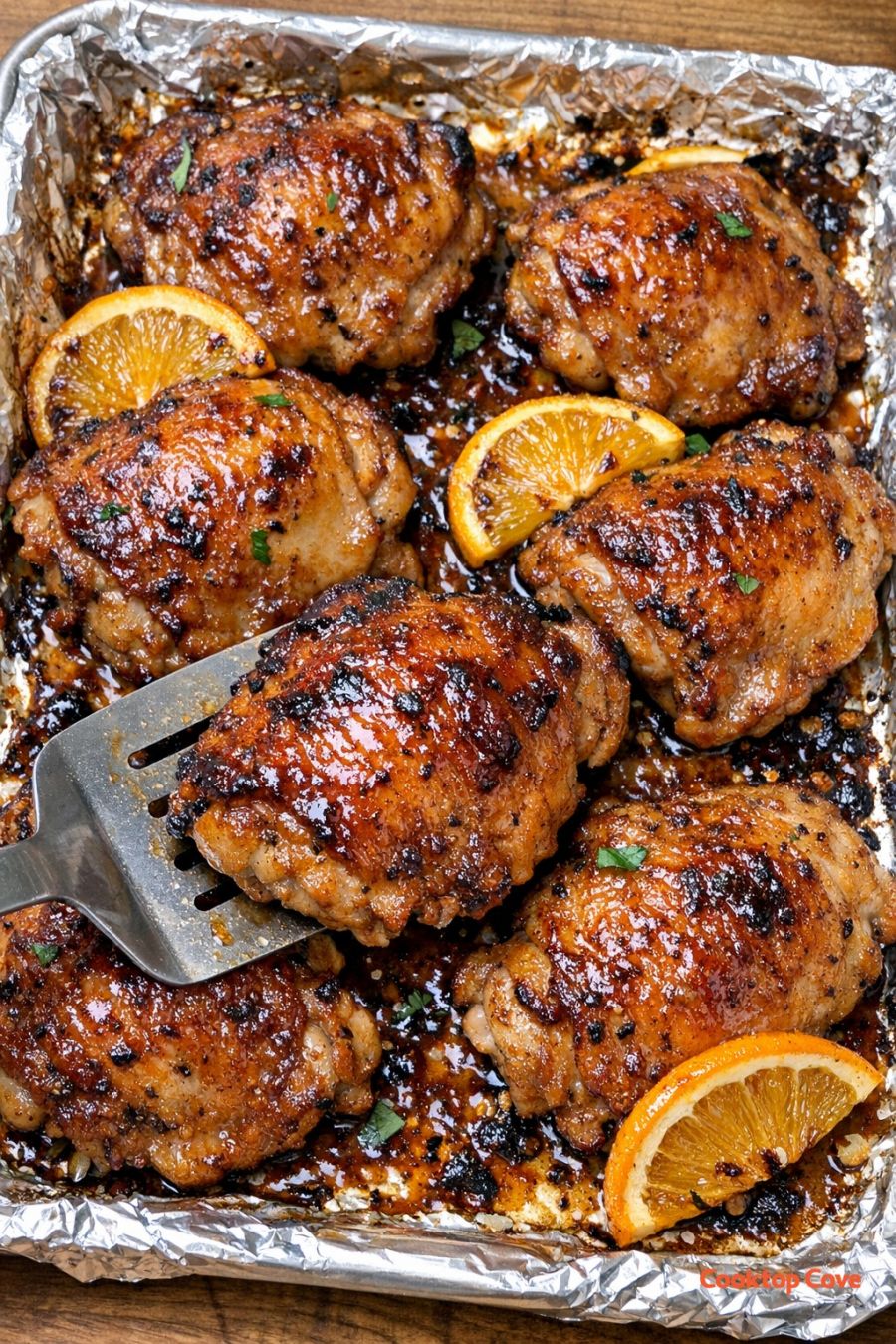
This oven baked 4-ingredient chicken grenada is adapted from a yellowed index card I could easily imagine finding in a Midwestern kitchen drawer dated June 1965: simple pantry staples, no fussy steps, and a sweet-citrus glaze that bronzes beautifully in the oven. The name likely nods to the Caribbean island of Grenada, known for warm spices and citrus, but in true mid-century American fashion the recipe keeps things streamlined—just chicken, frozen orange juice concentrate, brown sugar, and a splash of vinegar. The result is tender, caramelized chicken thighs with a glossy, slightly sticky coating and bright hints of orange, perfect for a weeknight dinner that feels a little special without any extra work.
Serve these bronzed, citrus-glazed chicken thighs with plain steamed white rice or buttered egg noodles to soak up the pan juices. A simple green vegetable—like steamed green beans, peas, or a crisp lettuce salad with a light vinaigrette—keeps the plate in that classic 1960s meat-and-two-sides spirit. If you’d like to lean into the citrus notes, add orange segments or a simple fruit salad on the side, and if you enjoy wine, a light, chilled white such as a Pinot Grigio or a dry Riesling pairs nicely with the sweet-tangy glaze.
Oven-Baked Chicken Grenada
Servings: 4
Ingredients
8 bone-in, skin-on chicken thighs (about 2 1/2 to 3 pounds total)
6 ounces frozen orange juice concentrate, thawed (from a 12-ounce can, use half)
1/3 cup packed light brown sugar
2 tablespoons apple cider vinegar
Directions
Heat the oven to 375°F (190°C). Line a shallow metal baking sheet or roasting pan with aluminum foil for easy cleanup, then lightly grease the foil with a thin film of oil or nonstick spray so the chicken skin doesn’t stick as it caramelizes.
Pat the chicken thighs dry with paper towels and trim any excess skin or large pockets of fat. Arrange the thighs skin-side up on the prepared foil-lined pan, leaving a little space between each piece so the heat can circulate and the skin can brown evenly.
In a small bowl, stir together the thawed orange juice concentrate, brown sugar, and apple cider vinegar until the sugar is mostly dissolved and the mixture is smooth. It should be thick but pourable, like a loose syrup.
Spoon or brush a generous layer of the orange mixture over the tops of the chicken thighs, letting a little run down the sides but not flooding the pan. Reserve the remaining glaze in the bowl for basting later.
Place the pan on the middle rack of the preheated oven and bake for 20 minutes. Carefully remove the pan, baste the chicken with some of the reserved orange glaze, and return it to the oven.
Continue baking for another 20 to 30 minutes, basting once or twice more with the remaining glaze, until the chicken is deep golden brown and bronzed, the glaze looks thick and slightly sticky around the edges, and the internal temperature in the thickest part of a thigh (not touching bone) reaches at least 165°F (74°C). Total baking time will be about 40 to 50 minutes.
If the chicken is done but you’d like a bit more color, place the pan under the broiler for 1 to 2 minutes, watching closely so the sugary glaze doesn’t burn. The skin should look caramelized with a shiny, sweet coating.
Let the chicken rest on the pan for 5 to 10 minutes before serving to allow the juices to settle and the glaze to thicken slightly on the surface. Use a metal spatula to lift each thigh from the foil, scraping up some of the caramelized glaze from the pan to spoon over the chicken on the plate.
Variations & Tips
For a slightly spicier, more island-inspired version, add a pinch of ground cinnamon and a small pinch of cayenne pepper or black pepper to the orange juice mixture before glazing. If you prefer a bit less sweetness, reduce the brown sugar to 1/4 cup and add an extra teaspoon of vinegar for more tang. Boneless, skinless chicken thighs can be used; reduce the baking time to about 25 to 35 minutes and skip broiling if they brown quickly, but note you’ll miss some of the caramelized skin effect. If you only have chicken drumsticks, they work well with the same method and timing. To keep this feeling true to a 1960s pantry, stick with frozen orange juice concentrate rather than fresh juice, which won’t give the same syrupy glaze. For easier cleanup and better browning, use a sturdy metal pan lined with foil rather than a glass dish, and avoid crowding the chicken so it roasts instead of steams. Food safety tips: Always thaw chicken in the refrigerator, never on the counter, and keep raw chicken and its juices away from ready-to-eat foods. Wash your hands, cutting boards, and utensils with hot, soapy water after handling raw poultry. Use a food thermometer to confirm the chicken has reached at least 165°F (74°C) at the thickest part, and refrigerate leftovers within 2 hours in shallow containers. Reheat leftovers to 165°F before eating, and discard any chicken that has been left at room temperature for more than 2 hours.
