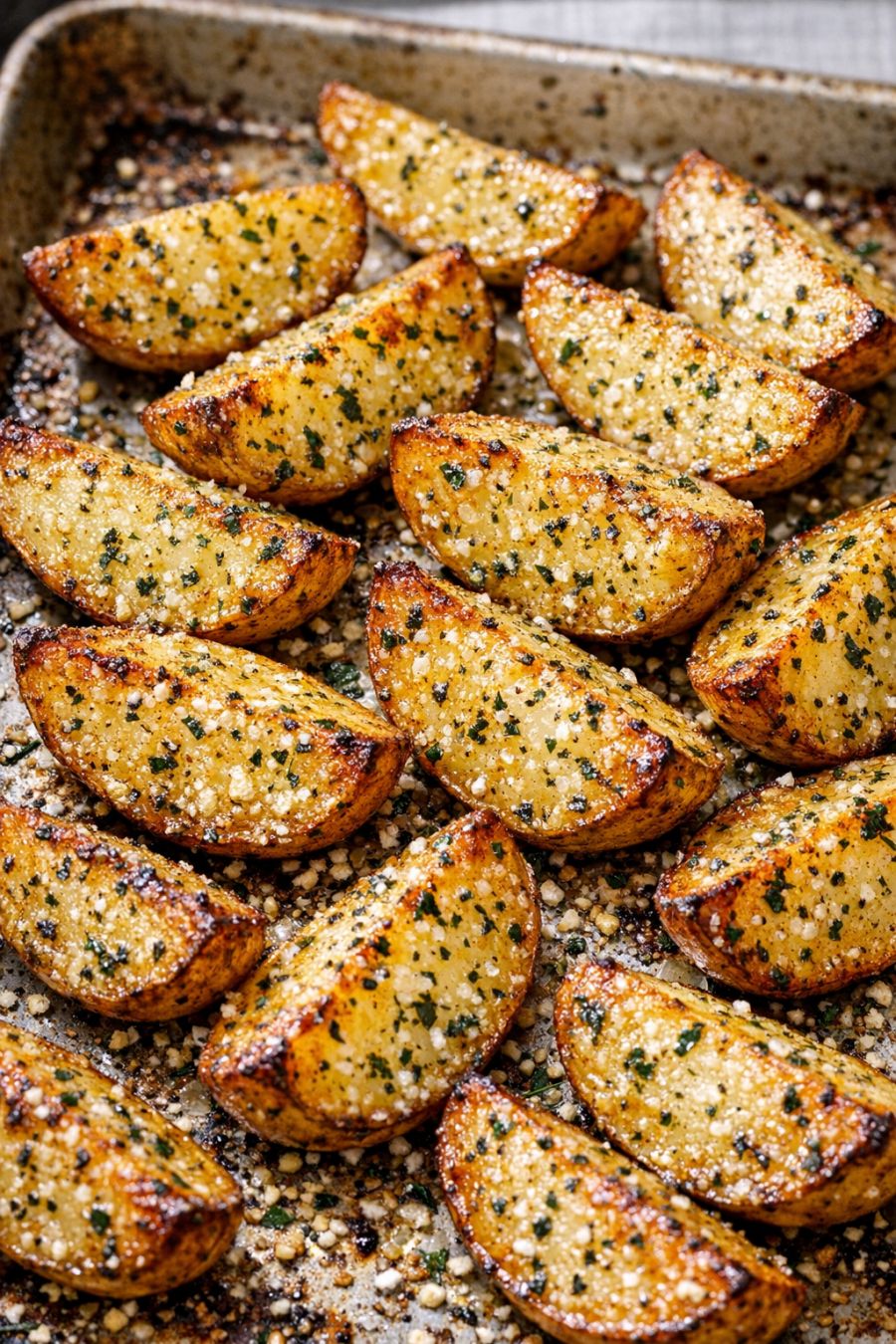
Ranch potatoes are one of those wonderfully American weeknight side dishes that feel nostalgic and practical all at once. They grew up alongside the rise of ranch dressing mix in the 1950s and 60s, when packet seasonings became pantry staples in busy households across the Midwest and beyond. This three-ingredient version leans into that tradition: just potatoes, oil, and a packet of ranch seasoning. The result is a tray of crisp-edged, tender-centered potatoes with that familiar tangy, herby flavor many of us grew up dipping our veggies into. It’s the kind of recipe you reach for when you want something comforting, low-effort, and universally appealing—perfect for everything from a casual Tuesday dinner to a game-day spread.
These oven-baked ranch potatoes are versatile enough to slide into almost any meal. They’re excellent alongside simple roasted or grilled chicken, pork chops, or a seared steak, and they pair nicely with lighter mains like baked salmon or turkey burgers. For a more casual spread, serve them with burgers, brats, or grilled sausages and a crisp green salad or coleslaw. They also work beautifully on a brunch table next to scrambled eggs, frittatas, or a vegetable hash. If you like contrast, add something bright and acidic—like a cucumber-tomato salad or pickles—to balance the richness of the potatoes and ranch seasoning.
Oven-Baked 3-Ingredient Ranch PotatoesServings: 4
Ingredients
2 pounds small Yukon Gold or red potatoes, scrubbed and cut into 1-inch pieces
3 tablespoons neutral oil (such as canola, vegetable, or light olive oil)
1 (1-ounce) packet ranch seasoning mix
Directions
Preheat your oven to 425°F (220°C). Line a large rimmed baking sheet with parchment paper or lightly grease it to help prevent sticking and promote even browning.
Prepare the potatoes by scrubbing them well and cutting them into roughly 1-inch pieces. Keeping the pieces similar in size helps them cook at the same rate and develop evenly crisp edges.
In a large bowl, combine the cut potatoes and oil. Toss thoroughly until every piece is lightly coated; this oil layer helps the ranch seasoning adhere and encourages browning in the oven.
Sprinkle the ranch seasoning packet evenly over the oiled potatoes. Toss again until the seasoning is well distributed and no obvious dry patches remain.
Spread the seasoned potatoes in a single layer on the prepared baking sheet, making sure they are not overcrowded. A bit of space between pieces allows hot air to circulate and helps them crisp rather than steam.
Bake for 25–35 minutes, stirring or flipping the potatoes once about halfway through. They are done when the edges are deeply golden and crisp, and the centers are tender when pierced with a fork.
Taste and adjust if needed. Ranch seasoning packets are usually salty enough, but if you prefer, you can add a small pinch of salt or a crack of black pepper. Serve hot, straight from the pan, while the edges are still crisp.
Variations & Tips
Because this recipe is so simple, it’s an easy canvas for small adjustments that can change the character of the dish without adding much work. For a slightly richer version, toss the hot, roasted potatoes with a tablespoon of butter right after they come out of the oven; the residual heat will melt it and give you a glossy, more indulgent finish. If you enjoy a bit of spice, add 1/4–1/2 teaspoon of smoked paprika or crushed red pepper flakes to the ranch packet before tossing with the potatoes. You can also introduce a fresh element at the end: scatter chopped parsley, chives, or green onions over the potatoes just before serving for color and brightness. If you’re cooking for a crowd or want to turn this into more of a loaded side, top the finished potatoes with shredded cheddar and return the tray to the hot (but turned-off) oven for a few minutes to melt the cheese, then finish with a spoonful of sour cream and a sprinkle of bacon bits. For a slightly different texture, try using larger russet potatoes cut into wedges—keep the same method, but extend the baking time by 5–10 minutes, checking for crisp edges and tender centers.