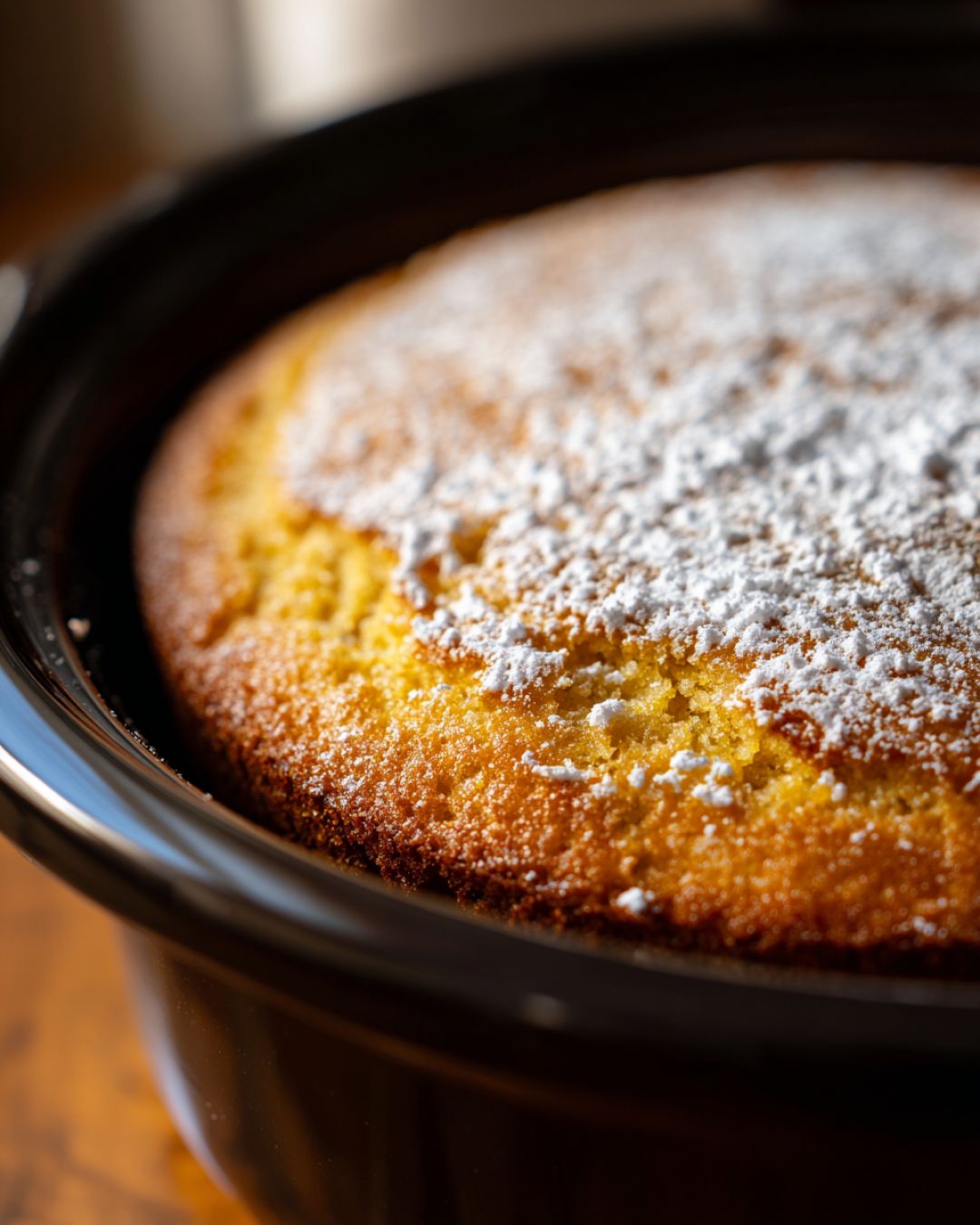
This little 2-ingredient slow cooker 7-Up cake is the sort of recipe that would’ve passed across a church basement table on a handwritten index card, smudged with a thumbprint of butter. It’s a cousin to those old Midwestern 7-Up and Sprite cakes that started popping up in the 1960s, when boxed mixes and bottled sodas felt downright modern. The lemon-lime soda keeps the cake tender and gives it a light, springy crumb, while the slow cooker does the work without heating up the whole house. It’s the kind of dessert you throw together on a Saturday morning and forget about until the afternoon, when the house smells like something your grandmother might’ve made, even if she never owned a slow cooker. You might make this when you’re short on time, when the grandkids are underfoot, or when you just want a simple, cozy sweet that tastes like potlucks, county fairs, and long summers on the porch.
This cake is lovely served warm right out of the slow cooker, scooped into bowls like a soft cobbler. A dollop of whipped cream or a scoop of vanilla ice cream melts into all the nooks and crannies and makes it feel a bit more special. If you’re serving it after a hearty Midwestern supper—say a pot roast, meatloaf, or a big pan of baked ham and scalloped potatoes—the light lemon-lime flavor is a nice, bright finish. Fresh berries on the side dress it up for company, while a simple dusting of powdered sugar keeps it humble and homey for an everyday treat. A cup of coffee or hot tea alongside turns it into a fine afternoon pick-me-up, the kind you linger over at the kitchen table while watching the fields outside settle into evening.
2-Ingredient Slow Cooker 7-Up CakeServings: 8
Ingredients
1 (15.25-ounce) box yellow cake mix (or lemon cake mix, if you like a stronger citrus flavor)
1 1/2 cups lemon-lime soda (such as 7-Up or Sprite), room temperature
Directions
Lightly grease the inside of a 4- to 6-quart slow cooker with butter or nonstick cooking spray. If you like easier cleanup, you can also line the bottom with a piece of parchment paper cut to fit.
In a medium mixing bowl, pour in the dry cake mix. Slowly add the lemon-lime soda, stirring gently with a spoon or whisk just until the batter is mostly smooth. Don’t overmix; a few small lumps are fine.
Pour the batter into the prepared slow cooker, spreading it out evenly with a spatula so it reaches the edges in a fairly level layer.
Cover the slow cooker with its lid. Cook on HIGH for 1 1/2 to 2 1/2 hours, or on LOW for 3 to 4 hours. Cooking times can vary by slow cooker, so begin checking after the shorter time. The cake is done when the top is set, the edges pull slightly away from the sides, and a toothpick inserted in the center comes out clean or with just a few moist crumbs.
Once done, turn off the slow cooker and let the cake rest, covered, for about 10 to 15 minutes. This helps it set up and makes it easier to serve.
Serve the cake warm, scooped out with a large spoon straight from the slow cooker, or gently loosen the edges and lift out portions. Enjoy as is, or top with whipped cream, ice cream, or a dusting of powdered sugar.
Variations & Tips
For a stronger citrus note, use lemon cake mix instead of yellow and add a teaspoon of finely grated lemon zest to the batter. If you like a bit of texture, scatter a handful of sweetened shredded coconut or white chocolate chips over the batter before cooking; they’ll melt in and create little pockets of sweetness. To make a simple glaze, stir together 1 cup powdered sugar with 1–2 tablespoons lemon-lime soda until smooth, then drizzle it over the warm cake right in the slow cooker. You can also turn this into a ‘poke cake’ by poking holes in the warm cake with a wooden spoon handle and drizzling a little extra soda or prepared lemon pudding over the top, letting it soak in before serving. For smaller households, prepare only half the cake mix and soda, and cook in a smaller slow cooker, checking for doneness a bit earlier. Remember that every slow cooker runs a little differently, so the first time you make this, keep an eye on it near the end of the cooking time—once you know how your particular pot behaves, this becomes a nearly foolproof, hands-off dessert.