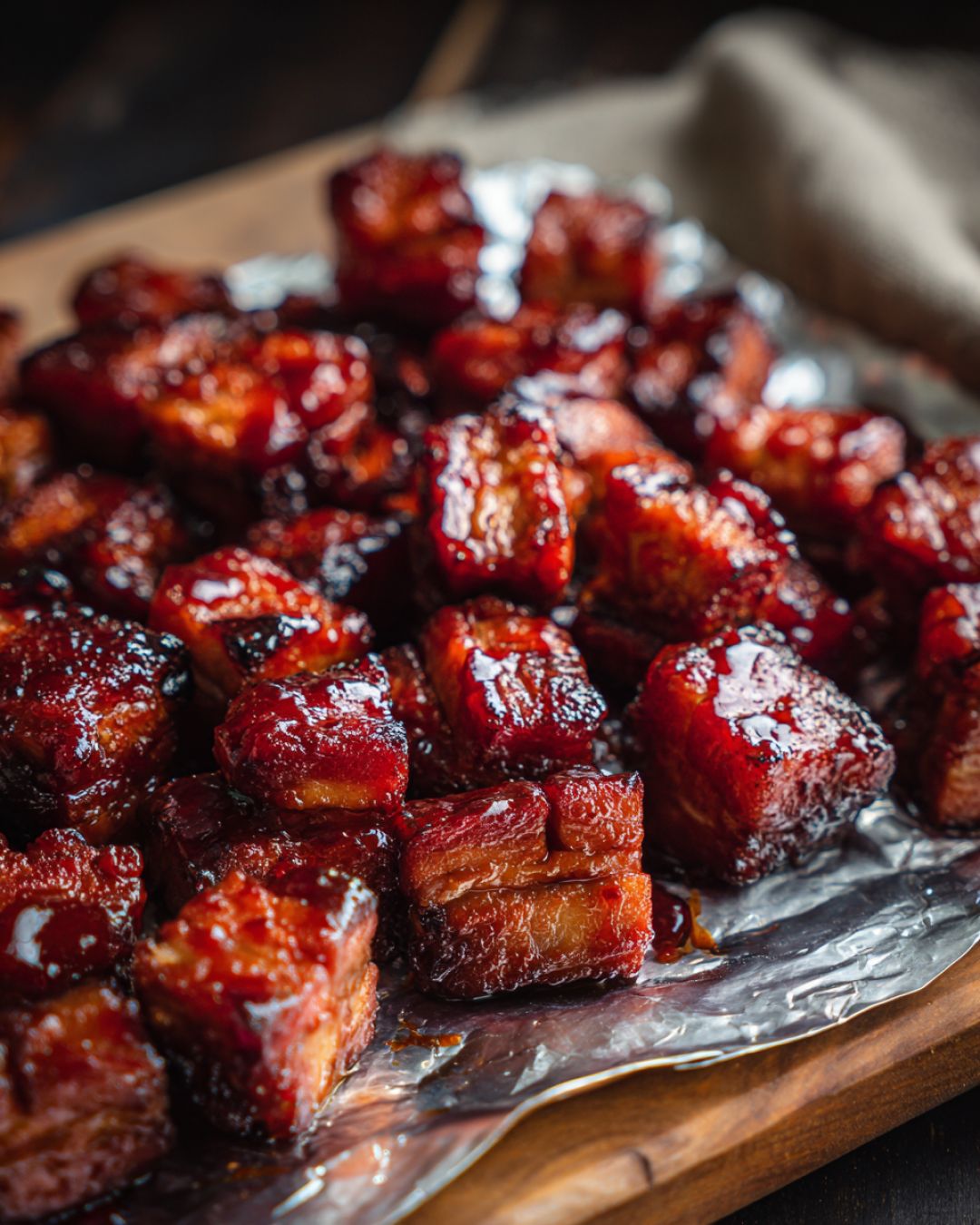
Pork belly burnt ends are one of those recipes that taste like you spent all day babysitting a smoker, but this version lets the slow cooker do the heavy lifting. Traditionally, burnt ends come from the point end of a smoked brisket and are famous at barbecue joints for being those caramelized, ultra-tender little cubes everyone fights over. This shortcut pork belly version gives you that same sweet, sticky, smoky vibe with just three ingredients and almost no hands-on time. It’s the kind of recipe I lean on during busy workweeks or when we’re having friends over and I want something impressive without hovering over the grill all afternoon.
These pork belly burnt ends are rich and flavorful, so I like to balance them with simple, fresh sides. They’re perfect over a pile of creamy coleslaw or next to a crisp chopped salad to cut through the richness. For something heartier, serve them with classic backyard sides like baked beans, cornbread, or roasted potatoes. If you’re turning this into more of a meal-prep situation, they’re fantastic tucked into rice bowls with steamed veggies or layered into tacos with shredded cabbage and a squeeze of lime. They also make an easy appetizer—just set them out with toothpicks and let everyone snack while the rest of dinner comes together.
3-Ingredient Slow Cooker Pork Belly Burnt EndsServings: 6
Ingredients
3 pounds pork belly, skin removed and cut into 1 1/2-inch cubes
1 cup barbecue sauce (your favorite store-bought)
1/3 cup brown sugar, packed
Directions
Prep the pork belly: Trim any tough skin from the pork belly if it’s still attached, leaving plenty of fat. Cut the pork belly into roughly 1 1/2-inch cubes so they cook evenly.
Layer in the slow cooker: Place the pork belly cubes into the slow cooker in an even layer. They can overlap a bit, but avoid tightly packing them so the fat can render and the sauce can coat everything.
Mix the sauce: In a small bowl, stir together the barbecue sauce and brown sugar until the sugar is mostly dissolved.
Coat the pork: Pour the barbecue sauce mixture over the pork belly cubes. Toss gently with a spoon or tongs to coat all the pieces as evenly as possible.
Slow cook: Cover and cook on LOW for 4–5 hours, or until the pork belly is very tender and a good amount of fat has rendered out. Gently stir once or twice during cooking if you’re home, but it’s fine to let it go unattended.
Reduce the sauce: Once the pork is tender, use a slotted spoon to transfer the pork belly cubes to a foil-lined baking sheet in a single layer. Carefully skim off excess fat from the liquid left in the slow cooker, then pour some of the remaining sauce over the pork cubes to coat them well.
Caramelize under the broiler: Preheat your oven broiler to high. Broil the pork belly cubes for 5–8 minutes, turning once halfway through, until the edges are caramelized and slightly charred. Keep a close eye on them so they don’t burn.
Serve: Let the burnt ends rest for a few minutes, then transfer to a serving dish. Spoon any extra sauce from the pan over the top and serve warm.
Variations & Tips
• Sweet & Spicy Kick: Add 1–2 tablespoons of hot sauce or sriracha to the barbecue sauce and brown sugar mixture for a little heat. This is my go-to when I know we’re serving these as game-day snacks.
• Honey-Garlic Twist: Swap half of the brown sugar for 2–3 tablespoons of honey and stir in 1–2 teaspoons of garlic powder. It gives you that sticky, garlicky glaze without adding more ingredients to your grocery list.
• Make-Ahead Meal Prep: You can cook the pork belly in the slow cooker a day ahead, then store the cubes and sauce separately in the fridge. When you’re ready to serve, toss the cubes in the sauce and broil to caramelize. This is especially helpful if you’re hosting and don’t want to juggle too many things at once.
• Crispier Edges: If you love extra-crispy burnt ends, broil them a few minutes longer or finish them in a hot cast-iron skillet on the stovetop to crisp up the edges in their own rendered fat.
• Lighter Option: Pork belly is naturally rich, so if you want to balance things out, serve smaller portions as a topping—over rice, baked potatoes, or big salads—rather than as the main protein on the plate. It stretches the recipe further and keeps it from feeling too heavy on a weeknight.