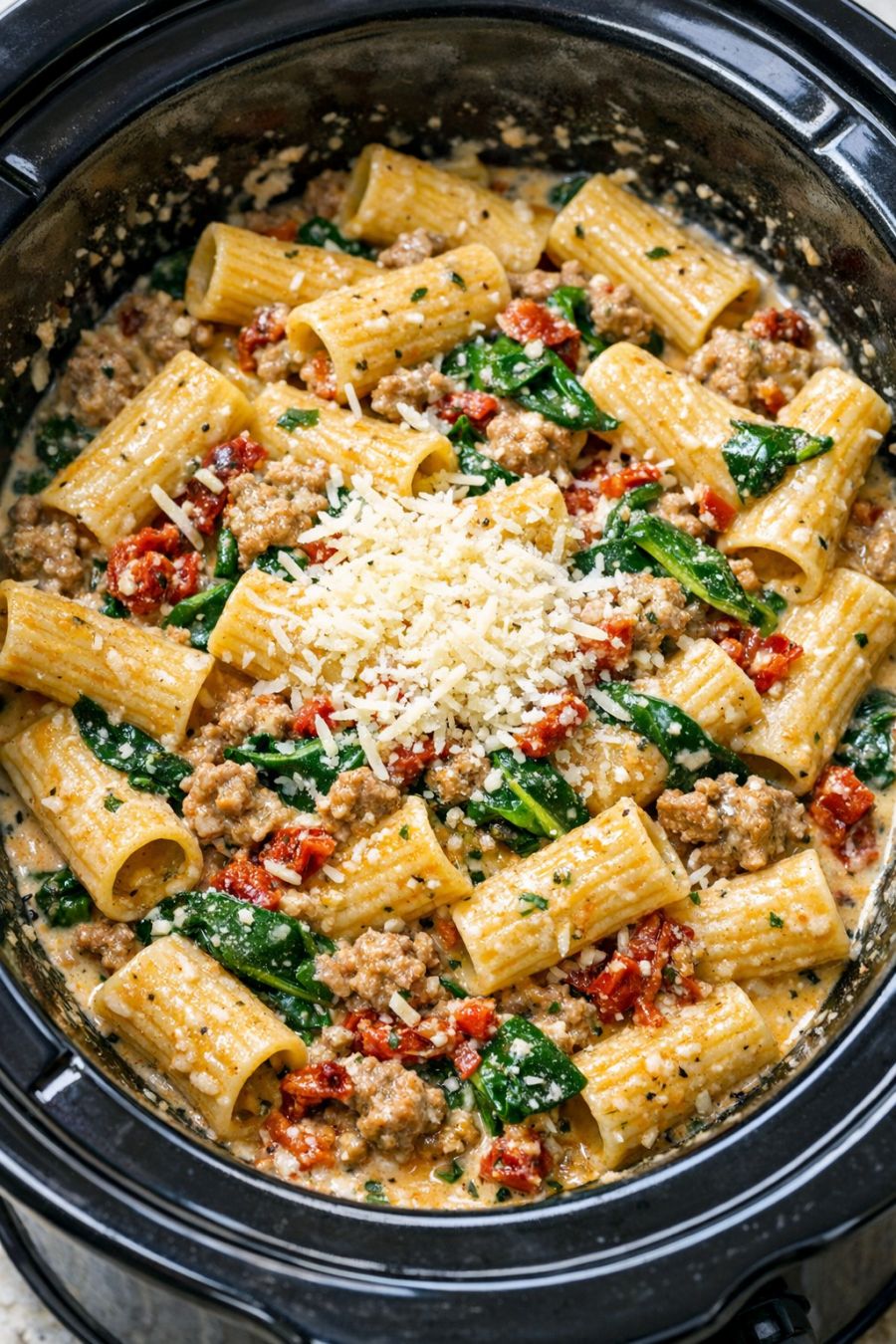
This slow cooker Tuscan Sausage Rigatoni is my weeknight answer to those restaurant-style creamy pasta cravings. It borrows its soul from Tuscan-inspired flavors—sun-dried tomatoes, garlic, Italian herbs, and cream—elements you’ll see in classic Tuscan chicken or rib-sticking soups from central Italy. Here, we let the slow cooker do the heavy lifting: raw Italian sausage and uncooked rigatoni go straight into the pot, and a single, velvety mixture of broth, cream, spinach, and sun-dried tomatoes gets poured over the top. A few hours later, everything melds into a rich, cozy pasta that tastes like you fussed much more than you actually did. It’s ideal for busy days when you want something comforting and a little special without hovering over the stove.
This Tuscan sausage rigatoni is quite rich, so I like to balance it with something fresh and crisp on the side. A simple green salad with a lemony vinaigrette or a classic Italian chopped salad works beautifully to cut through the creaminess. Garlicky bread or a warm baguette is perfect for catching every last bit of sauce. If you’d like a vegetable side, roasted broccoli, green beans, or balsamic-glazed Brussels sprouts complement the sun-dried tomatoes and Italian herbs. For a slightly more indulgent spread, serve with marinated olives and a small cheese board to turn this into a relaxed, trattoria-style dinner at home.
Slow Cooker Tuscan Sausage RigatoniServings: 6 servings
Ingredients
1 pound (450 g) uncooked Italian sausage links or bulk sausage (mild or hot), casings removed if using links
12 ounces (340 g) uncooked rigatoni pasta
1/2 cup oil-packed sun-dried tomatoes, drained and thinly sliced
2 cups low-sodium chicken broth
1 1/2 cups heavy cream
2 cups lightly packed fresh baby spinach
1 teaspoon Italian seasoning
1 teaspoon kosher salt, plus more to taste
1/2 teaspoon freshly ground black pepper
3 cloves garlic, minced (optional but recommended)
1/2 cup freshly grated Parmesan cheese, plus extra for serving
1 tablespoon olive oil (only if using very lean sausage or turkey sausage)
Red pepper flakes, to taste (optional, for a little heat)
Directions
Prepare the slow cooker base: Lightly grease the insert of a 5- to 6-quart slow cooker with nonstick spray or a thin film of olive oil to help prevent sticking.
Add the sausage and rigatoni: Place the uncooked Italian sausage into the bottom of the slow cooker. If using bulk sausage, break it into bite-size chunks with your fingers; if using links, cut or pinch them into chunks after removing the casings. Scatter the uncooked rigatoni evenly over the sausage, allowing some of the pasta to nestle down between the sausage pieces.
Mix the Tuscan-style sauce: In a large mixing bowl or large measuring cup, combine the sliced sun-dried tomatoes, chicken broth, heavy cream, baby spinach, Italian seasoning, salt, black pepper, and minced garlic (if using). Stir well so that the spinach and tomatoes are evenly distributed and the seasonings are dissolved into the liquid.
Pour the mixture over the sausage and pasta: Holding the bowl with both hands, slowly pour the sun-dried tomato, broth, cream, spinach, and seasoning mixture evenly over the raw sausage and rigatoni in the slow cooker. Aim to cover as much of the pasta as possible so it cooks evenly in the liquid.
Gently press down and adjust: Use the back of a spoon or a spatula to gently press any exposed rigatoni down into the liquid. It’s fine if a few pieces peek out; they’ll soften as they cook, but most of the pasta should be in contact with the sauce.
Slow cook: Cover the slow cooker with the lid. Cook on LOW for 3 to 4 hours, or until the rigatoni is al dente and the sausage is cooked through. Begin checking around the 2 1/2- to 3-hour mark, as slow cookers vary; the pasta should be tender but not mushy.
Finish with Parmesan and adjust seasoning: Once the pasta is cooked to your liking, sprinkle in the grated Parmesan cheese and stir gently to combine, breaking up any larger sausage pieces as you go. Taste and adjust with additional salt, pepper, or a pinch of red pepper flakes if you’d like more heat.
Rest and serve: Let the pasta sit, covered, on the WARM setting (or with the heat off) for about 5 to 10 minutes to thicken slightly as the sauce settles. Serve hot, topped with extra Parmesan and a few additional sun-dried tomato strips or fresh spinach leaves if you’d like a bit of color.
Variations & Tips
• Lighter version: Swap half-and-half for the heavy cream and use turkey Italian sausage instead of pork. The sauce will be a bit thinner, so reduce the chicken broth by about 1/4 cup to keep it from getting too loose.
• Extra-vegetable boost: Stir in additional vegetables that hold up well in a slow cooker, such as sliced mushrooms or diced bell peppers, when you add the sausage and pasta. For more delicate vegetables like zucchini, add them during the last hour of cooking so they don’t become overly soft.
• Different pasta shapes: If you don’t have rigatoni, penne or ziti work well. Choose a short, sturdy shape with ridges so it can stand up to slow cooking and cling to the creamy sauce. Avoid very small or delicate shapes, which can overcook quickly.
• Cheese variations: For a more pronounced nuttiness, mix Pecorino Romano with the Parmesan. A handful of shredded mozzarella stirred in at the end will give you a slightly stretchier, more casserole-like texture.
• Herb and flavor twists: Add a few fresh basil leaves or a sprig of rosemary to the sauce mixture before pouring it over the sausage and pasta. Remove woody herb stems before serving. A splash of dry white wine (subbing in for 1/4 cup of the broth) adds a subtle acidity that balances the richness.
• Timing tips: Because pasta can overcook in a slow cooker, it’s better to err on the side of checking early. If the pasta is done but you’re not ready to eat, switch the slow cooker to WARM and crack the lid slightly to prevent over-softening.
• Make-ahead prep: You can assemble the sausage, pasta, and the mixed liquid ingredients in the slow cooker insert the night before (without turning it on). Cover and refrigerate, then set the insert into the base and start cooking the next day. If the insert is very cold, let it sit at room temperature for 15–20 minutes before turning on the heat to avoid thermal shock.