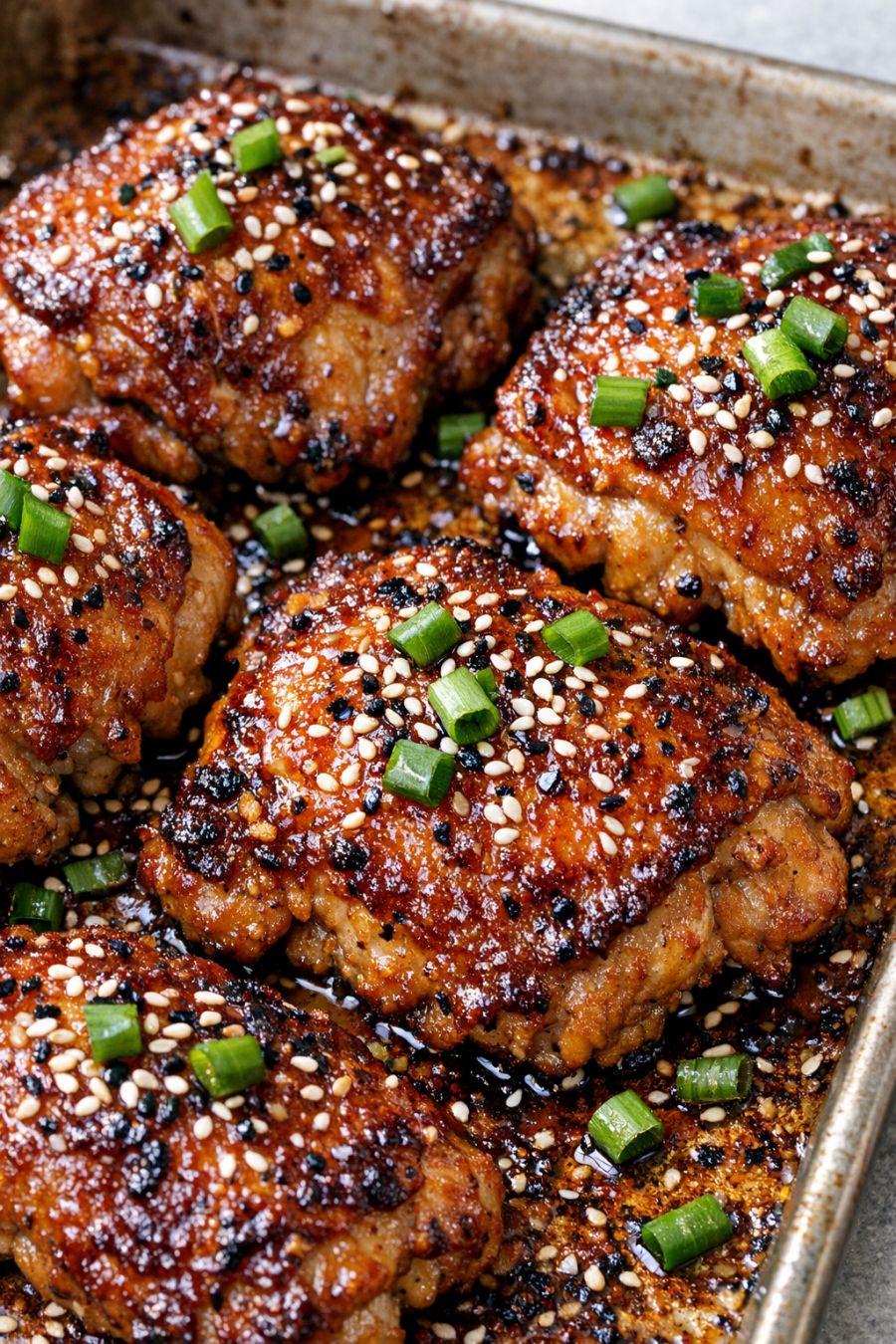
This oven-baked hot honey gochujang chicken is my kind of weeknight magic: you stir together one glossy, spicy-sweet lacquer, brush it over a pan of chicken thighs, and let the oven do the rest. The idea is as simple as Sunday pot roast, but the flavors lean Korean pantry—gochujang, soy, rice vinegar, toasted sesame oil—folded into familiar honey and garlic. It reminds me of the first time I swapped ketchup for chili sauce in my old meatloaf recipe: same comfort, new little spark. This is a craveable, absurdly satisfying sheet pan supper that feels special but fits right into a practical, everyday Midwestern kitchen.
Serve these lacquered chicken thighs with plain steamed white rice or buttered egg noodles to soak up all the sticky, caramelized sauce on the pan. A simple side of roasted or steamed vegetables—green beans, broccoli, or carrots—keeps it grounded and homey, while a crisp cabbage slaw with a light vinaigrette adds a nice crunch alongside the rich, glossy meat. If you like, sprinkle a few sesame seeds and sliced green onions over the chicken right in the pan and set it in the middle of the table, just like a family-style roast, with a jar of extra honey or a small dish of gochujang for folks who want more sweetness or heat.
Oven-Baked Hot Honey Gochujang Chicken ThighsServings: 4
Ingredients
2 1/2 to 3 pounds bone-in, skin-on chicken thighs (about 6 to 8 pieces)
1/3 cup gochujang (Korean red chili paste)
1/3 cup honey
3 tablespoons soy sauce (low-sodium if you have it)
2 tablespoons rice vinegar
1 tablespoon toasted sesame oil
3 cloves garlic, minced (about 1 tablespoon)
1 tablespoon neutral oil (such as canola or vegetable) for the pan
1/2 teaspoon kosher salt (for lightly seasoning the chicken)
1/4 teaspoon freshly ground black pepper
2 green onions, thinly sliced (optional, for serving)
1 teaspoon toasted sesame seeds (optional, for serving)
Directions
Preheat your oven to 400°F (200°C). Lightly oil a rimmed baking sheet with the neutral oil, making sure to coat the bottom so the chicken doesn’t stick as it bakes.
Pat the chicken thighs dry with paper towels. This helps the skin brown and the lacquer cling better. Arrange the thighs on the prepared rimmed baking sheet, skin side up, leaving a little space between each piece.
Sprinkle the chicken lightly with the kosher salt and black pepper. You don’t need much because the lacquer has plenty of flavor built in.
In a medium bowl, whisk together the gochujang, honey, soy sauce, rice vinegar, toasted sesame oil, and minced garlic until the mixture is smooth, glossy, and well combined. This is your 1 spicy-sweet lacquer that will flavor everything.
Using a pastry brush or the back of a spoon, generously brush the spicy-sweet lacquer over the tops and sides of the raw chicken thighs right on the rimmed baking sheet. Make sure every piece is well coated, but keep most of the sauce on top so it can bake into a sticky glaze rather than burn on the pan.
Slide the baking sheet into the preheated oven and bake for 20 minutes. Carefully pull the pan out and, using the same brush, baste the chicken with any lacquer and juices that have collected on the pan.
Return the pan to the oven and continue baking for another 15 to 20 minutes, or until the chicken is cooked through (an instant-read thermometer should read 175°F to 185°F in the thickest part) and the lacquer is bubbling, sticky, and slightly caramelized around the edges.
If you’d like deeper color and a bit more char on the skin, switch the oven to broil for the last 2 to 3 minutes, watching closely so the honey in the lacquer doesn’t burn.
Remove the baking sheet from the oven and let the chicken rest on the pan for about 5 minutes so the juices settle and the glaze thickens slightly. Sprinkle with sliced green onions and toasted sesame seeds, if using, and serve straight from the rimmed baking sheet with the sticky pan juices spooned over the top.
Variations & Tips
If boneless, skinless chicken thighs are what you have, use them and simply shorten the bake time to about 20 to 25 minutes total, checking for doneness at 165°F; they won’t get quite as crispy but will still soak up the lacquer beautifully. For a milder version, reduce the gochujang to 1/4 cup and add an extra tablespoon of honey so the sauce leans more sweet than spicy. If you prefer more tang, stir in an extra teaspoon or two of rice vinegar or finish the baked chicken with a squeeze of fresh lime. You can tuck sturdy vegetables—like halved baby potatoes or thick carrot coins—around the chicken on the same rimmed baking sheet; just toss them with a little oil, salt, and pepper first and know they’ll pick up some of the spicy-sweet flavor as they roast. Leftovers are wonderful sliced cold over a green salad or tucked into a soft roll with a swipe of mayonnaise and a handful of shredded cabbage. The lacquer itself can be made ahead and kept in the refrigerator for up to 3 days; stir well before brushing it over the chicken so the honey and gochujang are fully blended.