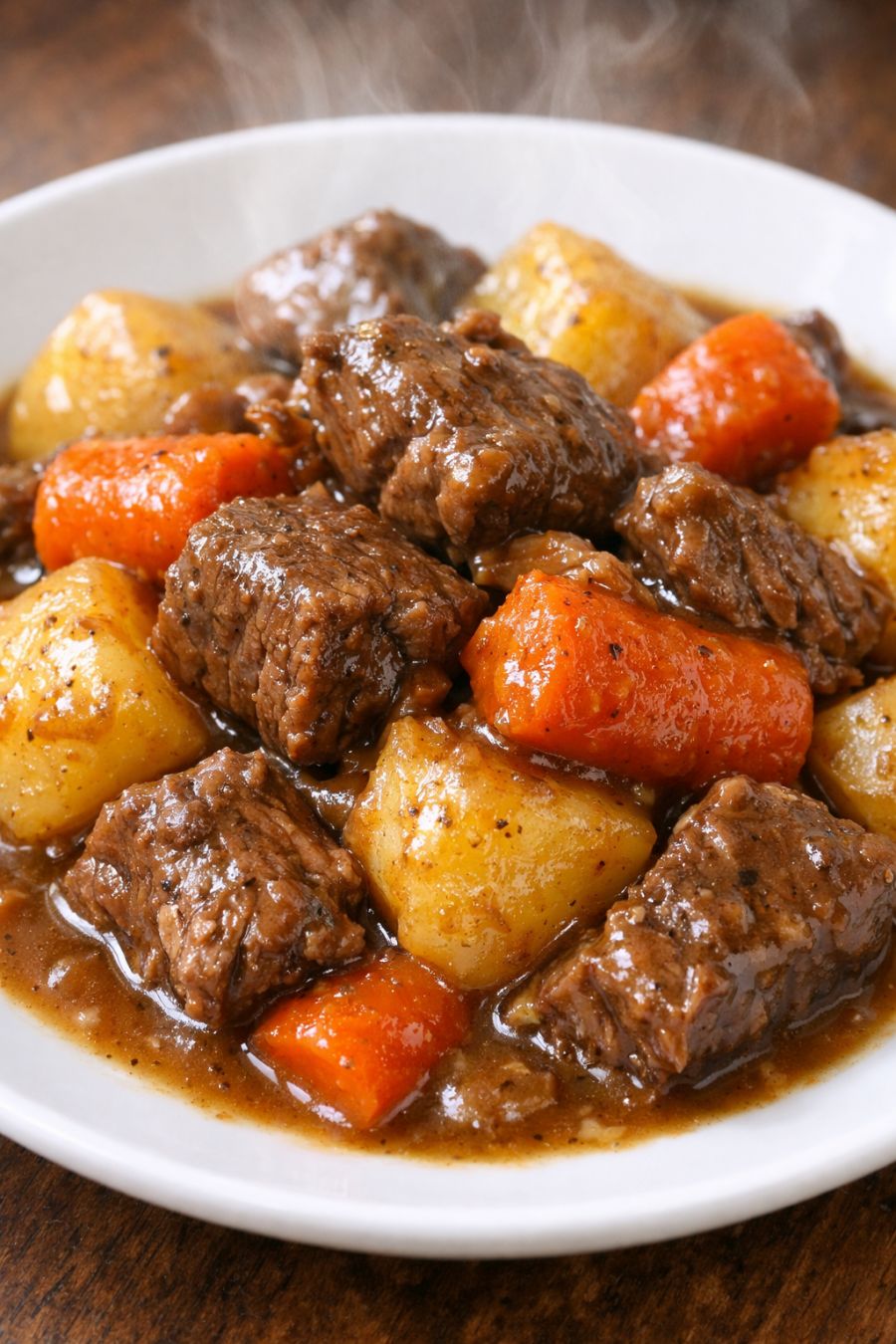
This slow cooker 5-ingredient Irish beef stew is the kind of stick-to-your-ribs comfort food my dad calls “a hug in a bowl.” It reminds me of the hearty stews farm families leaned on during long Midwestern winters—simple ingredients, long gentle cooking, and a gravy so rich it clings to every bite. With just beef, potatoes, carrots, onion soup mix, and stout beer, you get a thick, glossy brown sauce and fall-apart tender meat, all with about 10 minutes of hands-on time. It’s the kind of recipe you start in the morning and forget about until the house smells like Sunday supper at your grandparents’.
Serve this stew ladled into warm shallow bowls or onto plates so that thick gravy can spread over everything. A slice of crusty bread or a pan of warm dinner rolls is perfect for soaking up every bit of sauce. A simple green salad with a tangy vinaigrette helps cut through the richness, and if you like, a side of buttered peas or green beans adds color and comfort. For a true Irish nod, you can also spoon the stew over a small scoop of mashed potatoes, though it’s hearty enough to stand on its own.
Slow Cooker 5-Ingredient Irish Beef StewServings: 6
Ingredients
2 1/2 pounds beef stew meat, cut into large chunks
1 1/2 pounds yellow potatoes, cut into large chunks
4 large carrots, peeled and cut into thick rounds
1 (1-ounce) packet dry onion soup mix
1 1/2 cups Irish stout beer (such as Guinness)
Directions
Layer the potatoes in the bottom of a 5- to 6-quart slow cooker, spreading them out in an even layer so they form a bed for the meat.
Scatter the carrot pieces evenly over the potatoes. This keeps the vegetables tucked in the gravy and helps them cook up soft and tender.
Place the beef stew meat on top of the vegetables in a single, fairly even layer. Don’t worry if some pieces overlap; just avoid packing them too tightly.
Sprinkle the dry onion soup mix evenly over the beef and vegetables. Try to cover as much surface area as you can so the seasoning can melt down into the juices as it cooks.
Slowly pour the stout beer over everything, aiming around the edges and over the top so the dry mix begins to dissolve. The liquid should come about halfway up the beef and vegetables; do not stir. Leaving it layered like this helps the gravy thicken and keeps the meat nestled in flavor.
Cover the slow cooker with the lid and cook on LOW for 8 to 9 hours, or on HIGH for 4 to 5 hours, until the beef is very tender and the potatoes and carrots are soft when pierced with a fork.
Once cooked, gently stir the stew from the bottom to bring the potatoes and carrots up into the gravy. As you stir, the starch from the potatoes will naturally thicken the sauce into a rich, glossy gravy that coats every piece of meat and vegetable.
Taste the gravy and add a little salt and black pepper if needed, keeping in mind that the onion soup mix already adds saltiness. If the gravy is a bit thin for your liking, let the stew sit uncovered on WARM or LOW for 10 to 15 minutes, stirring once or twice, until it thickens further.
Serve the stew hot, spooned onto plates or into shallow bowls, making sure every serving gets plenty of that thick, rich brown gravy over the beef, carrots, and potatoes.
Variations & Tips
For a deeper, more old-fashioned flavor, you can brown the beef in a bit of oil in a hot skillet before adding it to the slow cooker, scraping any browned bits into the pot along with the meat. If you prefer not to cook with alcohol, replace the stout with an equal amount of beef broth plus 1 tablespoon Worcestershire sauce; the gravy will still be rich and comforting. To make the stew even heartier, you can add 1 cup of sliced mushrooms on top of the carrots (this adds an extra ingredient but keeps the spirit of the dish). If your family likes a thicker, almost pot-roast-style gravy, mash a few of the potatoes right in the slow cooker at the end of cooking or let the stew sit uncovered on WARM until the sauce tightens up. For a slightly sweeter note, use baby carrots instead of whole carrots. Leftovers reheat beautifully on the stove over low heat, and the gravy often tastes even richer the next day; if it becomes too thick, loosen it with a splash of water or broth while warming.