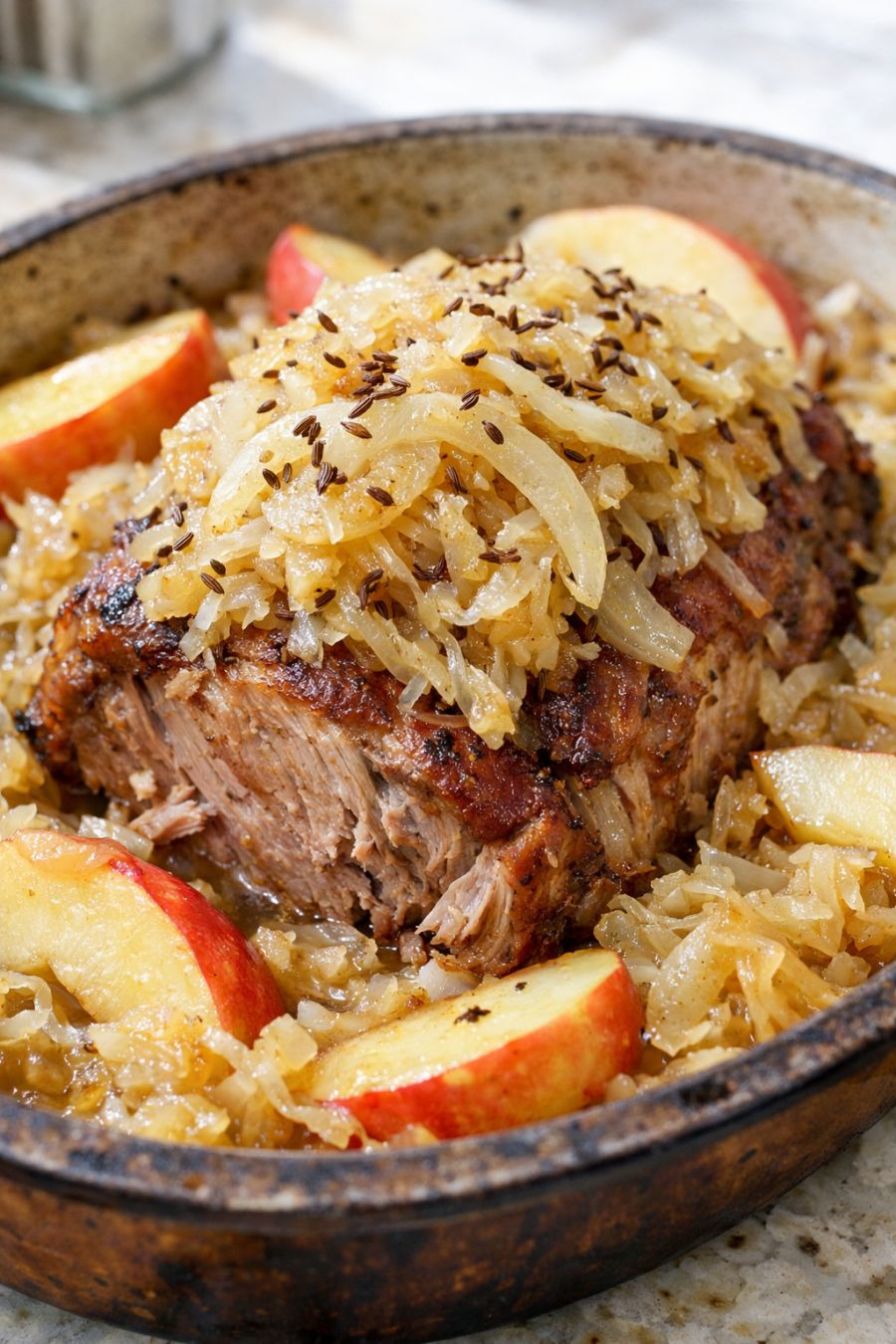
This slow cooker 5-ingredient pork and sauerkraut is the kind of set-it-and-forget-it comfort food that feels right at home in a Midwestern kitchen. It leans into the old German and Eastern European tradition of pairing pork with tangy fermented cabbage, but streamlines the process with jarred sauerkraut and a handful of pantry staples. You literally spoon sauerkraut and four simple ingredients over a pork roast in your slow cooker, walk away, and come back to tender, pull-apart meat in a richly flavored, slightly tangy broth. It’s practical, budget-friendly, and perfect for busy weekdays or cozy weekends when you want something deeply satisfying with almost no effort.
Serve the pork and sauerkraut piled over buttery mashed potatoes or simple boiled baby potatoes so they can soak up the juices. A side of rye bread or crusty baguette is great for sopping up the tangy-savory broth. For a little freshness and crunch, add a green salad with a mustardy vinaigrette or simple steamed green beans. If you enjoy a drink pairing, a crisp lager or a dry Riesling echoes the Central European roots of the dish and stands up nicely to the sauerkraut’s acidity.
Slow Cooker 5-Ingredient Pork and SauerkrautServings: 6
Ingredients
3 to 3 1/2 pounds boneless pork shoulder or pork butt roast, trimmed of excess hard fat
1 (24- to 32-ounce) jar sauerkraut, with its juices
1 large yellow onion, thinly sliced
1 cup unsweetened apple juice or apple cider
1 tablespoon Dijon or whole-grain mustard
1 teaspoon kosher salt
1/2 teaspoon freshly ground black pepper
Directions
Place the pork roast in the bottom of a 5- to 7-quart slow cooker, fat side up if there is a fat cap. Sprinkle the top and sides of the pork evenly with the kosher salt and black pepper.
Scatter the sliced onion evenly over and around the pork roast in the slow cooker, letting some slices fall down the sides so they mingle with the juices as they cook.
In a medium bowl or large measuring cup, whisk together the apple juice (or apple cider) and Dijon or whole-grain mustard until the mustard is fully dissolved. This simple mixture will help balance the sauerkraut’s acidity and create a flavorful cooking liquid.
Open the jar of sauerkraut and, without draining, use a spoon to scoop the sauerkraut and its brine directly over the pork roast, covering the top and letting some fall around the sides. Pour any remaining brine from the jar into the slow cooker as well.
Spoon the apple juice–mustard mixture evenly over the sauerkraut and pork, making sure the liquid settles down around the roast. You don’t need the meat to be fully submerged; the slow cooker will create plenty of steam and moisture.
Cover the slow cooker with the lid and cook on LOW for 8 to 10 hours, or on HIGH for 4 to 5 hours, until the pork is very tender and easily pulls apart with a fork. Slow, gentle heat helps the sauerkraut mellow and the flavors meld, so the longer low setting is ideal if you have the time.
Once cooked, use two forks to gently pull the pork into large chunks or shreds directly in the slow cooker, mixing it lightly with the sauerkraut and onions. Taste the mixture and adjust seasoning with a bit more salt or pepper if needed.
Serve the pork and sauerkraut hot, spooning generous portions of both meat and sauerkraut, along with some of the cooking juices, over your choice of potatoes, noodles, or bread.
Variations & Tips
For a slightly sweeter, more rounded flavor, stir 1 to 2 tablespoons of brown sugar or maple syrup into the apple juice–mustard mixture before spooning it over the pork. If you like caraway’s classic Central European flavor, add 1 teaspoon caraway seeds along with the onions. To make this dish a bit leaner, use a pork loin roast instead of shoulder, but be sure to cook on LOW and check for doneness earlier, as loin dries out more quickly than shoulder. For extra heartiness, tuck 3 to 4 peeled and chunked potatoes around the pork before adding the sauerkraut, keeping in mind they will soak up some of the salt and tang. If you prefer a stronger sauerkraut punch, add an additional half jar during the last hour of cooking so some of the cabbage stays a bit firmer and brighter. Leftovers reheat beautifully on the stovetop over low heat, and they’re excellent tucked into sandwiches on toasted rye with a swipe of mustard.