Scatter frozen green peas over raw dry shell pasta, paired with these 3 ingredients, into a ceramic baking dish for a creamy dinner that’s the one e
This oven-baked spring pea pasta is the kind of weeknight recipe I lean on when I want something cozy, creamy, and hands-off. The method is wonderfully simple: you scatter frozen green peas over raw dry shell pasta in a ceramic baking dish, add just three more pantry-friendly ingredients, and let the oven do the work. It’s a practical, modern twist on baked pasta casseroles that Midwestern home cooks have been making for generations—no pot of boiling water, no separate sauce pan.
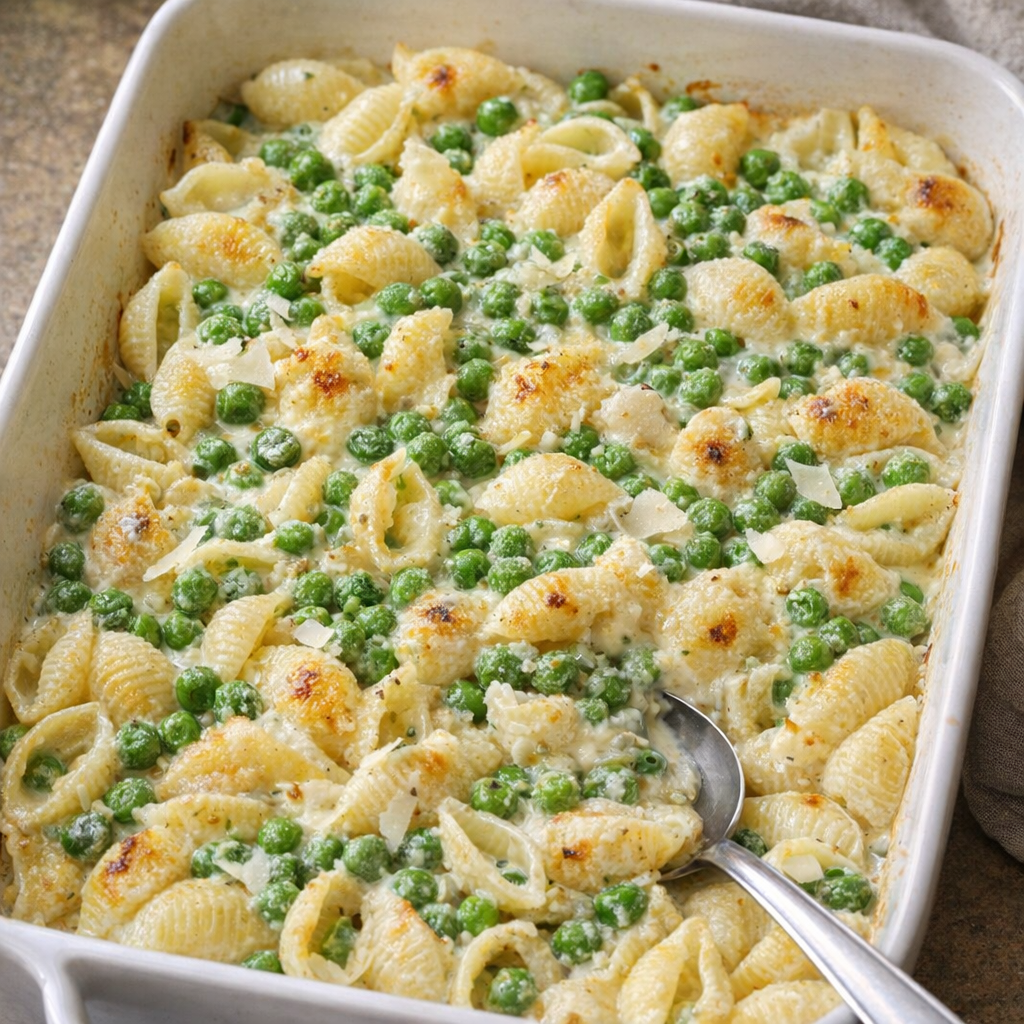
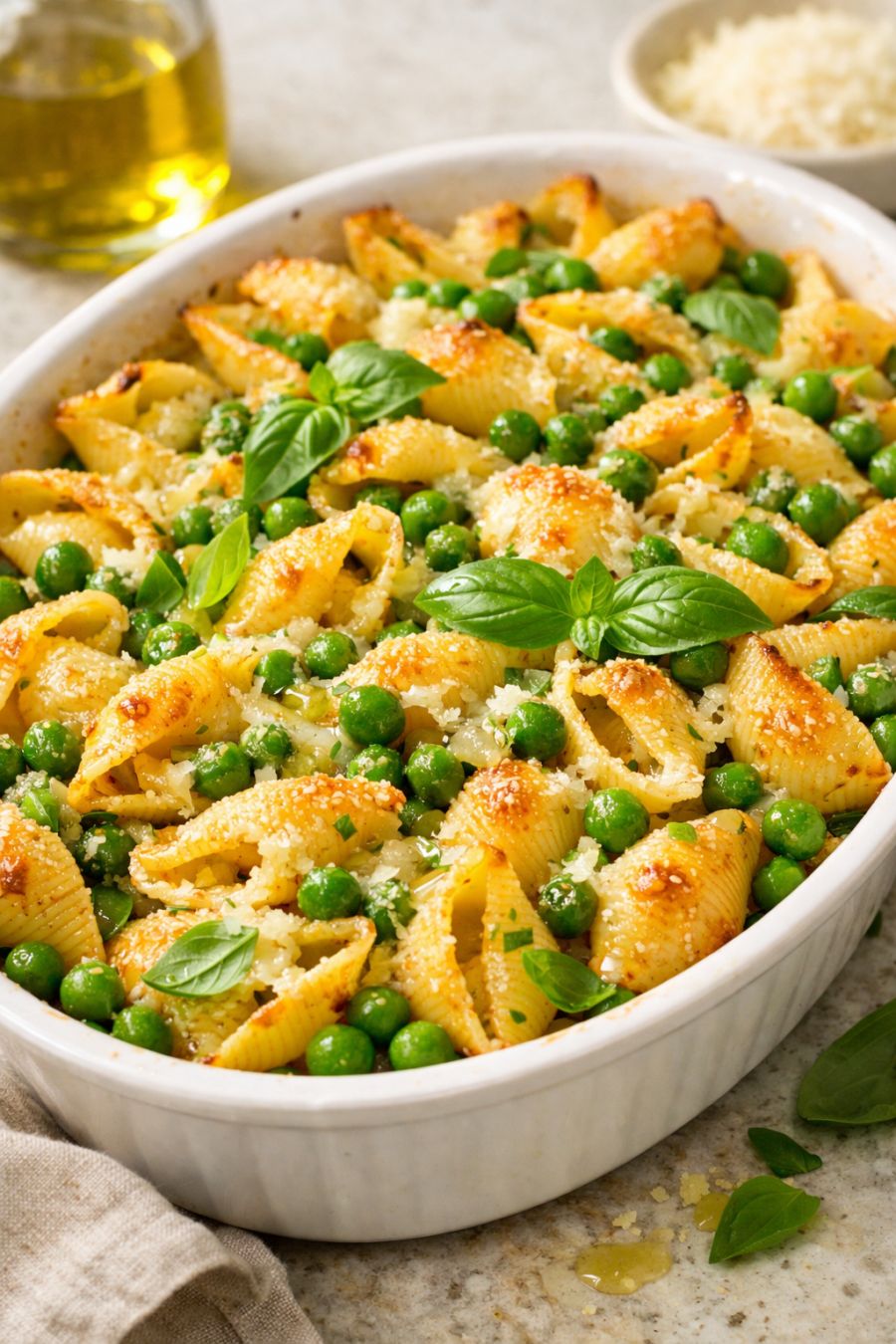
Everything bakes together into a creamy, lightly sauced dish where the peas stay sweet and bright, the shells turn tender, and the top gets just a bit golden. It’s the one-pan dinner people inevitably ask for the recipe for, because it feels special but is almost embarrassingly easy.
Baked pea shell pasta in a ceramic dish on a kitchen counter
Serve this creamy spring pea pasta straight from the ceramic baking dish with a simple green salad dressed in lemon and olive oil to echo the brightness of the peas. Warm crusty bread or garlic toast is great for scooping up the sauce from the bottom of the dish. A crisp white wine like Pinot Grigio or Sauvignon Blanc pairs nicely, as does sparkling water with a squeeze of lemon.
If you’d like to add protein on the side, grilled or roasted chicken, seared salmon, or even sliced chicken sausage work well without competing with the delicate sweetness of the peas.
Oven-Baked Spring Pea Shell Pasta
Servings: 4
Ingredients
8 ounces dry medium pasta shells 1 1/2 cups frozen green peas (do not thaw) 2 cups low-sodium vegetable or chicken broth 1 cup heavy cream 1 cup finely grated Parmesan cheese, plus a little extra for serving 1 teaspoon kosher salt (or to taste) 1/2 teaspoon freshly ground black pepper 1 tablespoon olive oil or softened butter for greasing the dish (optional)
Directions
Preheat your oven to 375°F (190°C). Lightly grease a medium ceramic baking dish (about 2-quart capacity) with olive oil or butter to help prevent sticking and make cleanup easier.
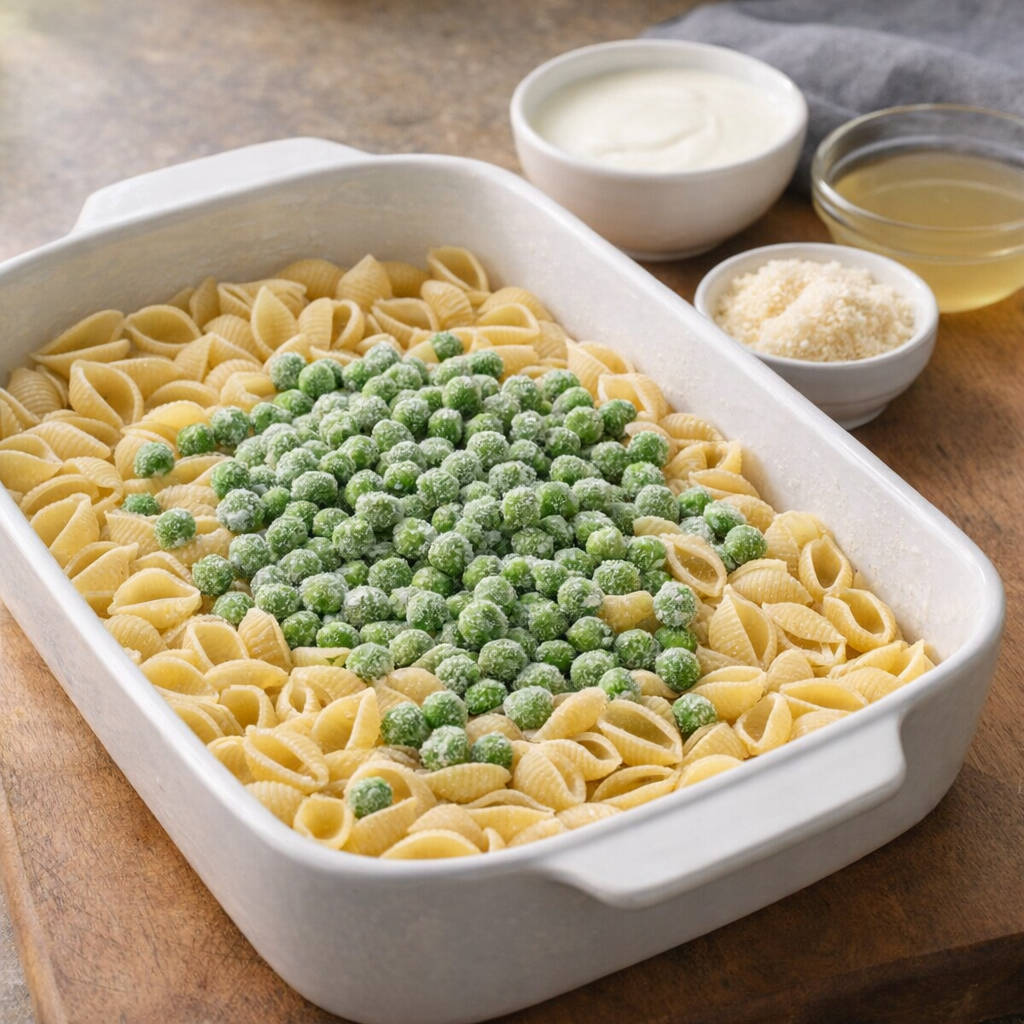
Greased ceramic baking dish with pasta shells and peas ready for assembly
Pour the dry pasta shells into the ceramic baking dish and spread them into an even layer. The shells should mostly cover the bottom of the dish in a single, slightly overlapping layer.
Scatter the frozen green peas evenly over the dry pasta shells. This layering helps the peas steam and stay tender while the pasta absorbs the liquid.
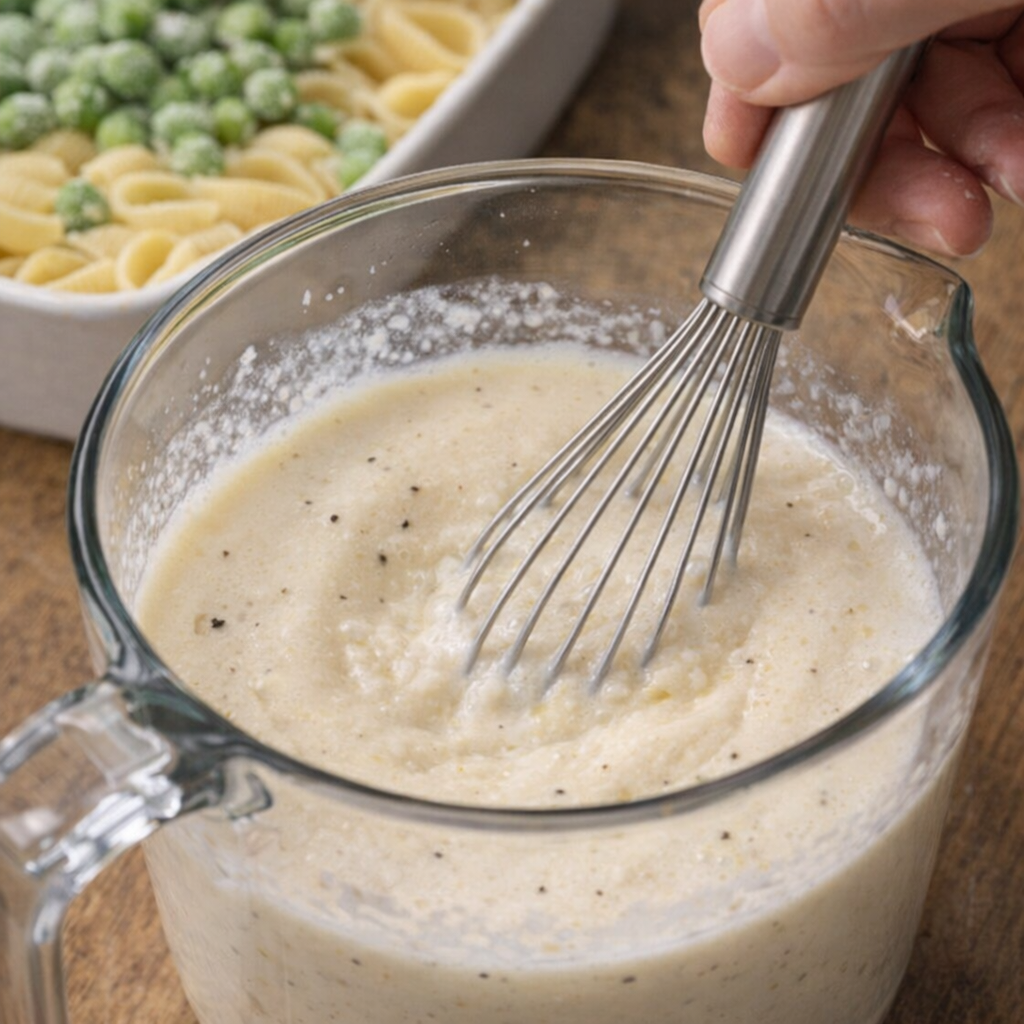
In a mixing bowl or large measuring cup, whisk together the broth, heavy cream, grated Parmesan, salt, and black pepper until the cheese is mostly dissolved and the mixture looks smooth. Taste the liquid and adjust the seasoning if needed, keeping in mind the Parmesan will add saltiness as it bakes.
Cream broth and Parmesan mixture being whisked in a glass measuring cup
Slowly pour the cream-and-broth mixture over the pasta and peas in the ceramic baking dish, making sure the liquid seeps down through the shells. Gently nudge any exposed pasta down so most of it is at least partially submerged; a few pieces peeking out are fine and will brown slightly.
Cover the baking dish tightly with foil to trap in steam, which helps the shells cook evenly. Place the dish on the middle rack of the preheated oven.
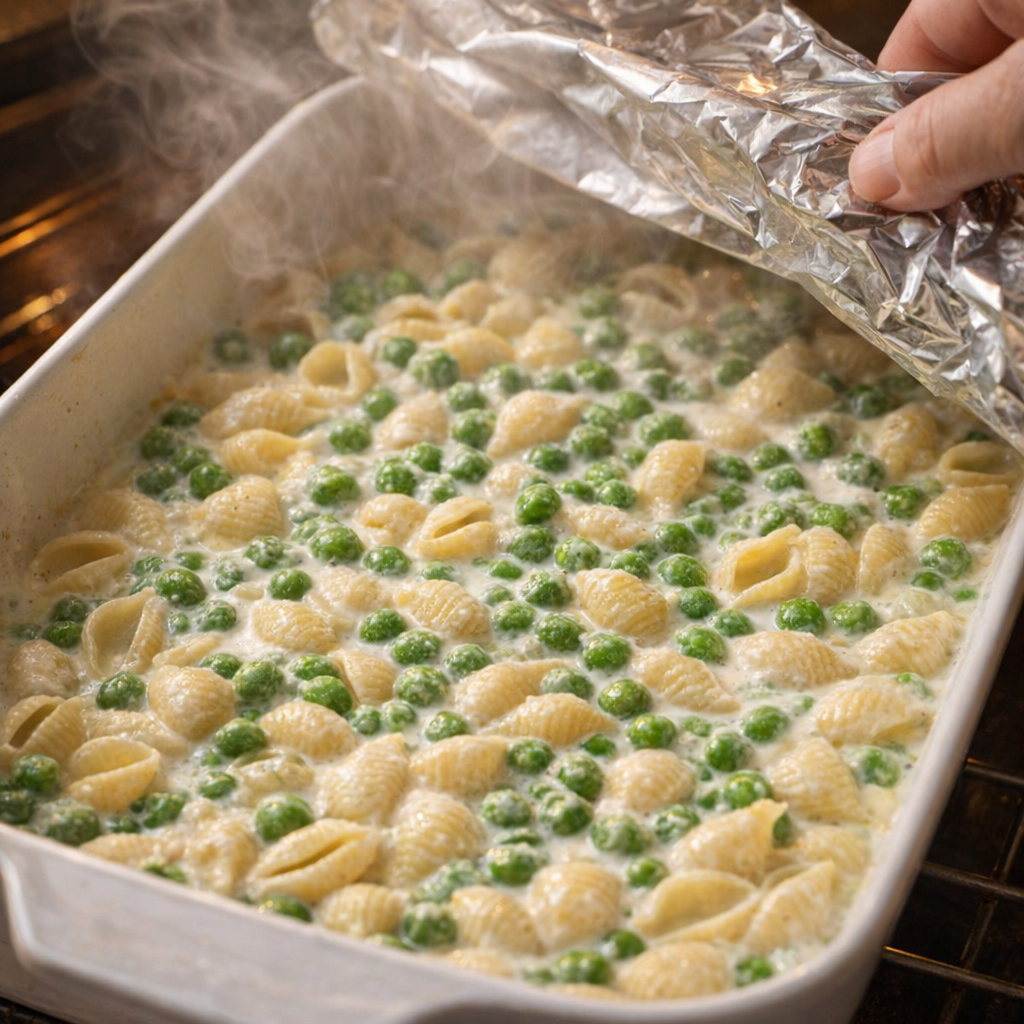
Bake, covered, for 30 minutes. Carefully remove the foil (watch for steam) and check the pasta by stirring gently from the bottom. The shells should be mostly tender but may still have a slight bite, and the sauce will look loose at this stage.
Foil lifted from baked pasta revealing steaming shells and bright peas
Return the dish to the oven, uncovered, and bake for another 10–15 minutes, stirring once halfway through if you like, until the pasta is fully tender and the sauce has thickened into a creamy coating. The top should have a few golden spots, and the peas will be bright green.
Remove the dish from the oven and let the pasta rest for about 5 minutes. The sauce will continue to thicken slightly as it cools. If it looks too thick, you can loosen it with a splash of warm broth or hot water and stir gently.
Taste and adjust seasoning with a bit more salt and pepper if needed. Sprinkle with a little extra grated Parmesan before serving, and bring the dish straight to the table so everyone can scoop out their own portion.
Variations & Tips
For a lighter version, you can swap half of the heavy cream for whole milk; the sauce will be a bit thinner but still pleasantly creamy. If you prefer a sharper, more complex flavor, replace part of the Parmesan with Pecorino Romano, reducing added salt to compensate for the extra saltiness of the cheese.
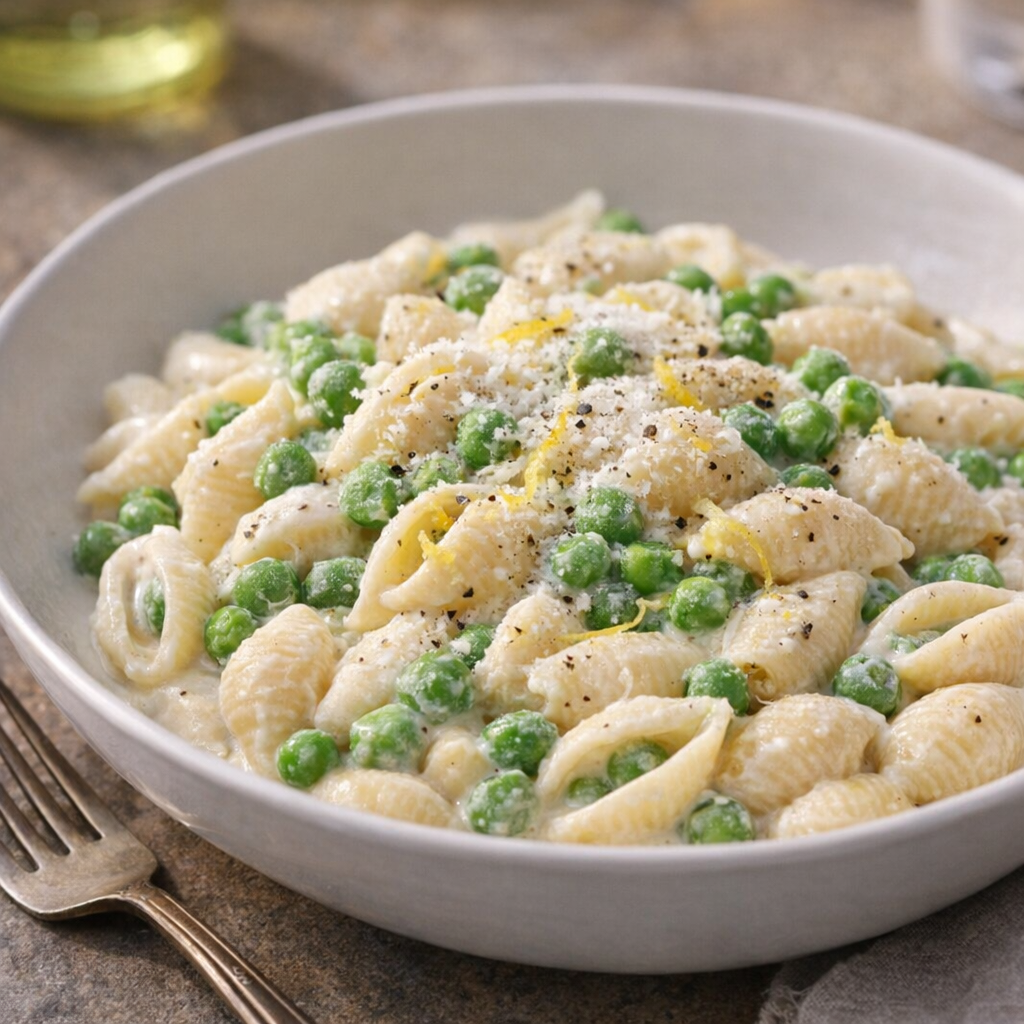
Serving of creamy pea pasta topped with Parmesan in a shallow bowl
To add protein directly into the bake, tuck in 1–1 1/2 cups of shredded rotisserie chicken or diced cooked ham over the pasta before scattering the peas, keeping the overall liquid amount the same. For a vegetarian boost, stir in a handful of baby spinach or chopped kale during the last 10 minutes of baking so it wilts into the sauce.
You can also add a crunchy topping by sprinkling the surface with a mix of breadcrumbs and a bit of Parmesan during the final 10 minutes of baking. If you like a hint of freshness, finish the dish with a squeeze of lemon juice or a spoonful of lemon zest just before serving to brighten the creamy sauce without changing the core method of scattering frozen peas over raw shells in a ceramic dish and baking everything together.