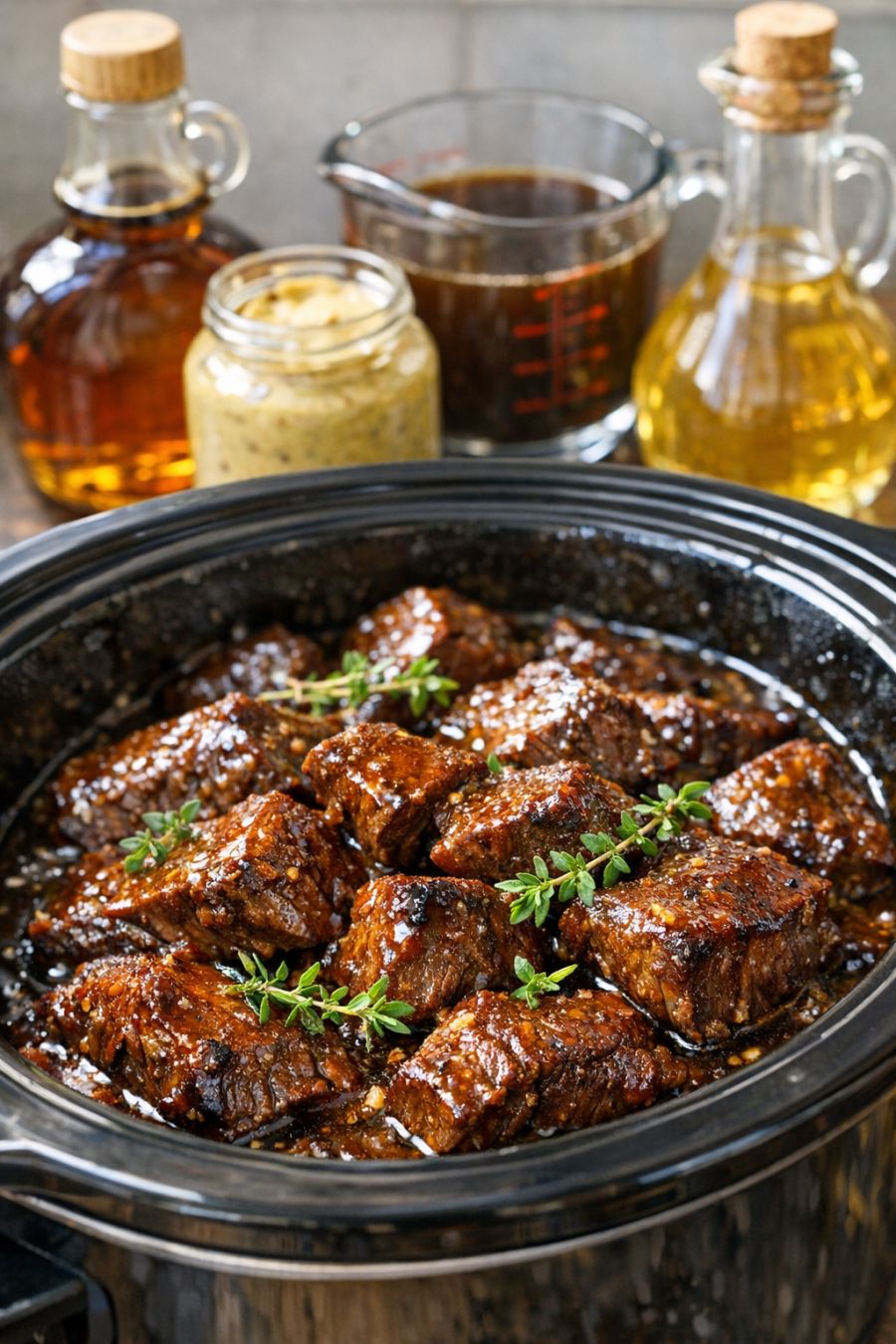
This slow cooker maple Dijon beef is the kind of weeknight supper that reminds me of those long Midwestern winters when you needed something hearty, hands-off, and comforting. You simply stir together one flavorful mixture—pure maple syrup, Dijon mustard, beef broth, apple cider vinegar, and fresh thyme—and pour it over a raw beef top blade roast in your slow cooker. By the time you’re ready for supper, the meat is tender, the sauce is rich and tangy-sweet, and the whole house smells like someone’s been tending the stove all day, even though you barely lifted a finger.
I like to spoon this maple Dijon beef over a bed of buttery mashed potatoes so all that lovely sauce can soak right in. Egg noodles or simple buttered rice work nicely too. Add a vegetable that feels down-home and familiar—steamed green beans, roasted carrots, or a simple tossed salad with a light vinaigrette. Warm dinner rolls or a slice of crusty bread are perfect for mopping up the extra sauce at the bottom of the plate.
Slow Cooker Maple Dijon Beef RoastServings: 6
Ingredients
3 to 3 1/2 pounds beef top blade roast (also called flat iron roast or top blade chuck roast)
1 teaspoon kosher salt
1/2 teaspoon black pepper
1/2 cup pure maple syrup
1/3 cup Dijon mustard
1 cup beef broth (low sodium if possible)
2 tablespoons apple cider vinegar
2 teaspoons fresh thyme leaves, chopped (plus extra for garnish if desired)
2 cloves garlic, minced
1 small onion, thinly sliced
1 tablespoon cornstarch (optional, for thickening)
1 tablespoon cold water (optional, for thickening)
Directions
Pat the beef top blade roast dry with paper towels. Sprinkle all over with the kosher salt and black pepper, pressing the seasoning gently into the meat. Lay the roast in the bottom of a 5- to 7-quart slow cooker.
Scatter the thinly sliced onion and minced garlic around and on top of the beef roast in the slow cooker.
In a medium bowl or large measuring cup, whisk together the pure maple syrup, Dijon mustard, beef broth, apple cider vinegar, and chopped fresh thyme until the mixture is smooth and well combined. This is your one simple sauce mixture.
Carefully pour this one maple Dijon mixture evenly over the raw beef roast in the slow cooker, making sure the top of the meat is well coated and the onions are mostly submerged.
Cover the slow cooker with the lid. Cook on LOW for 8 to 9 hours, or on HIGH for 4 to 5 hours, until the beef is very tender and shreds easily with a fork.
When the beef is done, transfer the roast to a cutting board and tent loosely with foil to rest for about 10 minutes. Skim any excess fat from the surface of the cooking liquid in the slow cooker.
If you’d like a thicker sauce, in a small bowl stir together the cornstarch and cold water until smooth. Turn the slow cooker to HIGH and whisk the cornstarch slurry into the hot cooking liquid. Cover and cook for 10 to 15 minutes, or until slightly thickened, stirring once or twice.
Slice or shred the beef top blade roast and return it to the slow cooker, gently tossing it in the warm maple Dijon sauce. Taste and adjust seasoning with a pinch more salt or pepper if needed.
Serve the beef hot, spooning extra sauce and onions over the top. Garnish with a few extra fresh thyme leaves if you like.
Variations & Tips
If beef top blade roast isn’t available, a well-marbled chuck roast will behave similarly in the slow cooker, staying moist and shreddable. For a slightly less sweet dish, reduce the maple syrup to 1/3 cup and add an extra tablespoon of apple cider vinegar to keep the tang. You can also tuck a few carrots or halved baby potatoes around the roast before pouring on the mixture, turning this into more of a one-pot meal. For a creamier finish, stir in 2 to 3 tablespoons of heavy cream or sour cream after thickening the sauce, just before adding the sliced or shredded beef back in. If you prefer to brown the roast first, sear it in a hot skillet with a bit of oil for 3 to 4 minutes per side before placing it in the slow cooker; it adds a deeper, roasty flavor but isn’t strictly necessary. Leftovers reheat beautifully and can be piled on toasted buns with a little extra Dijon for easy sandwiches the next day.