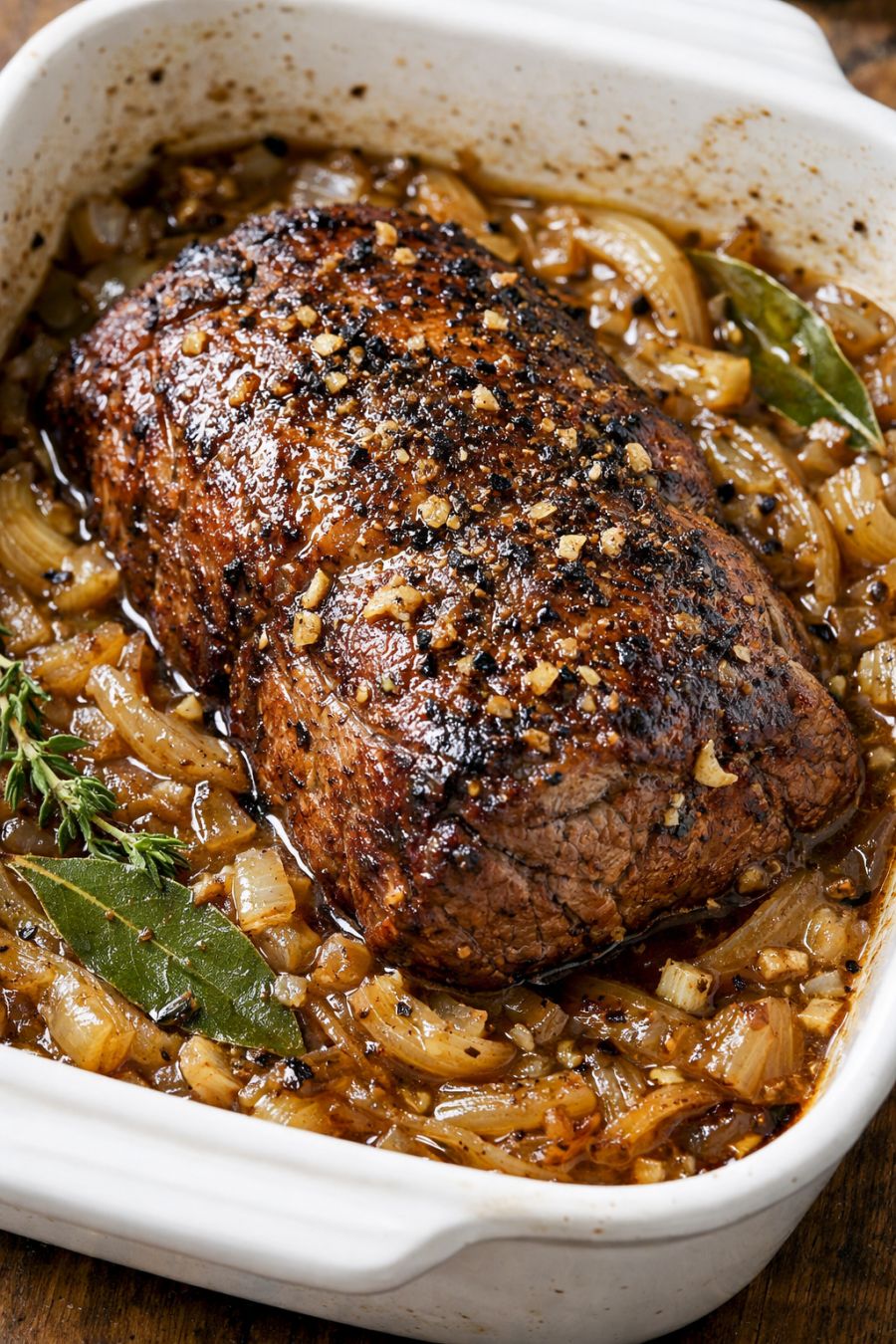
This four-ingredient roast beef is the kind of weeknight recipe I lean on when I want something comforting with very little effort. We take a lean beef eye of round roast and let canned French onion soup do most of the heavy lifting, adding just two pantry staples—soy sauce and Worcestershire—to deepen the savory flavor. Everything gets poured right over the roast in a casserole dish and then baked low and slow until tender and sliceable. It’s a very Midwestern, no-fuss approach to a classic roast, with a bit of restaurant-style richness thanks to the soup base.
Serve this roast beef sliced thin with plenty of the oniony pan juices spooned over the top. It’s excellent alongside mashed potatoes, buttered egg noodles, or roasted root vegetables to soak up the sauce. A simple green salad or steamed green beans adds freshness, and crusty bread is always welcome for mopping up the extra French onion gravy. Leftovers make fantastic sandwiches on crusty rolls with a swipe of horseradish or Dijon.
4-Ingredient French Onion Roast BeefServings: 6
Ingredients
1 (2 1/2 to 3 pound) beef eye of round roast, trimmed
1 (10.5 to 14.5 ounce) can condensed French onion soup (or regular canned French onion soup)
2 tablespoons soy sauce
1 tablespoon Worcestershire sauce
Directions
Preheat your oven to 325°F (165°C). Place a medium to large casserole dish (about 9x13 inches or similar) on the counter.
Pat the beef eye of round roast dry with paper towels. This helps it brown lightly in the oven and keeps the texture pleasant.
Place the roast in the center of the casserole dish, fat side up if there is a fat cap. This allows the fat to baste the meat as it cooks.
In a small bowl or measuring cup, combine the canned French onion soup, soy sauce, and Worcestershire sauce. Stir well to blend so the salty, savory flavors are evenly distributed.
Pour the French onion soup mixture evenly over the beef eye of round roast, letting it pool around the sides in the casserole dish. The roast should be surrounded by liquid but not fully submerged.
Cover the casserole dish tightly with a lid or a double layer of aluminum foil to trap moisture. This gentle, covered cooking helps keep the lean eye of round from drying out.
Transfer the covered dish to the preheated oven and bake for 1 1/2 to 2 1/2 hours, depending on the size of your roast and desired doneness. Begin checking around 1 1/2 hours. For a tender, sliceable roast, aim for an internal temperature of about 135°F for medium-rare or 145°F for medium, measured with an instant-read thermometer inserted into the thickest part of the roast.
Once the roast reaches your preferred doneness, remove the casserole dish from the oven and carefully uncover it, watching for steam. Transfer the roast to a cutting board and tent loosely with foil. Let it rest for 10 to 15 minutes so the juices redistribute.
While the roast rests, skim any excess fat from the surface of the pan juices in the casserole dish, if desired. Taste the juices; they should be rich and oniony. If you’d like them slightly thicker, you can simmer them briefly in a small saucepan on the stovetop, but they are delicious just as they are.
Slice the rested eye of round roast thinly across the grain to keep each bite tender. Arrange the slices on a platter and spoon some of the warm French onion pan juices over the top. Serve the remaining juices at the table for extra flavor.
Variations & Tips
For a heartier, one-pan meal, tuck peeled carrot chunks and halved small potatoes around the roast in the casserole dish before pouring the French onion soup mixture over the top; they’ll braise in the same savory liquid. If you prefer a more herb-forward profile, add 1 teaspoon dried thyme or 1 teaspoon dried rosemary to the soup mixture before pouring. To turn the pan juices into a thicker gravy, whisk 1 tablespoon cornstarch with 2 tablespoons cold water, then stir this slurry into the hot juices in a saucepan and simmer until slightly thickened. For a bit of heat, add 1/4 teaspoon black pepper or a pinch of red pepper flakes to the soup mixture. Leftovers can be cooled in their juices and refrigerated, then gently reheated in a covered dish with a splash of water or broth to keep the meat moist. If you don’t have soy sauce, you can substitute tamari or liquid aminos, adjusting salt to taste; if Worcestershire is unavailable, a splash of balsamic vinegar plus a pinch of sugar can mimic some of its tangy depth.