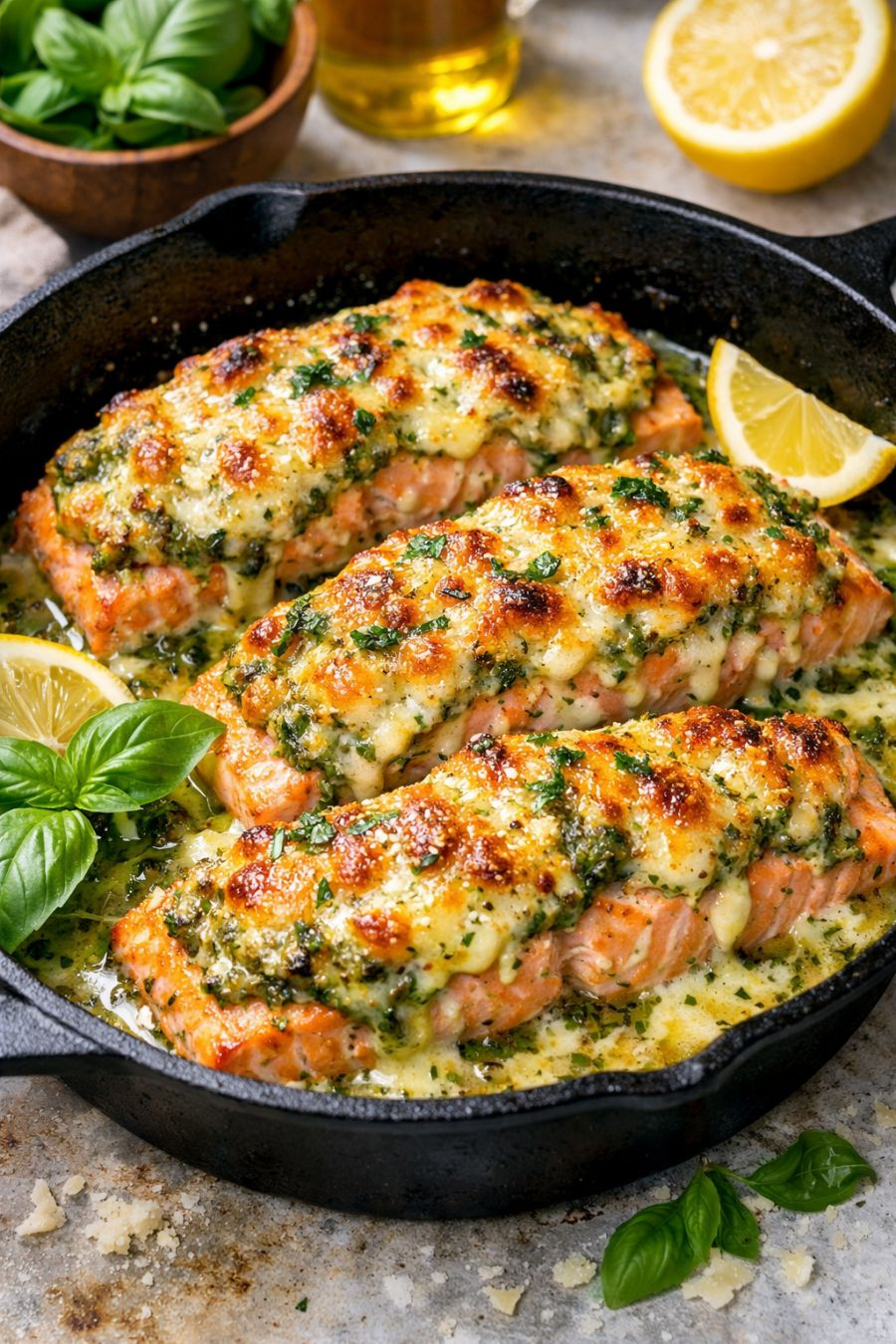
This low carb creamy pesto salmon is one of those weeknight dinners that looks and tastes like you put in a ton of effort, but it’s really just one herby mixture slathered over raw salmon and baked in a cast iron skillet. The sauce is a simple mash-up of basil pesto, mayonnaise, grated Parmesan, and a squeeze of lemon juice that bakes into a rich, tangy crust over the fish. I started making this on nights when I wanted something a little fancy but didn’t have the brain space for a long recipe, and it quickly became a regular in our rotation.
Serve this creamy pesto salmon straight from the cast iron skillet with something that soaks up the extra sauce, like roasted asparagus, sautéed green beans, or a simple side salad with a lemony vinaigrette to keep things low carb. If you’re cooking for a mixed crowd, add a small portion of buttered pasta, cauliflower rice, or roasted baby potatoes on the side. A crisp white wine like Sauvignon Blanc or a sparkling water with lemon pairs really nicely with the bright, herby flavors.
Creamy Pesto Cast Iron SalmonServings: 4
Ingredients
4 salmon fillets (about 5–6 oz each), skin-on or skinless
1/2 cup basil pesto (store-bought or homemade)
1/3 cup mayonnaise
1/4 cup finely grated Parmesan cheese
1 tablespoon fresh lemon juice
1/4 teaspoon garlic powder (optional)
1/4 teaspoon kosher salt, plus more to taste
1/8 teaspoon black pepper
1 teaspoon olive oil (for greasing the skillet)
Lemon wedges, for serving (optional)
Fresh basil or parsley, chopped, for garnish (optional)
Directions
Preheat your oven to 400°F (200°C). Place a 10- to 12-inch cast iron skillet on the middle rack while the oven heats so it gets nice and hot.
Pat the salmon fillets dry on all sides with paper towels. This helps the creamy topping stick and keeps the fish from steaming. Lightly season the flesh side of the salmon with a pinch of salt and black pepper. Set aside while you mix the topping.
In a small mixing bowl, stir together the basil pesto, mayonnaise, grated Parmesan, lemon juice, garlic powder (if using), 1/4 teaspoon kosher salt, and 1/8 teaspoon black pepper until you have a smooth, thick, herby mixture.
Carefully remove the hot cast iron skillet from the oven and place it on a heat-safe surface. Add 1 teaspoon olive oil and tilt the pan to lightly coat the bottom.
Arrange the raw salmon fillets in the hot skillet, skin-side down if they have skin, leaving a little space between each piece.
Using a spoon or spatula (or your clean hands if you prefer), slather the creamy pesto mixture generously over the top of each raw salmon fillet, spreading it all the way to the edges. The fillets should be fully covered in a thick layer, as shown in a close-up process shot of hands spreading the herby mixture over the salmon in the cast iron skillet.
Transfer the skillet back to the oven and bake for 12–15 minutes, or until the salmon flakes easily with a fork and the creamy pesto topping is bubbly and just starting to turn golden at the edges. Thicker fillets may need an extra 2–3 minutes.
If you like a more browned top, switch the oven to broil for 1–2 minutes at the end, watching closely so the topping doesn’t burn.
Remove the skillet from the oven and let the salmon rest for 3–5 minutes. Garnish with chopped fresh basil or parsley and serve with lemon wedges on the side for an extra squeeze of brightness.
Serve the salmon directly from the cast iron skillet, spooning any extra creamy pesto sauce from the pan over the fillets or your side vegetables.
Variations & Tips
To switch things up, you can swap the basil pesto for sun-dried tomato pesto or a spinach pesto for a slightly different flavor while keeping the same creamy, low carb concept. If you prefer a lighter sauce, replace half of the mayonnaise with plain Greek yogurt (just know it may separate slightly more in the oven, but it still tastes great). For extra crunch, sprinkle a tablespoon or two of finely crushed pork rinds or almond flour over the creamy topping before baking. If you don’t have a cast iron skillet, use any oven-safe skillet or a small baking dish and lightly grease it before adding the salmon. For meal prep, cook the salmon as directed, let it cool, then store it in airtight containers for up to 3 days; reheat gently in a 300°F oven or in a covered skillet over low heat so the fish doesn’t dry out. You can also make the herby mixture up to 2 days ahead and keep it in the fridge, then just slather it over the raw salmon right before baking on a busy night.