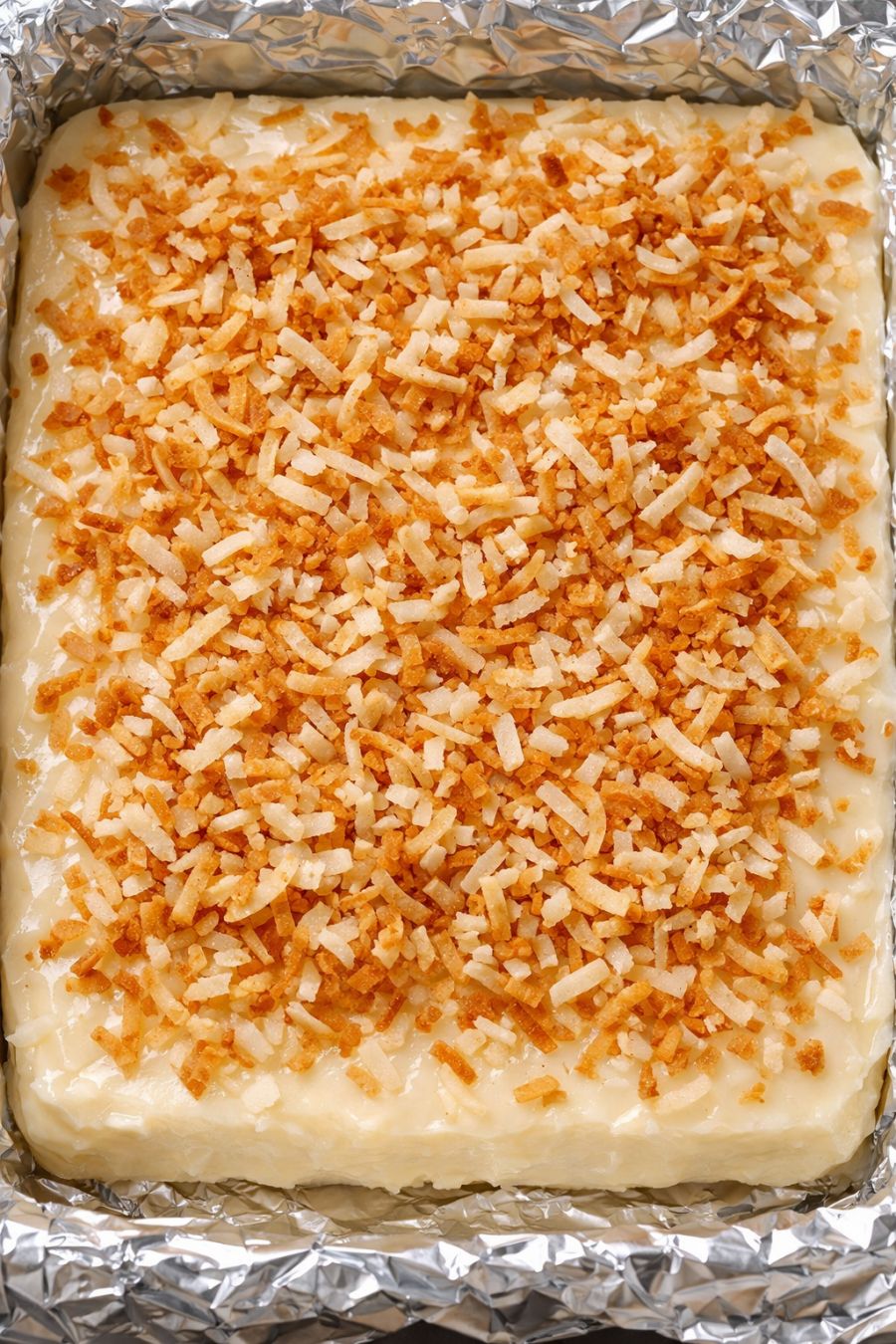
This slow cooker 3-ingredient toasted coconut fudge is the kind of creamy, rich dessert that quietly steals the show at a gathering. My aunt brought a pan of it to our spring get-together, and within minutes everyone was hovering over the dessert table, asking how something so silky and coconut-kissed could possibly be that simple. The secret is using the slow cooker as a gentle, hands-off water bath for white chocolate and sweetened condensed milk, then finishing with a generous layer of toasted coconut. It’s a modern shortcut version of old-fashioned fudge—no candy thermometer, no constant stirring—just three pantry-friendly ingredients and a bit of patience while it chills.
Cut the fudge into small, bite-sized squares and serve it slightly chilled so it holds its shape but still feels soft and creamy when you bite into it. It pairs beautifully with hot coffee, black tea, or a simple espresso after dinner. For a spring or summer spread, I like to set it alongside a bowl of fresh berries or sliced pineapple to balance the sweetness. On a dessert board, tuck the coconut fudge between salty nuts, dark chocolate pieces, and a few crisp butter cookies for contrast in texture and flavor.
Slow Cooker Toasted Coconut FudgeServings: 24 small squares
Ingredients
3 cups (about 18 oz / 510 g) good-quality white chocolate chips or chopped white chocolate
1 can (14 oz / 396 g) sweetened condensed milk
1 1/2 cups (about 4 oz / 115 g) sweetened shredded coconut, divided (1 cup for toasting on top, 1/2 cup stirred in)
Directions
Line an 8 x 8-inch (20 x 20 cm) baking pan with aluminum foil, letting the foil overhang on two sides to create handles. Lightly grease the foil with a thin film of butter or neutral oil so the fudge releases cleanly.
Toast the coconut: Place 1 cup of the sweetened shredded coconut in a dry skillet over medium heat. Cook, stirring frequently, until the coconut turns golden brown and fragrant, 3 to 5 minutes. Watch closely, as it can go from toasted to burnt quickly. Transfer immediately to a plate to cool completely. Reserve the remaining 1/2 cup coconut for stirring into the fudge.
Set up the slow cooker: Place the white chocolate and the entire can of sweetened condensed milk into a heatproof mixing bowl that fits inside your slow cooker. The bowl should sit securely but not touch the lid. Pour hot tap water into the slow cooker insert until it comes about halfway up the sides of the bowl, creating a gentle water bath. Do not get water into the bowl with the chocolate.
Cook the fudge base: Cover the slow cooker with its lid and set to LOW. Let the mixture warm for 45 to 60 minutes, without stirring, until the white chocolate looks glossy and soft around the edges. Every slow cooker heats a bit differently, so start checking at the 30-minute mark to avoid overheating.
Stir until smooth: Carefully lift the lid (watch for steam) and remove the bowl from the water bath using oven mitts. Stir the white chocolate and condensed milk together with a heatproof spatula until completely smooth, thick, and uniform. The mixture should look glossy and creamy, with no visible chunks of chocolate. If any pieces remain, return the bowl to the slow cooker for another 10 to 15 minutes, then stir again.
Add coconut to the fudge: Once the mixture is smooth, stir in the remaining 1/2 cup of sweetened shredded coconut (untoasted). Fold it in until evenly distributed; this gives the fudge a soft, coconutty chew inside to balance the crisp toasted coconut on top.
Transfer to the pan: Scrape the warm fudge mixture into the prepared foil-lined pan. Use the spatula to spread it into an even layer, smoothing the top as much as possible. While the fudge is still warm and soft, sprinkle the cooled toasted coconut evenly over the surface, pressing it very gently so it adheres but stays fluffy and textured.
Cool and set: Let the pan sit at room temperature until it cools to lukewarm, then transfer it to the refrigerator. Chill for at least 3 hours, or until the fudge is firm enough to slice cleanly. For the most even texture, I prefer an overnight chill.
Slice and serve: Use the foil overhang to lift the entire slab of fudge out of the pan and onto a cutting board. Peel back the foil. With a sharp knife, cut the fudge into 1-inch squares or rectangles. Wipe the knife with a warm, damp cloth between cuts for the cleanest edges and to keep the toasted coconut from scattering.
Store: Layer the fudge pieces in an airtight container, separating layers with parchment or waxed paper so the coconut topping stays intact. Refrigerate for up to 1 week, or freeze for up to 2 months. Let frozen fudge sit at room temperature for 10 to 15 minutes before serving so the texture returns to creamy and soft.
Variations & Tips
For a slightly less sweet version, swap half of the white chocolate for high-quality vanilla baking chips or a bar-style white confection; it will still be creamy but a bit more mellow. If you like a stronger coconut flavor, use full-fat canned coconut milk in place of a few tablespoons of the sweetened condensed milk (stir it in after the main mixture is melted and smooth), but keep the total liquid amount similar so the fudge sets properly. A small pinch of fine sea salt stirred into the fudge base before pouring it into the pan adds balance and makes the coconut taste more pronounced. You can also add 1 teaspoon of pure vanilla extract or 1/2 teaspoon of coconut extract for a bakery-style aroma—just stir it in after the chocolate has melted. For a layered look, reserve a few tablespoons of the toasted coconut and scatter it over the top right before serving so you get a fresh, crisp contrast against the softer coconut that set into the fudge. If your slow cooker runs hot, place a folded kitchen towel under the lid to catch condensation and prevent water from dripping into the chocolate, and start checking the mixture earlier; overheating is the main way to ruin the texture. Finally, for gifting or a party tray, cut the fudge into very small squares and nestle them into mini paper liners so the toasted coconut stays in place and the soft, glossy edges don’t stick together.