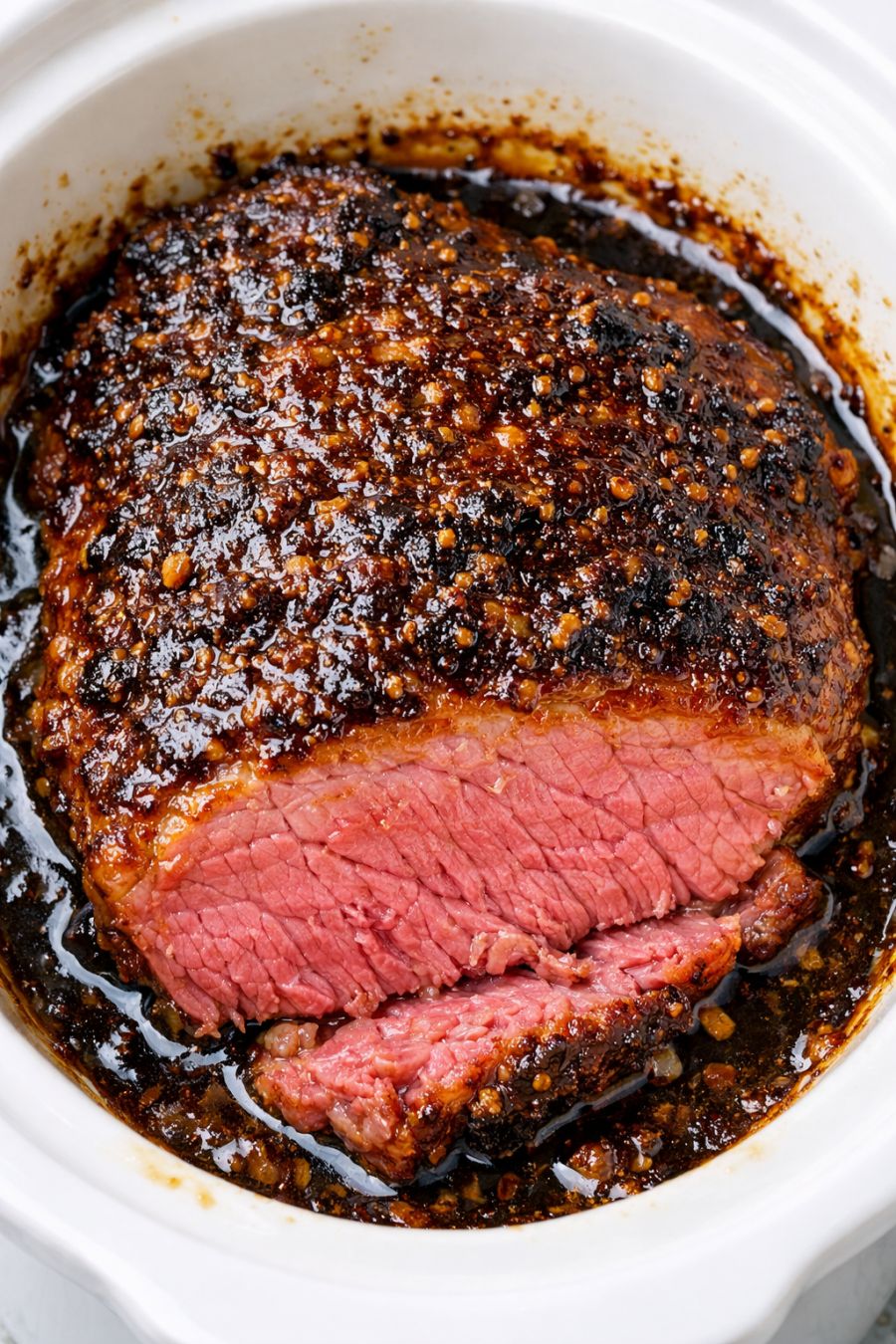
This slow cooker 3-ingredient Dijon molasses corned beef is the kind of recipe my grandmother would pull out on busy farm days when there was work to be done and company still expected a proper meal. She always said the secret to a tender, sticky, almost candy-coated brisket was to keep it simple and let time do the work. Here, corned beef brisket simmers low and slow in a crock, bathed in a mixture of Dijon mustard and dark molasses. As it cooks, the sugars caramelize into a deep brown, glossy crust while the inside stays rosy pink and fork-tender. It’s an old-fashioned, no-fuss trick that turns a humble cut into a feast, with just three ingredients and a slow cooker humming away on the counter.
Serve thick slices of this sticky Dijon molasses corned beef with simple, comforting sides that soak up the extra sauce: buttered boiled potatoes or mashed potatoes, steamed cabbage or green beans, and maybe a pan of warm dinner rolls or cornbread. A crisp green salad with a tangy vinaigrette helps balance the sweetness of the glaze. Leftovers make wonderful sandwiches on rye or soft rolls with a smear of extra Dijon and a few pickle slices, and the sticky sauce from the crock is perfect drizzled over everything on the plate.
Slow Cooker 3-Ingredient Dijon Molasses Corned BeefServings: 6
Ingredients
3 to 4 pounds corned beef brisket, with spice packet (if included)
1/2 cup Dijon mustard
1/2 cup dark molasses
Directions
Unwrap the corned beef brisket and drain off the brine. Rinse the meat lightly under cool water, then pat it dry with paper towels. If your corned beef came with a spice packet, you can discard it for this recipe; the Dijon and molasses will provide all the flavor you need.
Lay the corned beef brisket into the bottom of a 5- to 7-quart slow cooker, fat side up. Tucking it in snugly helps the glaze cling and form that sticky, textured crust as it cooks.
In a small bowl, stir together the Dijon mustard and dark molasses until smooth and evenly blended. The mixture will be thick and glossy, almost like a loose frosting.
Spoon the Dijon-molasses mixture over the top of the corned beef, spreading it with the back of the spoon so the entire upper surface is coated in a thick, even layer. Let a little run down the sides, but keep most of it concentrated on top so it can caramelize into a dark brown and golden glaze.
Cover the slow cooker with the lid and cook on LOW for 8 to 10 hours, or until the corned beef is very tender when pierced with a fork. Avoid lifting the lid during the first several hours so the heat stays steady and the glaze can slowly thicken and darken.
About halfway through cooking, if you happen to be nearby, tilt the lid carefully and use a spoon to scoop some of the pooling sauce from the edges and drizzle it back over the meat. This isn’t required, but it deepens that sticky, textured crust on top.
When the corned beef is fork-tender and the top is a deep, sticky brown with golden mustard flecks, turn off the slow cooker and let the meat rest, still covered, for 15 to 20 minutes. This rest helps the juices settle so the slices stay moist and pink inside.
Transfer the corned beef to a cutting board, leaving the thick, sticky sauce in the slow cooker. Slice the brisket across the grain into 1/4- to 1/2-inch slices. Arrange the slices back into the slow cooker, nestling them into the sauce so the edges soak up that glossy glaze.
Spoon some of the thick sauce over the top of the sliced meat for a richly coated, textured finish, then serve warm straight from the slow cooker, making sure each serving gets a good drizzle of the dark, sticky Dijon molasses sauce from the edges of the crock.
Variations & Tips
If you prefer a little more bite to balance the sweetness, stir 1 to 2 tablespoons of extra-sharp Dijon into the glaze or add a teaspoon of prepared horseradish before spreading it over the meat (this keeps the ingredient list simple while still leaning on what you likely have on hand). For a slightly less sweet version, use 1/3 cup molasses and 2/3 cup Dijon, keeping the total amount the same so the glaze still forms that thick, sticky crust. If your corned beef is on the lean side, you can trim only the very thick, hard fat and leave a thin cap; it bastes the meat and helps create those caramelized, textured edges. For a darker, almost bark-like crust, once the corned beef is cooked and sliced, transfer the slices to a baking dish, spoon over some of the sauce, and run it under a hot broiler for 2 to 3 minutes, watching closely, just until the glaze bubbles and darkens further. Leftovers keep well in the refrigerator for several days and reheat nicely in a covered dish with a splash of water or broth; the sauce will loosen slightly and become a rich coating for sandwiches, hash, or chopped beef over buttered noodles.