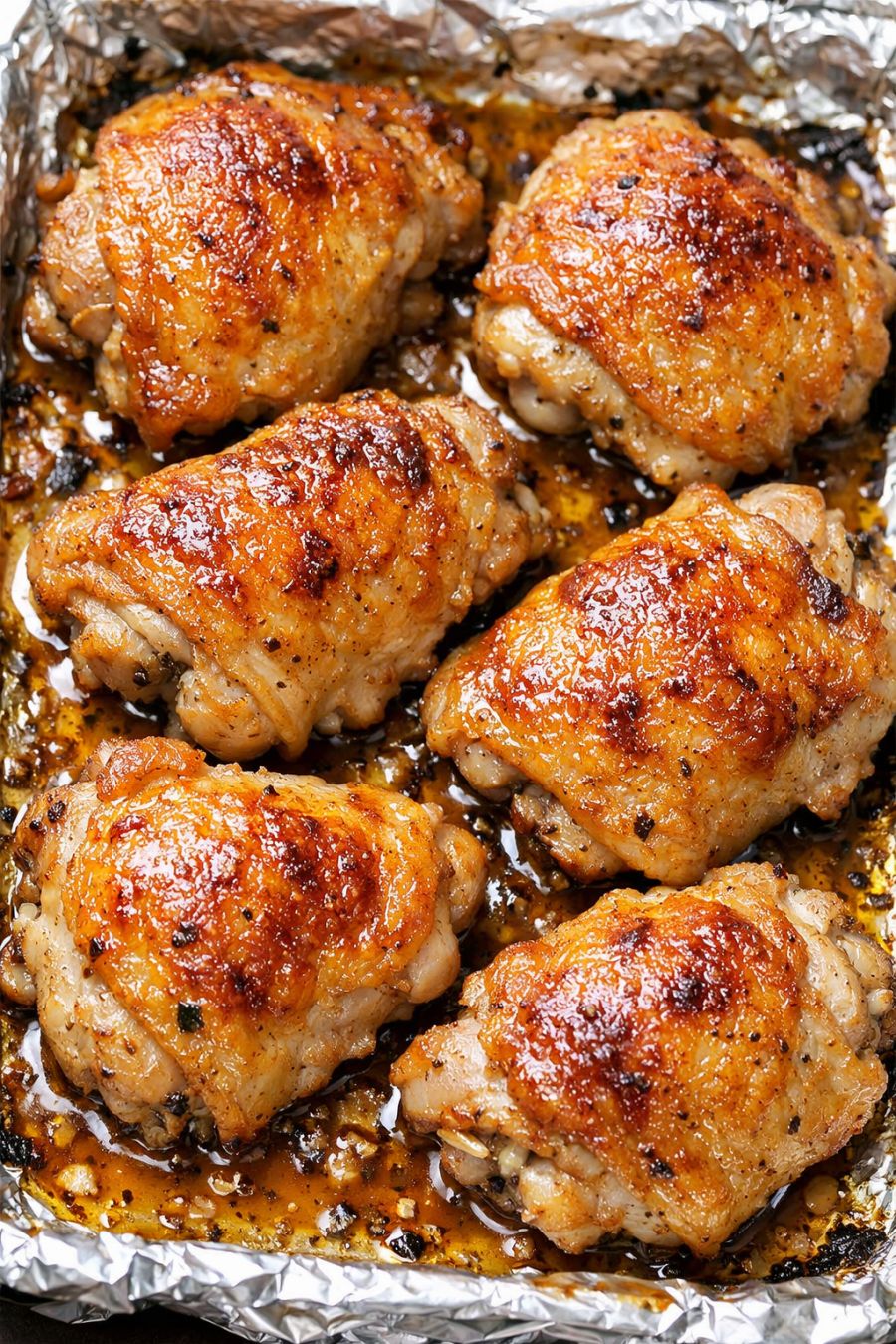
This low carb 3-ingredient chicken thigh roast is the kind of simple, reliable dish that shows up when the weather starts to shift—cozy, fragrant, and just rich enough to feel like a treat. A neighbor of mine used to bring over a pan of these whenever the seasons changed, and I’ve kept the spirit of that gesture: bone-in, skin-on chicken thighs roasted until the skin turns deeply golden and crisp, the meat stays tender and juicy, and the pan fills with savory juices. With only chicken, a good seasoning salt, and olive oil, this is weeknight cooking at its most practical, but it still feels special enough for company.
Serve these roasted chicken thighs straight from the foil-lined tray with a spoonful of the pan juices over the top. For a low carb plate, pair them with roasted or sautéed green vegetables—broccoli, Brussels sprouts, green beans, or asparagus all work well. A simple green salad with a sharp vinaigrette helps cut through the richness of the chicken skin, and cauliflower mash or roasted cauliflower florets make a satisfying stand-in for potatoes. If you’re feeding a mixed crowd, you can always add a side of crusty bread or rice for those who want it, while keeping the main dish firmly low carb.
Low Carb 3-Ingredient Chicken Thigh RoastServings: 4
Ingredients
2 1/2 to 3 pounds bone-in, skin-on chicken thighs (about 6–8 pieces)
1 1/2 tablespoons seasoned salt (or your favorite low carb all-purpose seasoning blend)
2 tablespoons olive oil, plus more for the pan if needed
Directions
Preheat your oven to 425°F (220°C). Line a large rimmed baking sheet with aluminum foil, then lightly rub or brush the foil with a thin film of olive oil to help prevent sticking and encourage crisp edges.
Pat the chicken thighs very dry on all sides with paper towels. This step is important for getting that golden, crispy skin instead of steaming the chicken.
Place the dried chicken thighs in a large bowl or on a clean tray. Drizzle the 2 tablespoons of olive oil over the chicken and toss or rub with your hands to coat each piece evenly, making sure some oil gets under the skin where possible.
Sprinkle the seasoned salt evenly over the chicken thighs on all sides. Use your hands to rub the seasoning in so it adheres well. You want a visible, even coating, but not a thick crust of salt.
Arrange the seasoned chicken thighs skin side up on the prepared foil-lined baking sheet, leaving a little space between each piece so hot air can circulate and the edges can crisp. Tuck any loose skin neatly over the meat so it doesn’t burn.
Place the tray on the middle rack of the preheated oven and roast for 35–45 minutes, depending on the size of the thighs. Do not cover the pan; leaving it uncovered allows the skin to render and crisp. The chicken is done when the skin is deep golden brown with browned, slightly frilly edges, the juices run clear when pierced, and an instant-read thermometer inserted into the thickest part (without touching bone) reads 175–190°F (80–88°C).
If you’d like extra-crispy skin, move the tray to the upper third of the oven for the last 5 minutes, or briefly broil on high, watching very closely so the skin browns without burning.
Remove the tray from the oven and let the chicken rest on the pan for 5–10 minutes. The juices in the foil will be clear and savory; spoon some over each thigh when serving for added moisture and flavor. Serve directly from the tray while the skin is still crisp.
Variations & Tips
For a smoky version, use a seasoned salt that leans on smoked paprika or add a pinch of smoked paprika into your seasoned salt before rubbing it on the chicken (still counting as part of the seasoning blend so you stay within the three-ingredient spirit). If you prefer a more herb-forward profile, choose a seasoned salt that includes dried thyme, rosemary, or oregano; these pair especially well with roasted chicken and cooler weather. To lean into garlic without adding extra ingredients, look for a garlic-heavy seasoning salt or a low carb poultry seasoning that already contains garlic and onion powders. For extra-crispy skin, start the thighs on a wire rack set over the foil-lined tray so hot air can circulate underneath, then finish them directly on the foil for the last 5–10 minutes to let the edges sizzle in the rendered fat. If you’re cooking for two, halve the recipe but keep the same oven temperature and timing; the chicken needs the high heat to brown properly. Leftovers reheat well on a foil-lined tray in a hot oven (400°F/200°C) for 10–15 minutes, which helps re-crisp the skin better than the microwave. Finally, you can use the same method with drumsticks or leg quarters; just adjust the roasting time slightly, cooking until the skin is deeply golden and the internal temperature is in the 175–190°F range for tender, juicy dark meat.