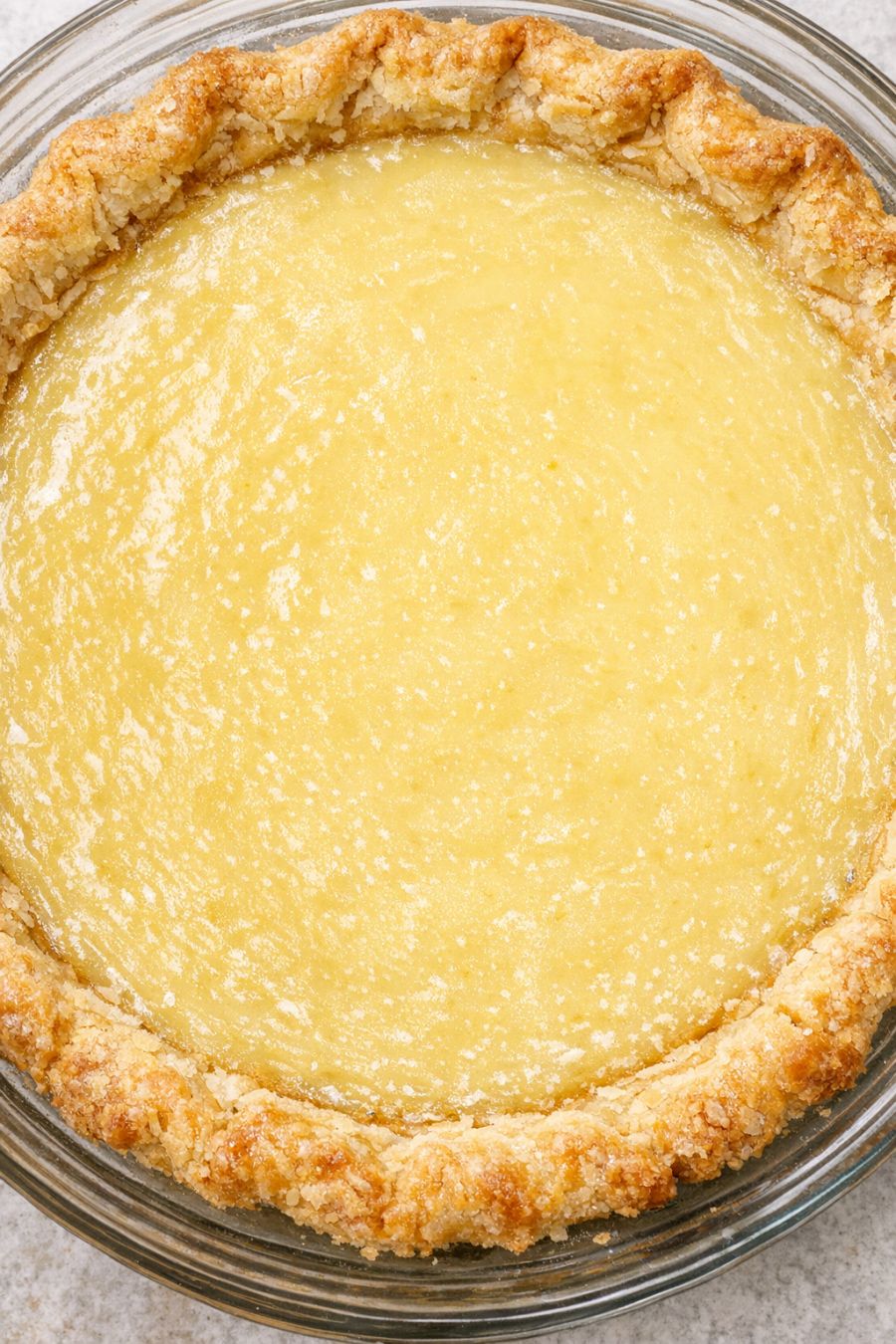
This southern 3-ingredient lemon pie is the kind of recipe that lives in family lore. My friend’s grandma kept it to herself for years, showing up to Sunday dinner with this glossy, pale-yellow pie in a glass plate, the filling impossibly silky and the crust perfectly flaky. When she finally gave in and shared it, we realized the secret wasn’t some complicated technique—it was how she coaxed real flavor and texture out of just three pantry staples. This style of lemon pie is rooted in Southern church-supper cooking: resourceful, unfussy, and built on ingredients you can grab at any grocery store.
Serve this lemon pie well-chilled, with the filling set and the crust fully cooled so it slices cleanly. A small dollop of lightly sweetened whipped cream on each slice is lovely but optional; the pie is rich enough to stand on its own. I like to pair it with coffee after a big Sunday meal or with iced tea on a warm afternoon. If you’re building out a dessert table, it sits nicely next to something chocolatey or a simple bowl of fresh berries to balance the sweetness and brightness of the lemon.
Southern 3-Ingredient Lemon PieServings: 8
Ingredients
1 (9-inch) unbaked refrigerated pie crust, fitted into a glass pie plate
4 large eggs
1 1/2 cups granulated sugar
2 tablespoons finely grated lemon zest (from about 2 lemons)
1/2 cup fresh lemon juice (from about 3–4 lemons)
Directions
Preheat your oven to 375°F (190°C). Place the glass pie plate with the unbaked crust on a rimmed baking sheet for easier handling. If the crust has warmed up, slide it into the fridge while you prepare the filling so it stays nice and flaky.
In a medium bowl, whisk the eggs until they’re well blended and no streaks of white remain. You don’t need a mixer here—just a sturdy whisk and a minute of steady whisking.
Add the granulated sugar to the eggs and whisk until the mixture looks thickened and slightly lighter in color, about 1–2 minutes. This helps the sugar start dissolving and gives the filling a smoother texture.
Whisk in the finely grated lemon zest, making sure it’s evenly distributed, then slowly whisk in the fresh lemon juice. The mixture will be thin; that’s exactly what you want. Taste a tiny bit—this is where the bright, tart character of the pie is set.
Give the filling one last stir, then carefully pour it into the chilled pie crust in the glass pie plate. The liquid will come close to the top, so move slowly to avoid spills.
Place the baking sheet with the pie on the center rack and bake for 35–40 minutes, or until the crust is golden and the filling looks mostly set with a slight wobble in the very center when you gently nudge the pan. The surface should look glossy and just barely puffed in spots, with no wet liquid sloshing.
Remove the pie from the oven and place it on a cooling rack. Let it cool completely at room temperature, about 1–2 hours, so the filling can finish setting. You’ll notice the top smoothing out as it cools.
Once cooled, transfer the pie to the refrigerator and chill for at least 3 hours, or until thoroughly cold. This chilling step is what gives you that smooth, creamy yellow filling that slices cleanly while still feeling custardy on the tongue.
To serve, cut into wedges with a sharp knife, wiping the blade between slices for the cleanest cuts. Serve directly from the glass pie plate so you can see the golden crust and pale yellow filling from the sides, just like it would arrive at a family Sunday dinner.
Variations & Tips
Because this pie is built on just three core ingredients—eggs, sugar, and lemon—you can adjust the character without complicating the recipe. For a slightly softer, silkier custard, reduce the sugar to 1 1/4 cups and add an extra tablespoon of lemon juice; the filling will be a touch more tart and less sweet. If your lemons are very mild, increase the zest to 3 tablespoons to keep the citrus flavor forward. To prevent over-browning, you can loosely tent the crust edges with foil during the last 10–15 minutes of baking. For a more rustic look, skip any garnish and let the smooth, glossy surface speak for itself; for a dressier presentation, add a light dusting of powdered sugar just before serving (it will melt into the surface if the pie is very moist). This same base formula also works in a shallow tart pan—just watch the baking time, as a thinner layer will set a few minutes faster. Always bake and serve in glass if you can; it helps you monitor crust color and gives that classic, homey look that matches the pie’s simple, secret-family-recipe feel.