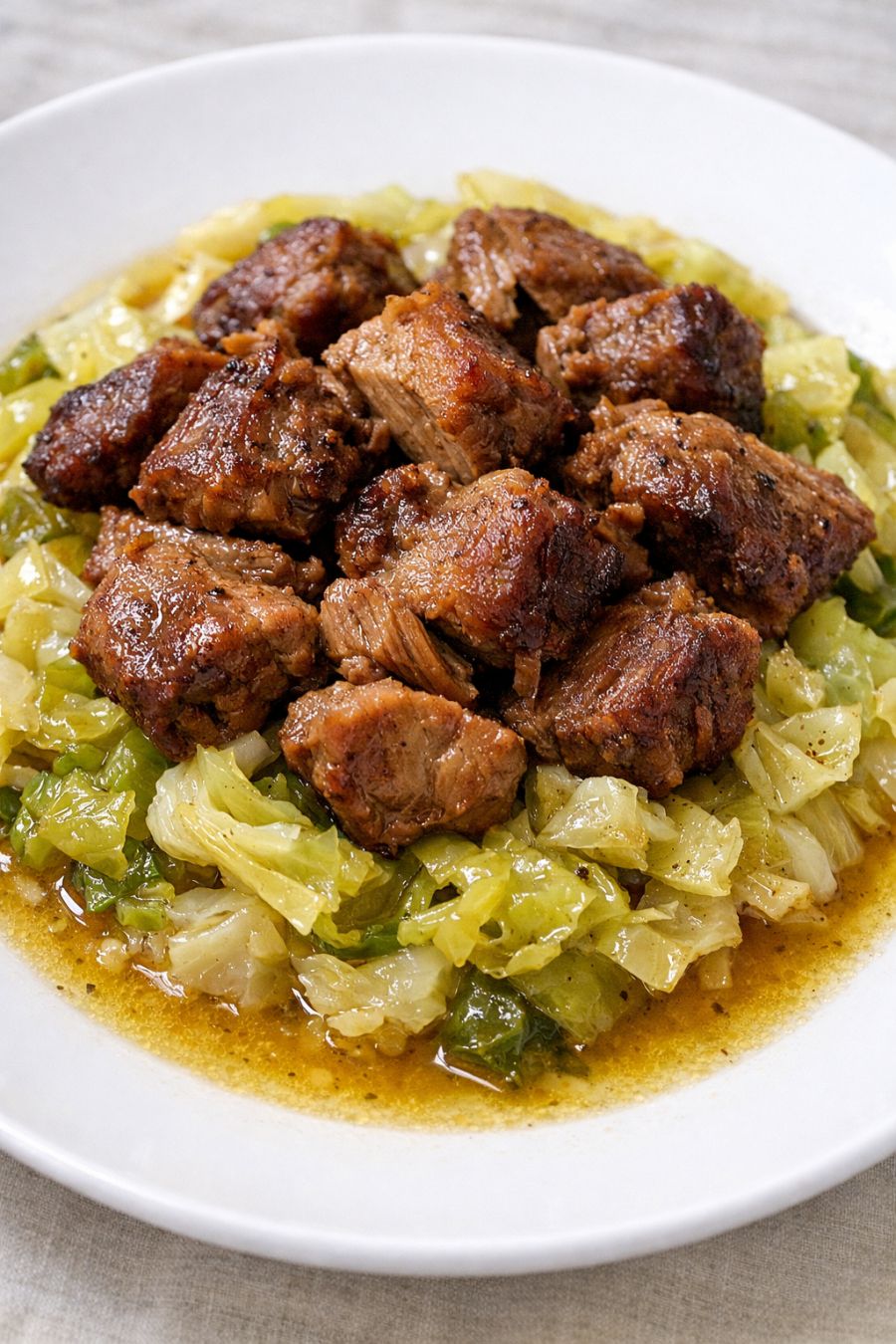
This slow cooker 4-ingredient Amish pork and cabbage is the kind of rustic, practical dish my Midwestern grandmother would have picked up from the local farming community: a single pot, humble ingredients, and a quietly luxurious result. Pork shoulder slowly melts into tender, spoonable chunks, while cabbage softens into buttery ribbons, all bathed in a simple, savory broth. It’s the sort of meal you start on a chilly March morning and forget about until the house smells like Sunday supper at a farmhouse table.
Serve the pork and cabbage in shallow bowls so the golden broth can pool around the edges—this is where the flavor lives. A side of buttered boiled potatoes, mashed potatoes, or a thick slice of crusty bread is perfect for soaking up the juices. If you like a little freshness, add a simple side of sliced apples or a crisp green salad dressed with cider vinegar to echo the gentle tang in the dish.
Slow Cooker Amish Pork and CabbageServings: 6
Ingredients
3 to 3 1/2 pounds boneless pork shoulder (Boston butt), trimmed of excess surface fat
1 medium green cabbage (about 2 to 2 1/2 pounds), cored and cut into thick wedges or chunky shreds
1/2 cup unsalted butter (1 stick), cut into slices
1 cup low-sodium chicken broth or water
Directions
Prepare the cabbage: Remove any tough or damaged outer leaves from the cabbage. Cut the cabbage into thick wedges or into chunky 1- to 1 1/2-inch shreds, keeping them on the larger side so they hold up to long cooking.
Layer the slow cooker: Place the cabbage in the bottom of a large slow cooker (5- to 7-quart). Scatter the butter slices evenly over the cabbage so it will melt down and coat the leaves as they cook.
Add the pork: Pat the pork shoulder dry with a clean towel. Nestle the pork on top of the cabbage and butter. Pour the chicken broth (or water) around the sides of the pork so it runs down to the bottom of the slow cooker without washing the butter off the cabbage.
Season simply (optional but traditional): If you follow a very bare-bones farmhouse style, you can rely on the natural flavor of the pork, cabbage, and butter alone. If you prefer, lightly sprinkle the pork with a generous pinch of salt and a few grinds of black pepper, but keep it minimal to honor the rustic spirit of the dish.
Slow cook until meltingly tender: Cover the slow cooker with the lid. Cook on LOW for 8 to 10 hours, or on HIGH for 4 to 5 hours, until the pork is very tender and easily pulls apart with a fork and the cabbage is soft, silky, and lightly golden around the edges.
Rest and separate the pork: Turn off the slow cooker and let the pork rest in the hot juices for about 10 minutes. Transfer the pork to a large cutting board or platter and gently pull it into large, rustic chunks with two forks, discarding any large pieces of fat.
Finish the cabbage in the buttery broth: Stir the cabbage in the slow cooker so it’s well-coated with the buttery, porky juices. Taste a piece and, if you’ve chosen to season, adjust with a small pinch of salt at this stage rather than earlier. The cabbage should be tender, silky, and bathed in a golden broth.
Serve: Spoon a generous bed of cabbage onto warm plates, letting some broth come along with it. Top with chunks of the slow-cooked pork, then drizzle a little extra broth over everything. Serve hot, with bread or potatoes on the side to catch the juices.
Variations & Tips
Because this recipe leans on just four ingredients, small changes can make a noticeable difference. For a slightly tangier, more Pennsylvania Dutch-style flavor, replace half of the broth with apple cider or add 1 to 2 tablespoons of apple cider vinegar to the liquid before cooking. If you like a touch of sweetness, tuck a cored, quartered apple in with the cabbage; it will soften and melt into the background, giving the broth a gentle fruity note. To emphasize the buttery character, swirl in an extra tablespoon or two of butter right before serving for added richness and gloss. You can also adjust the cut of pork: a bone-in shoulder adds even more flavor but may take a little longer to become tender; just remove the bone before serving. For those who prefer a slightly leaner dish, use a trimmed pork loin roast and shorten the cooking time, checking for tenderness after about 6 hours on LOW so it doesn’t dry out. Leftovers reheat well in a covered skillet over low heat with a splash of water or broth, and the flavors often deepen by the next day, making this ideal for cooking once and eating twice over a weekend.