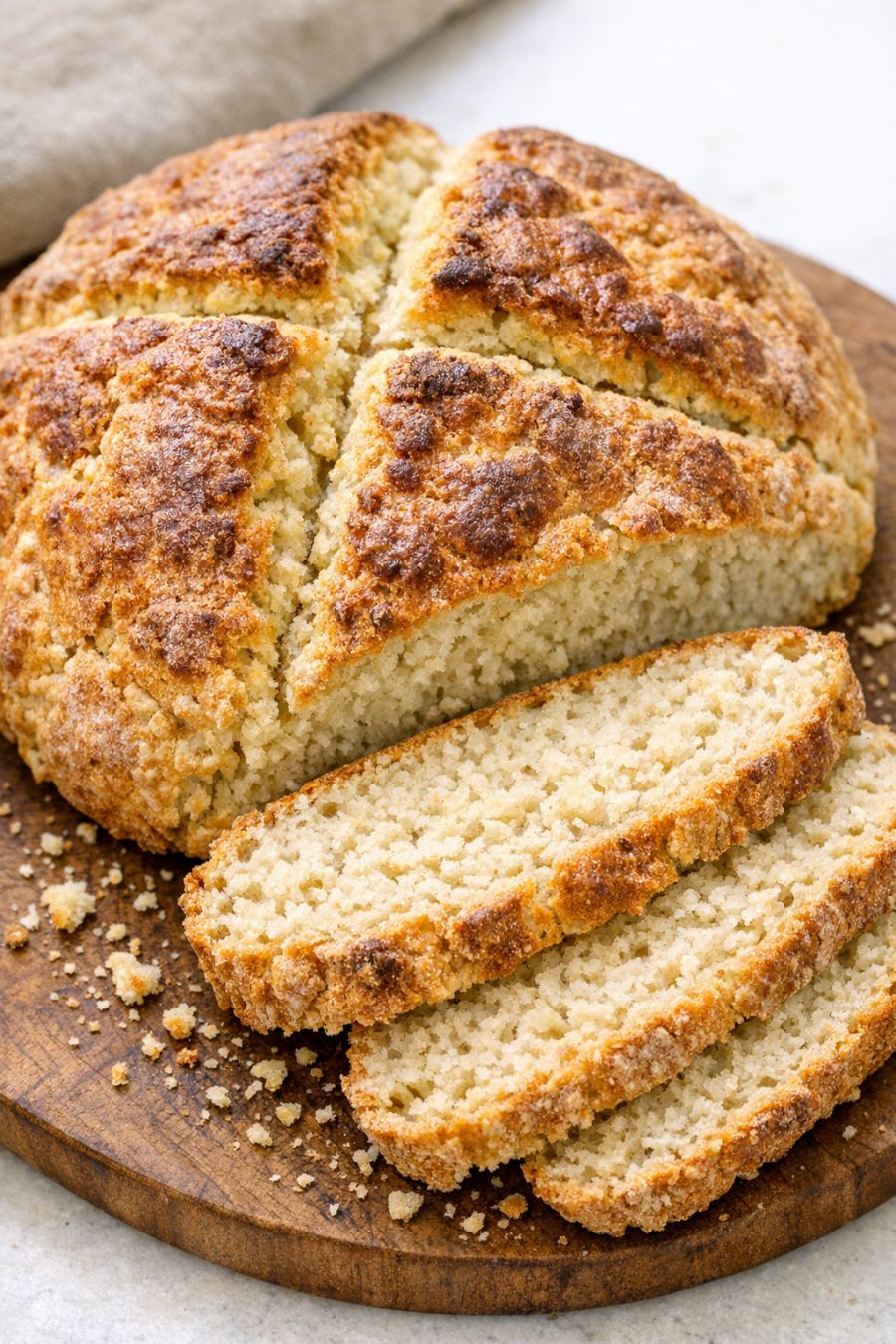
Every March, like clockwork, my grandpa bakes this simple Irish soda bread, and now it’s one of those traditions I make time for no matter how busy work gets. Classic Irish soda bread is all about using just a few pantry staples—no yeast, no long rise, no fancy equipment. You stir it together, shape it into a rustic round loaf, score a deep cross on top, and let the oven do the rest. The result is a golden brown, crusty loaf with a dense, soft crumb inside that practically begs for a thick smear of salted butter. It’s the kind of old-fashioned, no-fuss recipe that feels special enough for St. Patrick’s Day but easy enough for any weeknight stew or Sunday breakfast.
Slice the warm soda bread thick and serve it with plenty of salted butter so it can melt into all the nooks of the dense crumb. It’s perfect alongside a hearty beef stew, corned beef and cabbage, or a simple bowl of soup. For breakfast, toast leftover slices and top with butter and jam or a drizzle of honey. It also makes a great base for open-faced sandwiches with sharp cheddar and ham. If you’re hosting, set the loaf on a wooden cutting board in the center of the table and let everyone tear off rustic pieces family-style.
4-Ingredient Irish Soda BreadServings: 8
Ingredients
4 cups (480 g) all-purpose flour, plus extra for dusting
1 teaspoon fine sea salt
1 teaspoon baking soda
1 3/4 cups (420 ml) buttermilk, cold
Directions
Preheat your oven to 425°F (220°C). Line a baking sheet with parchment paper or lightly flour a round baking stone. This helps the loaf release easily and keeps the bottom from over-browning.
In a large mixing bowl, whisk together the flour, salt, and baking soda until everything is evenly combined. This makes sure the baking soda is dispersed so the bread rises evenly.
Make a well in the center of the dry ingredients and pour in most of the cold buttermilk, holding back a few tablespoons. Using a wooden spoon or your hand shaped like a claw, gently mix just until the dough comes together in a shaggy, slightly sticky ball. If there are dry patches of flour, add the remaining buttermilk a tablespoon at a time. The dough should be soft and a bit tacky but not wet or runny.
Turn the dough out onto a lightly floured surface. With floured hands, gently bring it together and pat it into a round about 1 1/2 to 2 inches thick. Avoid kneading; overworking the dough will make the crumb tough instead of soft and tender.
Transfer the round loaf to the prepared baking sheet or stone. Using a sharp knife or bench scraper, score a deep cross on top, cutting almost all the way through the dough but not separating it into pieces. This helps the loaf bake evenly and gives that classic rustic look.
Bake on the center rack for 30 to 40 minutes, or until the loaf is a deep golden brown with a firm, rustic crust. The bottom should sound hollow when tapped, and an instant-read thermometer inserted into the center should read about 200°F (93°C).
Remove the bread from the oven and transfer it to a wooden cutting board or wire rack. Let it cool for at least 20 to 30 minutes so the crumb can set. Slice into thick wedges, revealing the dense, soft pale interior, and serve warm with a generous smear of salted butter.
Variations & Tips
If you want to stay close to tradition but tweak the flavor slightly, you can swap half of the all-purpose flour for whole wheat flour for a heartier loaf; you may need an extra splash of buttermilk because whole wheat absorbs more liquid. For a touch of sweetness (more like the American-style soda breads many of us grew up with), stir 2 to 3 tablespoons of sugar into the dry ingredients, or fold in a handful of raisins or currants—just know that technically that makes it less traditional. If you’re out of buttermilk, make a quick substitute by adding 1 3/4 tablespoons of white vinegar or lemon juice to a measuring cup, then filling to 1 3/4 cups with milk; let it sit for 5 to 10 minutes until slightly thickened. To meal-prep around a busy schedule, you can measure and mix the dry ingredients the night before and store them in an airtight container, then just add the buttermilk and bake after work. Leftover slices freeze well: cool completely, slice, wrap tightly, and freeze; reheat in the toaster or oven to bring back that rustic crust and soft interior.