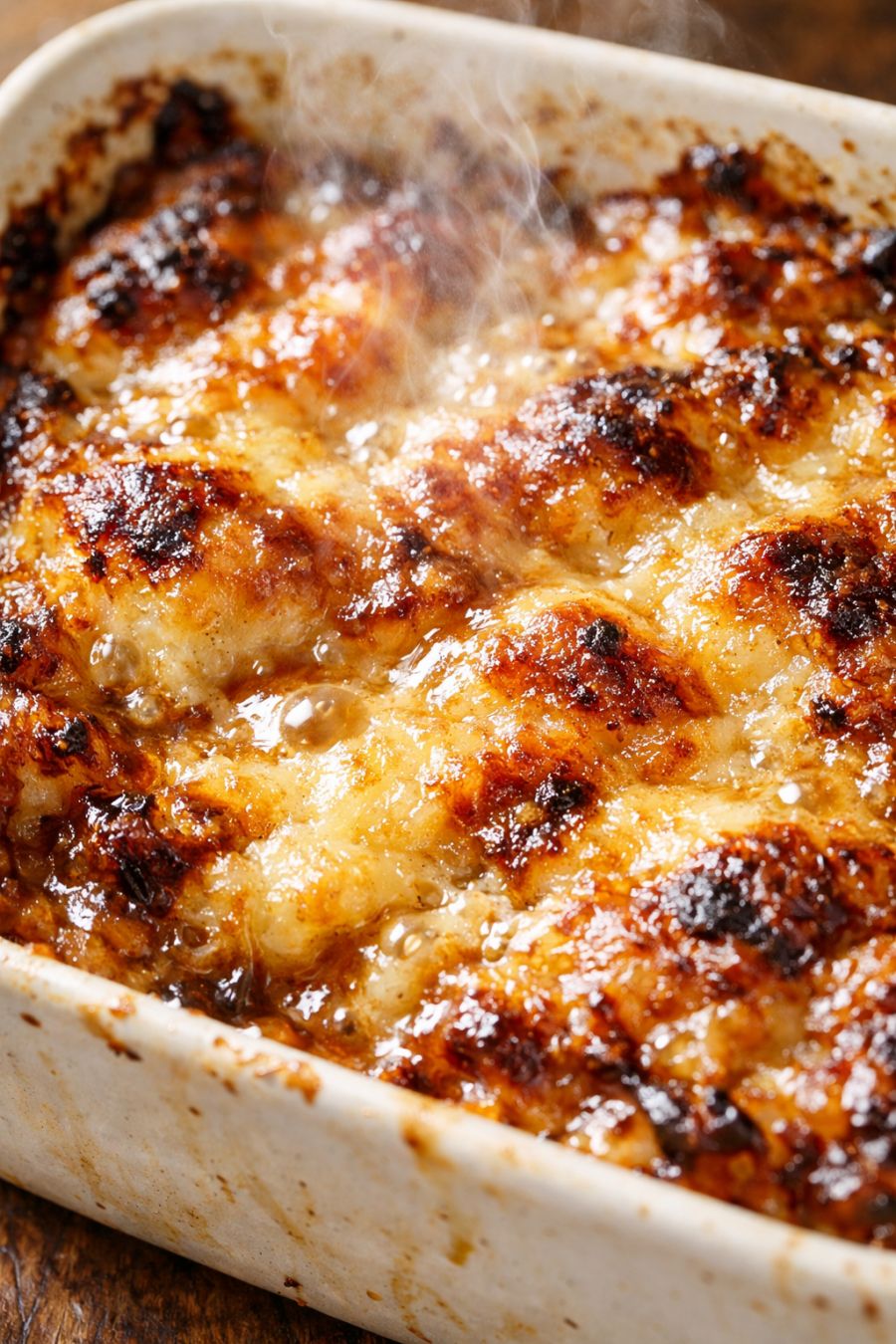
This 5-ingredient oven spring time comfort using tubular pasta is my answer to those busy weekends when I want dinner handled hours ahead. Think of it as a lighter, spring-leaning cousin of baked ziti, built on just pasta, peas, ricotta, Parmesan, and cream. The technique is classic Midwestern casserole—assemble in a ceramic baking dish, slide it into the oven, and let time and gentle heat do the work—while the flavors nod to Italian baked pastas. It bakes up with a bubbly, caramelized top and golden, crispy edges, but underneath you get a silky, almost lasagna-like center that feels cozy without being heavy.
Serve this baked tubular pasta straight from the oven with a simple lemon-dressed green salad or a plate of sliced fresh tomatoes and cucumbers to echo the spring theme. Warm crusty bread or garlic toast is perfect for catching the creamy sauce at the bottom of the dish. A crisp white wine like Pinot Grigio or a light, citrusy beer works well, but sparkling water with a squeeze of lemon is just as refreshing. If you’d like more protein on the table, pair it with grilled or roasted chicken sausages or a platter of thinly sliced prosciutto and salami.
5-Ingredient Spring Baked Tubular PastaServings: 4-6
Ingredients
12 oz tubular pasta (such as rigatoni, ziti, or penne)
1 cup frozen peas, still frozen
1 1/2 cups whole-milk ricotta cheese
1 1/2 cups heavy cream
1 1/2 cups finely grated Parmesan cheese, divided
Directions
Lightly grease a medium ceramic baking dish (about 2 to 2 1/2 quarts). This helps the edges crisp and release easily later.
In a large pot, bring well-salted water to a boil. Add the tubular pasta and cook 2 to 3 minutes less than the package directions for al dente; you want it quite firm since it will finish cooking in the oven. Drain well.
While the pasta cooks, in a large bowl whisk together the ricotta and heavy cream until smooth. Stir in 1 cup of the grated Parmesan until evenly combined. Season the mixture lightly with salt and a generous pinch of black pepper if you like (optional, not counted among the core ingredients).
Add the hot, drained pasta and the frozen peas directly to the ricotta-cream mixture. Toss well so every piece of pasta is coated and the peas are evenly distributed. The residual heat from the pasta will start to thaw the peas.
Transfer the mixture to the prepared ceramic baking dish, spreading it into an even layer and pressing gently so there are no large air pockets. Sprinkle the remaining 1/2 cup Parmesan evenly over the top, making sure to get some cheese all the way to the edges for extra crispy, caramelized bits.
Cover the dish tightly with foil and refrigerate for at least 1 hour and up to 6 hours if you want to have dinner handled ahead. This rest allows the pasta to absorb some of the sauce so the center turns silky rather than soupy.
When you’re ready to bake, heat the oven to 375°F (190°C). Place the baking dish, still covered with foil, on the middle rack. Bake for 25 to 30 minutes, until the pasta is heated through and the sauce is gently bubbling around the edges.
Remove the foil and continue baking for 15 to 20 minutes, until the top is deeply golden, the surface is bubbly, and the edges are caramelized and crisp. If your oven runs cool and you want more color, you can move the dish to the upper third of the oven for the last 5 minutes.
Let the baked pasta rest on the counter for 10 to 15 minutes before serving. This short rest helps the creamy layers set slightly so you get neat scoops with a glossy, melty interior under the browned, umami-rich top.
Variations & Tips
For a brighter, more pronounced spring flavor, fold in a handful of chopped fresh herbs—such as parsley, chives, or basil—into the ricotta mixture before adding the pasta. If you’d like some protein without changing the 5-ingredient base, scatter cooked, crumbled Italian sausage, shredded rotisserie chicken, or flaked smoked salmon over the top before baking; it will nestle into the creamy pasta as it cooks. To make it a bit lighter, swap half of the heavy cream for whole milk, understanding the sauce will be slightly less rich but still comforting. You can also play with different tubular shapes: rigatoni gives big pockets of sauce, penne makes a tighter, more uniform bake, and ziti falls somewhere in between. For a more pronounced caramelized crust, switch the oven to broil for 1 to 2 minutes at the very end, watching closely so the cheese browns without burning. Leftovers reheat well, covered, in a 325°F (165°C) oven with a splash of cream or milk to loosen the sauce.