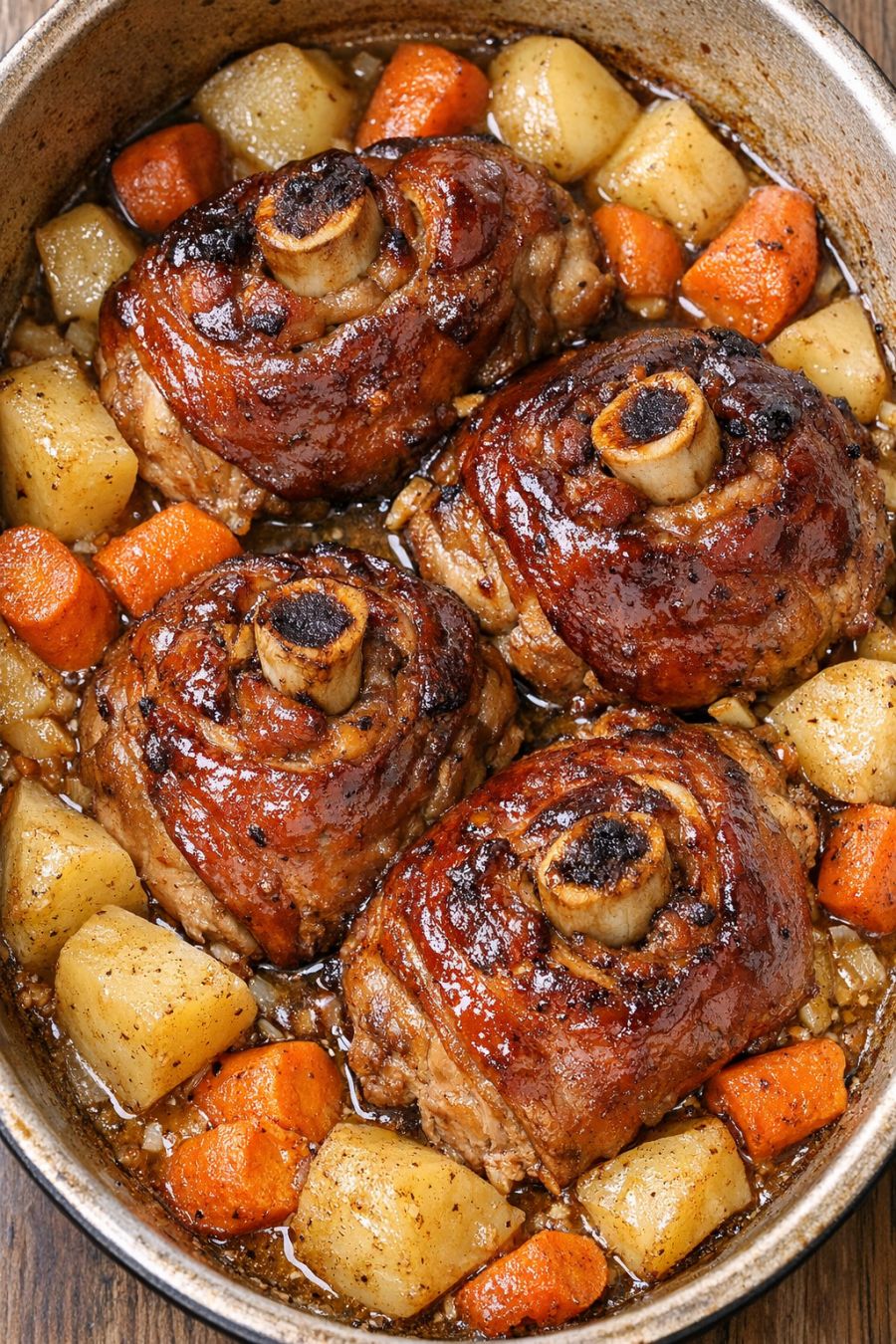
This oven baked 4-ingredient pork hock with root vegetables is the kind of thrift-minded comfort food I grew up on in the Midwest. My mom could stretch one humble pork hock to feed all of us by surrounding it with potatoes and carrots that soaked up every bit of that rich, savory flavor. Everything roasts together in one pan until the meat is tender, the vegetables are soft and golden at the edges, and the pan drippings turn into a glossy glaze. It’s simple, budget-friendly, and perfect for a cozy family dinner when you want something that tastes like it’s been cooking all day, without a lot of fuss.
Serve the pork hock right in the roasting pan, with the carrots and potatoes nestled all around and a spoon for those golden pan drippings. A simple green side salad or steamed green beans helps balance the richness, and a loaf of crusty bread or warm dinner rolls is great for soaking up the juices. If you like, add a little dish of mustard or horseradish on the table for anyone who enjoys a sharper bite with their pork. This meal is hearty enough to stand on its own, but a light dessert like fruit or pudding makes a nice finish.
Oven Baked Pork Hock with Root VegetablesServings: 4
Ingredients
1 large fresh pork hock (about 2 to 2 1/2 pounds), skin on if possible
2 pounds potatoes, peeled and cut into large chunks (about 1 1/2-inch pieces)
1 1/2 pounds carrots, peeled and cut into thick chunks
3 tablespoons vegetable oil or melted butter
1 1/2 teaspoons kosher salt, divided
1 teaspoon black pepper, divided
1 teaspoon dried thyme or dried Italian seasoning (optional, but nice if you have it)
1/2 cup water
Directions
Preheat your oven to 350°F (175°C). Lightly grease a large oval roasting pan or a 9x13-inch baking dish so the vegetables don’t stick.
Pat the pork hock dry with paper towels. This helps it brown better. Rub it all over with about 1 tablespoon of the oil or melted butter, 1 teaspoon of the salt, 1/2 teaspoon of the black pepper, and the dried thyme or Italian seasoning if you’re using it. Set the hock in the center of the roasting pan.
In a large bowl, toss the potato chunks and carrot pieces with the remaining oil or melted butter, the rest of the salt, and the rest of the black pepper until everything is lightly coated. Scatter the vegetables all around the pork hock in an even layer, tucking them in close so they can soak up the drippings as the meat cooks.
Pour the water into the bottom of the pan, being careful not to wash the seasoning off the top of the pork hock. The water will help create steam at first so the meat stays moist, then mix with the fat and juices to form those golden, glossy pan drippings.
Cover the roasting pan tightly with a lid or a double layer of foil. Place it on the middle rack of the oven and bake, covered, for 1 1/2 hours. This slow, covered time helps the tough parts of the hock start to soften and keeps everything from drying out.
After 1 1/2 hours, carefully remove the lid or foil, watching out for steam. Gently stir and turn the potatoes and carrots so they get some of the juices from the bottom of the pan. Spoon a little of the pan liquid over the pork hock to start building that glaze.
Return the uncovered pan to the oven and continue baking for another 45 to 60 minutes, basting the pork hock once or twice more with the pan drippings. The pork skin and edges should become deep golden and glossy, the meat should be very tender, and the carrots and potatoes should be soft and lightly caramelized. If the pan ever looks too dry, add a splash more water, a couple tablespoons at a time.
When the pork hock is fork-tender and the vegetables are soft, remove the pan from the oven. Let it rest for about 10 minutes so the juices settle and the glaze thickens a bit. Use a spoon to gently turn the vegetables in the pan drippings so they’re well coated and shiny.
To serve, set the whole pork hock on a platter or leave it right in the roasting pan for a rustic family-style presentation. Spoon the carrots and potatoes all around it and drizzle with any remaining golden juices. At the table, slice or pull pieces of meat from the hock and share it around, making sure everyone gets plenty of those richly flavored vegetables.
Variations & Tips
For picky eaters, you can cut the vegetables into smaller, bite-sized pieces so they’re less intimidating and cook up extra soft. If your family doesn’t love carrots, swap in parsnips or add a few wedges of onion for extra sweetness. To make the glaze a little more pronounced, stir 1 to 2 teaspoons of brown sugar or honey into the pan drippings during the last 20 minutes of baking. If you prefer a smokier flavor and can find it, use a smoked pork hock instead of fresh; just be sure to taste before adding extra salt, since smoked hocks can be quite salty. For a slightly lighter version, trim off any very thick outer fat from the hock before seasoning, and use olive oil instead of butter. You can also turn leftovers into a cozy soup: strip the remaining meat from the bone, chop up any leftover potatoes and carrots, and simmer everything the next day with a little broth and extra vegetables for an easy second meal.