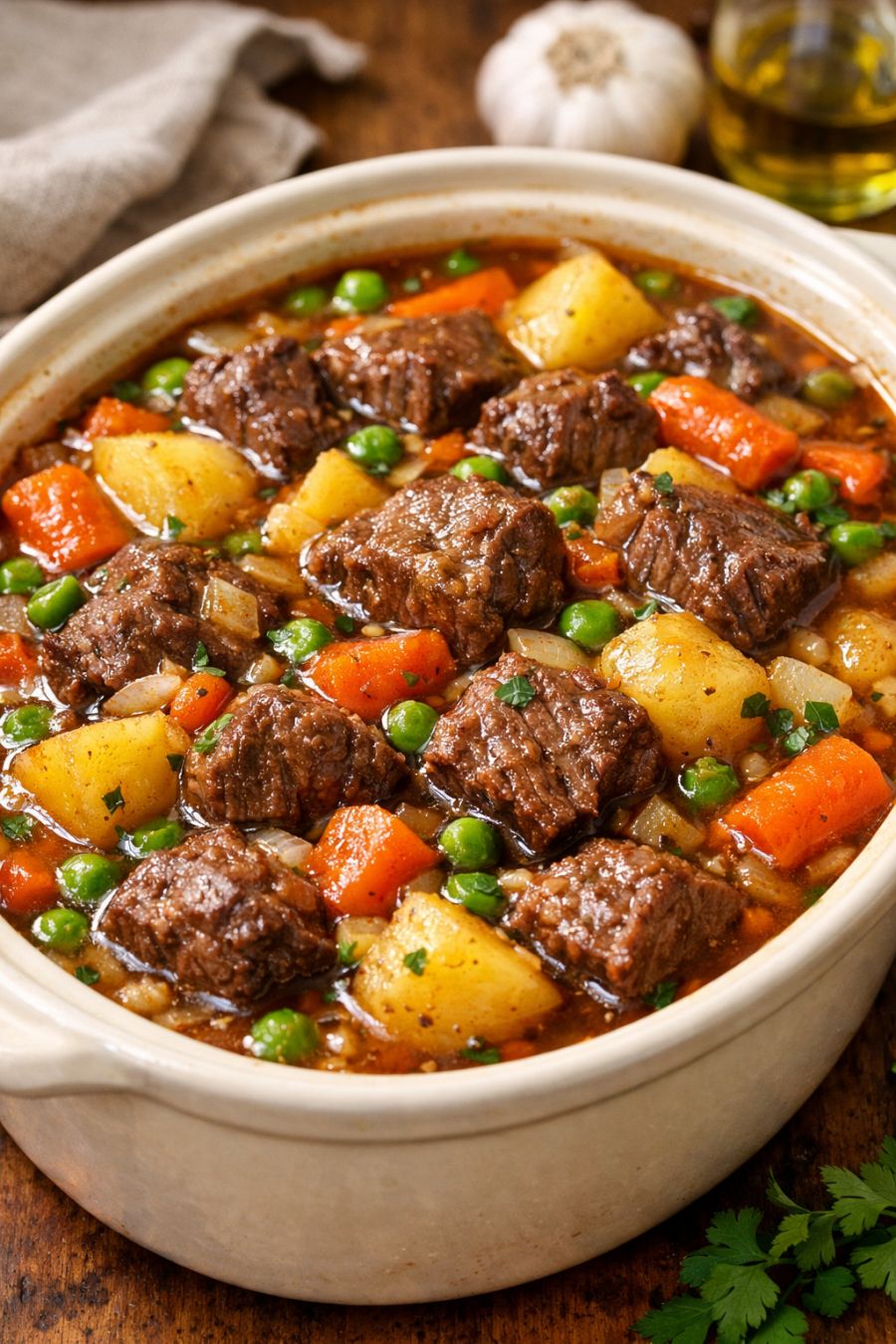
This little oven beef stew is the kind of dish our mothers and grandmothers leaned on when times were lean but bellies still needed filling. It’s a true Depression-era style meal: you toss raw beef chunks straight into a clear glass casserole dish, scatter in just four more humble ingredients, cover it up, and let the oven do the work. No browning, no fancy steps, just slow, gentle baking that turns tough meat tender and creates a rich, savory gravy. It’s the sort of recipe you can pull together on a cold afternoon with pantry basics, and by suppertime the whole house smells like the Sunday dinners I remember from my childhood farmhouse kitchen.
Serve this stew hot, ladled into shallow bowls so everyone can see the tender beef and vegetables peeking through the gravy. Around here we like it over a scoop of mashed potatoes or buttered egg noodles, but it’s just as good with thick slices of white bread for sopping up the juices. A simple side—like canned green beans warmed with a bit of butter, or a crisp lettuce salad—keeps the meal honest and in the spirit of its Depression-era roots. A jar of pickles or a little dish of applesauce on the table adds that old-fashioned Midwestern touch.
5-Ingredient Oven Depression-Era Beef StewServings: 4
Ingredients
2 pounds beef stew meat, cut into 1-inch chunks
4 large russet potatoes, peeled and cut into 1-inch chunks
4 large carrots, peeled and sliced into 1/2-inch coins
1 large yellow onion, peeled and roughly chopped
2 cups canned condensed tomato soup (or tomato sauce) mixed with 1 cup water
Directions
Preheat your oven to 325°F (165°C). Place a clear glass casserole dish (about 9x13 inches or similar size with a lid or foil cover) on the counter so it’s ready for layering.
Toss the raw beef chunks directly into the bottom of the clean glass casserole dish, spreading them out in an even layer so they cook and tenderize evenly.
Scatter the potato chunks evenly over the beef, then add the sliced carrots and chopped onion on top. There is no need to stir; just keep the layers fairly even so everything cooks at about the same rate.
In a bowl or large measuring cup, stir together the condensed tomato soup and the water until fairly smooth. This simple mixture will create the broth and gravy for your stew.
Pour the tomato mixture evenly over the beef and vegetables in the glass dish, letting it seep down through the layers. Use a spoon to gently nudge any very dry spots so everything has at least a light coating of liquid.
Cover the glass casserole dish tightly with its lid, or seal it well with aluminum foil to trap in moisture. This slow, covered baking is what makes the beef tender and gives you that Depression-era, oven-baked stew character.
Place the covered dish on the center rack of the preheated oven and bake for about 2 1/2 to 3 hours, or until the beef is very tender when pierced with a fork and the vegetables are soft. Try not to peek too often; the steam inside the covered dish is your best friend here.
Carefully remove the casserole dish from the oven and uncover, watching out for hot steam. Give the stew a gentle stir to bring the beef and vegetables together and to mix the gravy evenly.
Taste the stew and, if desired, add a pinch of salt and pepper to suit your family’s taste. Let it rest for about 5 minutes to settle, then ladle into bowls and serve warm with your favorite simple sides.
Variations & Tips
To keep the spirit of a Depression-era dish, think in terms of using what you have on hand. If you’re short on fresh potatoes or carrots, you can add a drained can of potatoes or carrots during the last 45 minutes of baking instead. A handful of frozen peas stirred in right after baking adds color and sweetness without complicating the recipe. If you don’t have condensed tomato soup, you can use plain canned tomato sauce with a teaspoon of sugar stirred in to soften the acidity, or even crushed tomatoes thinned with a bit more water. For a heartier gravy, sprinkle 2 tablespoons of all-purpose flour over the raw beef in the glass dish before adding the vegetables and tomato mixture; it will thicken as it bakes. If your beef is very lean, drizzle a tablespoon of vegetable oil over the meat before layering to keep everything moist. You can also stretch this stew to feed more mouths by adding another potato or carrot and a splash of water, then serving it generously over rice, noodles, or bread, just the way folks did when every penny counted.