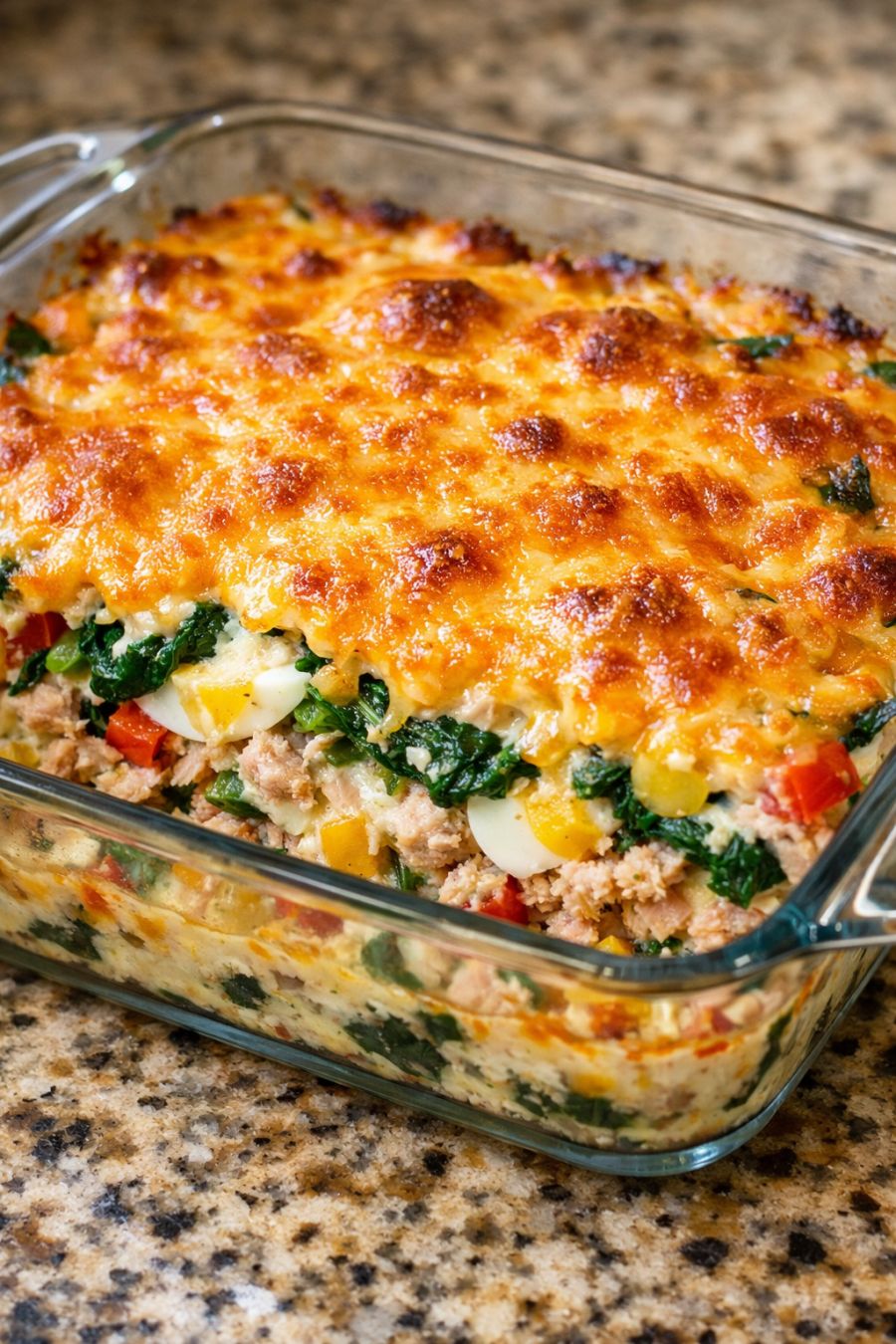
This little 5‑ingredient tuna casserole is the kind of no-fuss supper I lean on when the day’s gotten away from me and I still want something warm and savory on the table. It starts just the way the headline says: you dump the wet, undrained canned tuna straight into a glass baking dish, then add four simple things you probably already have on hand. No noodles, no fancy steps, and it stays low carb, which suits a lot of us these days. It reminds me of the casseroles we baked on busy weeknights back in the Midwest, only lightened up a bit, and still hearty enough that your husband will be asking when you’re making it again.
Serve this tuna casserole hot, scooped out in generous spoonfuls with a big side of steamed green beans or buttered broccoli. A simple green salad with a tangy vinaigrette helps cut through the richness nicely. If you’re not watching carbs too closely, a piece of crusty bread or a warm dinner roll is perfect for soaking up the creamy juices in the bottom of the dish. A few dill pickle slices or sliced tomatoes on the side also give that old-fashioned Midwestern plate feel.
5 Ingredient Low Carb Tuna CasseroleServings: 4
Ingredients
3 (5-ounce) cans tuna in water, undrained
3 large eggs
1 cup full-fat sour cream
1 1/2 cups shredded cheddar cheese, divided
1 teaspoon garlic powder
1/2 teaspoon salt (or to taste)
1/2 teaspoon black pepper (or to taste
Cooking spray or a little butter for greasing the dish
Directions
Preheat your oven to 375°F (190°C). Lightly grease a 2-quart glass baking dish with cooking spray or a little butter so the casserole doesn’t stick.
Open the tuna cans and pour the tuna with all its liquid straight into the center of the glass baking dish. Use a fork to break up any big chunks and spread the tuna evenly over the bottom. It should look wet in the dish—that liquid will help keep everything moist and flavorful as it bakes.
In a medium mixing bowl, whisk the eggs until the yolks and whites are well blended. Add the sour cream, 1 cup of the shredded cheddar cheese, garlic powder, salt, and black pepper. Stir until you have a thick, creamy mixture.
Pour the egg and sour cream mixture evenly over the tuna in the baking dish. Use the back of a spoon to gently nudge it around so it seeps down between the tuna pieces, but don’t worry if you still see some tuna peeking through.
Sprinkle the remaining 1/2 cup shredded cheddar cheese evenly over the top. This will give you a nicely browned, bubbly top layer, just like the old-fashioned casseroles we all grew up with.
Place the glass baking dish on the middle rack of the preheated oven. Bake for 25–30 minutes, or until the casserole is set in the center (it should not be jiggly when you tap the dish) and the top is lightly browned and bubbling around the edges.
Remove the casserole from the oven and let it rest for about 5–10 minutes before serving. This short rest helps it firm up a bit so it scoops out in nice, hearty portions.
Spoon into bowls or onto plates and serve warm. Store any leftovers, cooled, covered in the refrigerator and use within 3 days.
Variations & Tips
If you’d like a little more vegetable bulk while keeping things low carb, you can stir 1–2 cups of well-drained, cooked broccoli florets or riced cauliflower into the tuna before you pour on the egg mixture. A teaspoon of dried dill or Italian seasoning mixed into the egg and sour cream will give it a different twist, and you can swap part of the cheddar for Monterey Jack, pepper jack, or Swiss if that’s what you have. For extra richness, replace a few spoonfuls of sour cream with heavy cream or cream cheese. If your household likes a bit of heat, add a pinch of red pepper flakes or a few dashes of hot sauce to the egg mixture. For food safety, always use tuna from cans that are not bulging, rusted, or badly dented, and refrigerate leftovers within 2 hours of baking. Reheat leftovers until they are hot all the way through (165°F/74°C) before serving, and discard any casserole that has been left out at room temperature for more than 2 hours. If using a glass baking dish, avoid placing it directly from the refrigerator into a very hot oven to prevent thermal shock—let it sit at room temperature for a short while before reheating.