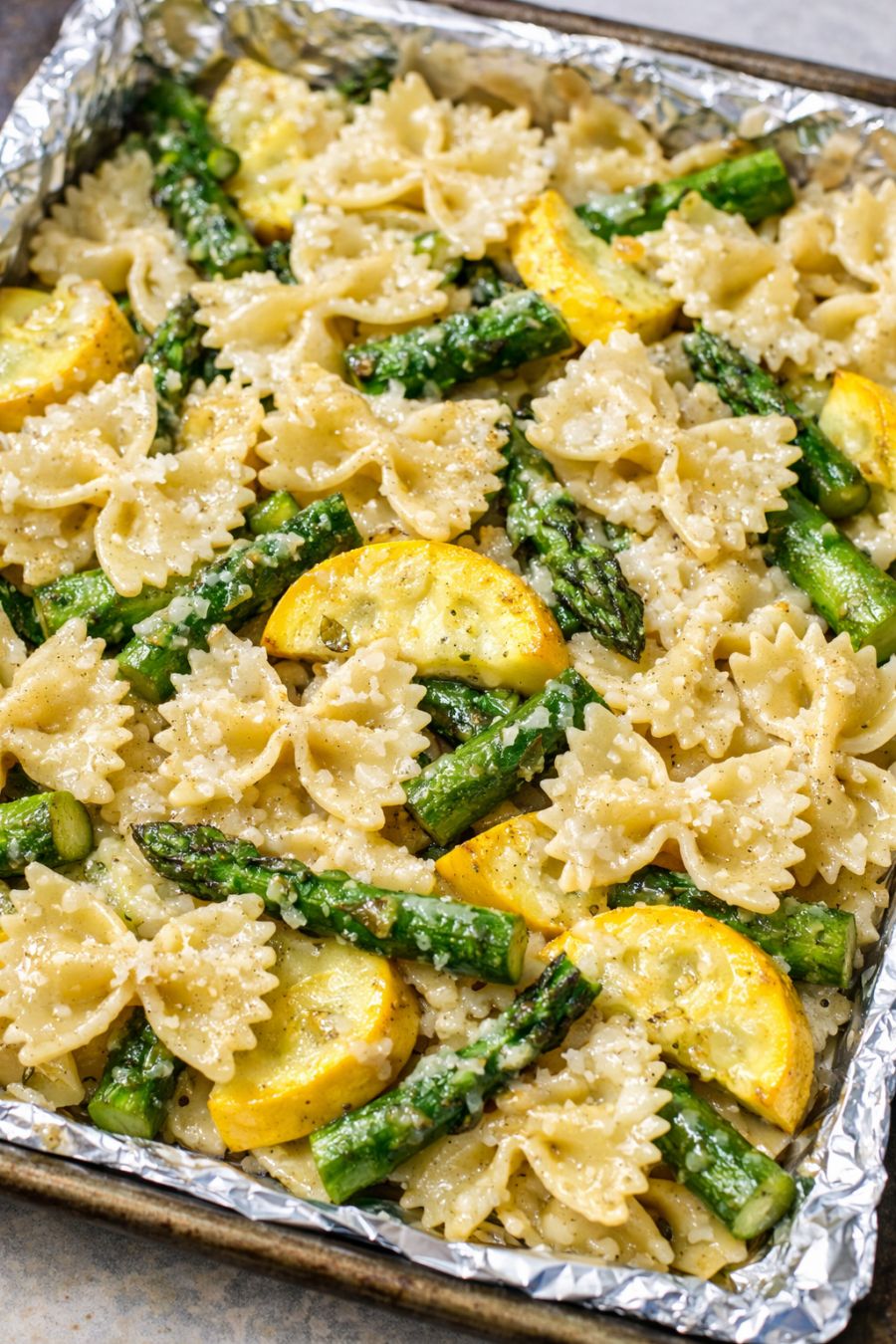
This oven baked 4-ingredient sheet pan spring vegetable farfalle is the kind of weeknight miracle my sister-in-law swore by when her kids were little, and now it’s become my own “secret” too. Everything bakes together on one foil-lined pan—no separate pot for boiling pasta—so cleanup is easy and dinner feels almost hands-off. The bowtie pasta turns tender in the oven while soaking up the buttery, cheesy juices from the asparagus and yellow squash, giving you a creamy, cozy dish that still tastes bright and fresh. It’s perfect for busy nights when you want something homemade that doesn’t ask much of you, but still feels special enough to put in the middle of the table and let everyone dig in.
Serve this sheet pan farfalle straight from the pan with a simple green salad or sliced cucumbers and cherry tomatoes on the side to keep the meal light and fresh. Warm bread or garlic toast is great for soaking up any extra cheesy, buttery juices. If you want a little more protein, add rotisserie chicken, sliced grilled sausage, or canned white beans on the side or sprinkled over the top after baking. A squeeze of lemon and a little black pepper at the table brighten the flavors even more, and it pairs nicely with iced tea or a light white wine for the grown-ups.
Oven Baked 4-Ingredient Sheet Pan Spring Vegetable FarfalleServings: 4
Ingredients
8 oz dry farfalle (bowtie pasta)
1 lb asparagus, woody ends trimmed and cut into 1- to 2-inch pieces
1 medium yellow squash, halved lengthwise and sliced into 1/4-inch half-moons
4 tbsp unsalted butter, melted (or olive oil)
1 1/2 cups grated Parmesan cheese, divided
3 cups low-sodium vegetable or chicken broth, plus more as needed
1 tsp kosher salt (or to taste)
1/2 tsp black pepper (optional)
1 tbsp olive oil or nonstick spray for the foil
Directions
Preheat your oven to 400°F (200°C). Line a large rimmed sheet pan with aluminum foil, making sure the foil comes up the sides a bit to catch the liquid. Lightly grease the foil with olive oil or nonstick spray so the pasta doesn’t stick.
Spread the dry farfalle evenly over the prepared sheet pan in a single layer as much as possible. It’s okay if some pieces overlap a bit, but try not to pile them too high in one spot so they cook evenly.
Scatter the asparagus pieces and sliced yellow squash evenly over and around the pasta. This helps the vegetables roast while the pasta soaks up liquid, so every bite has a mix of pasta and veggies.
In a large measuring cup or bowl, whisk together the melted butter, 1 cup of the grated Parmesan cheese, the broth, salt, and black pepper (if using). The Parmesan will look a little lumpy in the liquid, and that’s fine—it will melt as it bakes.
Slowly pour the buttery Parmesan broth all over the pasta and vegetables, tilting the pan gently so the liquid spreads toward the corners. The pasta should be mostly submerged; if a lot of it is sticking out dry, add a bit more broth or water until it’s just barely covered in most spots.
Cover the entire sheet pan tightly with another piece of foil, crimping the edges well to seal in steam. This helps the pasta cook through and keeps the liquid from evaporating too quickly.
Bake the covered pan on the middle rack for 25 minutes. Carefully remove the top foil (watch for hot steam), give the pasta and vegetables a gentle stir to loosen any pieces that might be sticking, and check the tenderness of the pasta.
If the pasta is still quite firm and looks dry, add another 1/4 to 1/2 cup broth or water, stir lightly, and spread everything back out. Return the pan to the oven, uncovered, and bake for another 10–15 minutes, or until the pasta is tender and most of the liquid is absorbed into a creamy sauce.
Once the pasta is cooked to your liking, sprinkle the remaining 1/2 cup grated Parmesan evenly over the top. Slide the pan back into the oven for 3–5 minutes, just until the cheese melts and turns a little golden in spots.
Let the sheet pan rest on the counter for 5 minutes to thicken up slightly. Taste and adjust salt and pepper if needed. Serve the farfalle straight from the foil-lined pan, scooping up plenty of the asparagus, squash, and cheesy juices in every portion.
Variations & Tips
For picky eaters, you can chop the asparagus and squash into smaller pieces so they blend in more with the pasta, or use milder veggies like peas or finely diced zucchini. If someone in your family doesn’t love asparagus, swap in green beans cut into 1-inch pieces. To add protein without extra fuss, scatter cooked shredded rotisserie chicken, sliced pre-cooked chicken sausage, or drained canned chickpeas over the pasta during the last 10 minutes of baking so they warm through. For extra creaminess, stir in a splash of cream or a dollop of cream cheese right after baking until it melts into the sauce. You can also use part mozzarella with the Parmesan for a stretchier, cheesier top. If you need this to be vegetarian, stick with vegetable broth and Parmesan made without animal rennet, or substitute another hard Italian-style cheese. For a lighter version, reduce the butter to 2 tablespoons and use a bit more broth; the pasta will still turn out creamy from the starch. Food safety tips: Make sure the broth you use is not past its expiration date and keep it refrigerated after opening; discard any leftovers if they’ve been at room temperature for more than 2 hours. Store cooled leftovers in an airtight container in the refrigerator and use within 3–4 days, reheating thoroughly until steaming hot before serving. Because this recipe uses dairy, don’t leave the finished dish out on the counter for long stretches; serve, then refrigerate promptly. When adding any cooked meats, ensure they were previously cooked to a safe internal temperature (165°F/74°C for poultry) and haven’t sat out at room temperature more than 2 hours before being reheated in this dish.