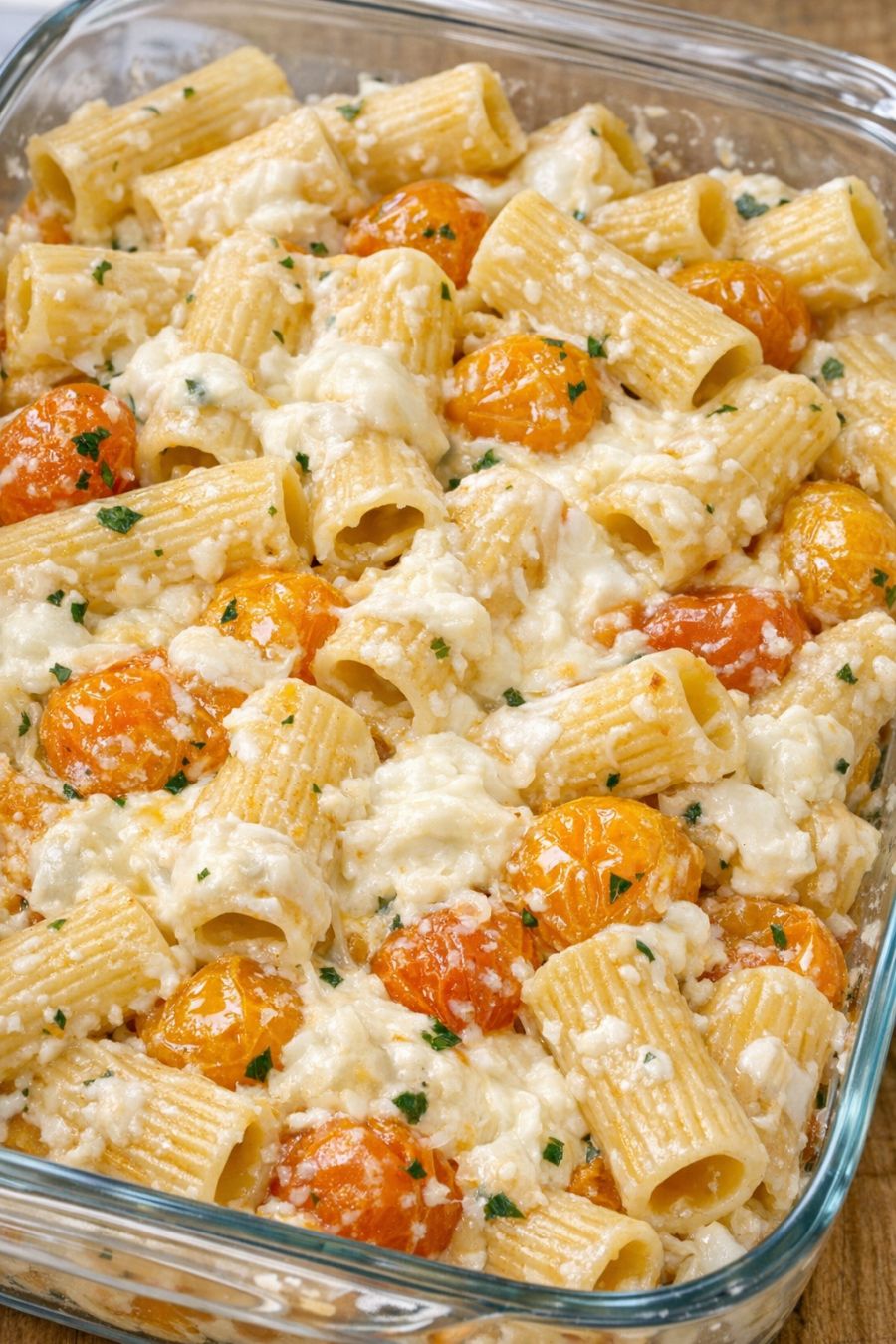
My cousin drove out last week with a pan of this simple baked rigatoni, and I swear I’ve been thinking about that creamy texture ever since. It’s the kind of three-ingredient meal that feels almost too easy for how comforting it turns out: rigatoni baked right in the oven with tangy goat cheese and sweet little tomatoes that burst into their own sauce. It reminds me of the church potlucks back home, where casseroles were hearty, unfussy, and meant to be shared. This is a modern, pared-down version of those old Midwestern bakes—straightforward, cozy, and perfect for nights when you want something warm and satisfying without fussing over a dozen ingredients.
Serve this creamy goat cheese rigatoni straight from the glass casserole dish while it’s still warm and saucy. It pairs nicely with a simple green salad—think crisp lettuce, a few cucumber slices, and a light vinaigrette to cut through the richness. A slice of crusty bread or warm dinner rolls is handy for scooping up the extra sauce that collects at the bottom of the dish. If you enjoy wine, a light red or a crisp white goes well, but around here a cold glass of milk or iced tea feels just right at the table.
Oven-Baked 3-Ingredient Sheet Pan Goat Cheese RigatoniServings: 4
Ingredients
12 ounces dry rigatoni pasta
10 ounces soft plain goat cheese (in log or crumbled form)
2 pints (about 20–24 ounces) cherry or grape tomatoes
Directions
Preheat your oven to 400°F (200°C). Set out a clear glass casserole dish or a rimmed sheet pan large enough to hold the pasta and tomatoes in a fairly even layer.
Pour the dry rigatoni into the glass casserole dish, spreading it out so it mostly covers the bottom in a single, loose layer.
Scatter the whole cherry or grape tomatoes over and around the rigatoni, letting some fall down between the pasta tubes. The tomatoes will release their juices as they bake and help create the sauce.
Nestle the goat cheese right in the center of the dish. If you’re using a log, place it in one or two large chunks so it melts evenly. If using crumbles, pile them together in the middle so they don’t dry out.
Pour about 2 cups of very hot tap water (or just-boiled water, cooled 1–2 minutes) evenly over the pasta and tomatoes, adding just enough so the rigatoni is mostly submerged but the goat cheese is still peeking out on top. Gently shake the dish to settle everything. (If your dish is very large, you may need up to 2 1/2 cups water.)
Cover the dish tightly with foil to trap in the steam. Place it on the middle rack of the preheated oven and bake for 25 minutes, until the tomatoes are puffed and starting to burst and the pasta is just turning tender.
Carefully remove the foil—watch for hot steam—and check the pasta by tasting a piece. If it’s still quite firm, stir gently, adding a splash more hot water if it looks dry around the edges.
Return the uncovered dish to the oven and bake another 10–15 minutes, until the rigatoni is al dente, the tomatoes have burst into a saucy mixture, and the goat cheese is very soft and melty around the edges.
Take the dish out of the oven and let it sit for 3–5 minutes so the bubbling settles slightly. Then, using a sturdy spoon, stir everything together right in the glass dish: fold the softened goat cheese into the hot pasta and tomatoes until a creamy, glossy sauce coats each tube of rigatoni.
Taste and adjust to your liking. If you want a looser sauce, add a tablespoon or two of hot water and stir again until it looks silky. Serve warm straight from the casserole dish, making sure each scoop has plenty of pasta, tomatoes, and creamy goat cheese.
Variations & Tips
If you’d like to add a little something extra without straying far from the spirit of this three-ingredient meal, you can sprinkle in a pinch of dried Italian herbs or black pepper when you stir the pasta at the end. A handful of fresh basil or parsley, torn over the top right before serving, gives it a garden-fresh touch that reminds me of summer suppers on the porch. For a heartier version, you can serve it alongside grilled chicken or sausage rather than baking the meat in, which keeps the dish itself true to its three ingredients. If you prefer a milder flavor, swap half of the goat cheese for a mild cream cheese, stirring until smooth. To make the pasta even creamier, reserve a little of the hot water you add and stir in an extra splash at the end until the sauce is as silky as you like. Food safety tips: Always make sure the pasta is heated through and steaming hot before serving. Use pasteurized goat cheese, especially if serving to pregnant guests, older adults, or anyone with a weakened immune system. Refrigerate leftovers within 2 hours in a shallow container, and reheat thoroughly until piping hot before eating—add a spoonful of water before reheating to keep the pasta from drying out.