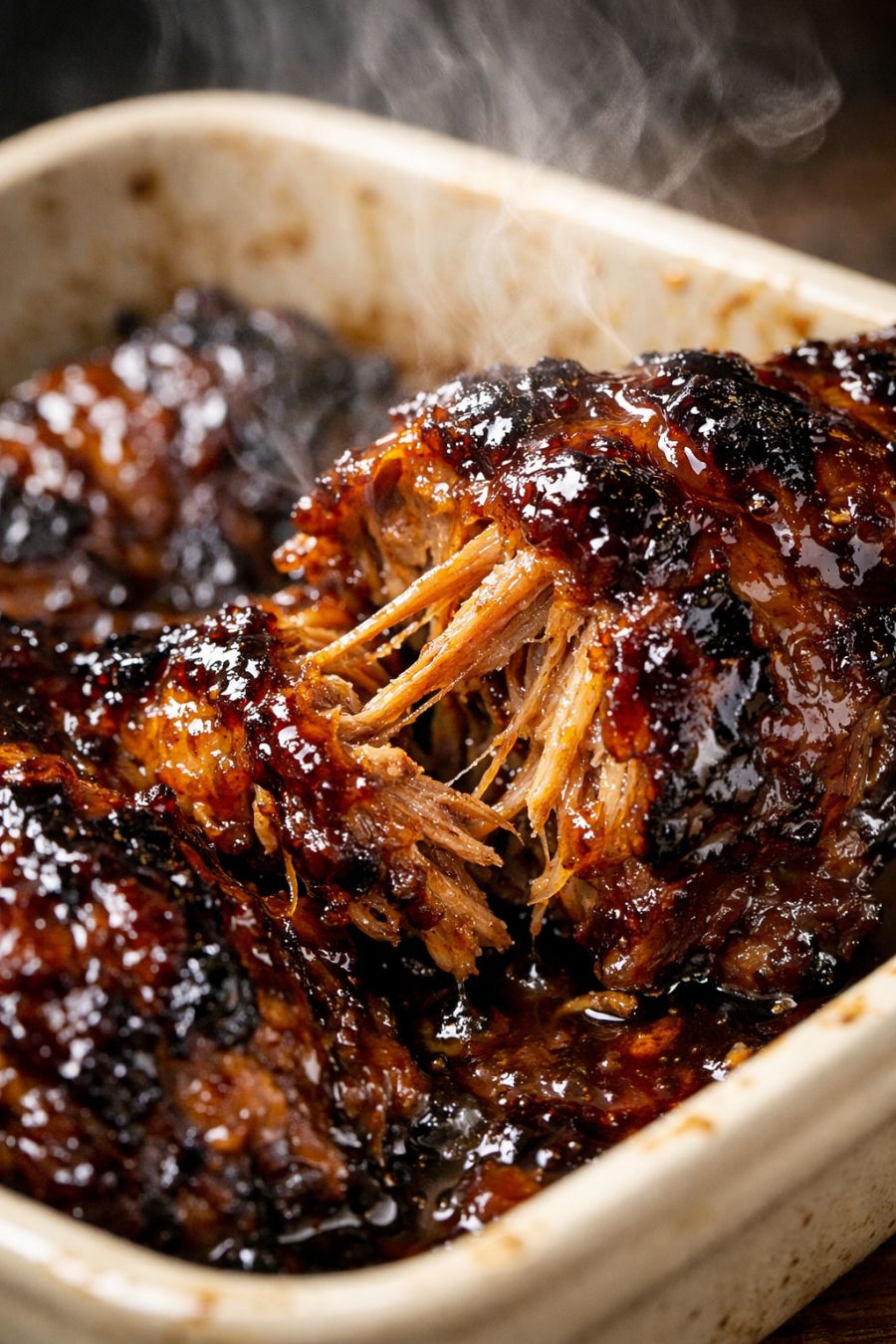
This 3-ingredient spring weekend delight is the kind of recipe I lean on when the lilacs are blooming, the yard needs tending, and I’d rather be on the porch than hovering over the stove. It’s built around a humble, fibrous, pull-apart protein that turns silky and tender after a long, slow roast under a dark amber glaze. Folks in my part of the rural Midwest have been tucking roasts into low ovens for generations, letting time and gentle heat do the work while we’re outside working the garden or visiting with neighbors. This version keeps that same old-fashioned comfort but trims things down to just three pantry-friendly ingredients so dinner can quietly take care of itself while you enjoy the day.
I like to heap this tender, glazed meat onto soft sandwich buns with a spoonful of the extra juices, then serve it alongside a simple cabbage slaw and a bowl of spring peas or asparagus. It’s also lovely piled over creamy mashed potatoes or buttered egg noodles, with a bright green salad to keep things feeling light and seasonal. If you’re feeding a crowd, set the baking dish right on the table with a basket of rolls, some pickles, and maybe a pan of baked beans, and let everyone pull off strands of that succulent meat and build their own plates.
3-Ingredient Spring Weekend DelightServings: 6-8
Ingredients
3 to 4 pounds boneless pork shoulder roast (or pork butt), trimmed of excess hard fat
1 cup thick barbecue sauce, preferably a dark, molasses- or brown sugar–rich style
1 cup apple cider (or unsweetened apple juice)
Directions
Preheat your oven to 300°F (150°C). Choose a ceramic baking dish or casserole that’s just big enough to hold the roast snugly, with a little room around the sides.
Pat the pork shoulder dry with paper towels. If there are large, hard pieces of surface fat, trim them away, but leave a modest layer so the meat stays moist. Nestle the roast into the center of the baking dish.
In a bowl or large measuring cup, whisk together the barbecue sauce and apple cider until smooth and pourable. The mixture should look like a shiny, dark amber glaze.
Pour the sauce mixture evenly over and around the pork, lifting the roast slightly with a fork so some of the liquid slips underneath. Spoon a little extra over the top so the whole roast is coated.
Cover the baking dish tightly with a double layer of heavy-duty aluminum foil or a well-fitting lid. This helps trap steam so the meat becomes tender instead of drying out.
Place the covered dish on the center rack of the preheated oven. Roast for 3 to 4 hours, depending on the size of your pork shoulder. Try not to peek too often; keeping it covered is what gives you that succulent, pull-apart texture.
After 3 hours, carefully remove the dish from the oven and peel back the foil away from you so the steam escapes safely. Test the meat with a fork: it should pull apart easily in moist, fibrous strands. If it still feels firm, re-cover and return it to the oven, checking every 30 minutes until it yields.
Once the pork is very tender, remove the foil and gently turn the roast over in the sauce with two forks or tongs, basting the top with the dark amber juices. Return the uncovered dish to the oven for 15 to 20 minutes to let the top glaze and deepen in color.
Take the dish out of the oven and let the pork rest for about 10 to 15 minutes. Then use two forks to pull the meat apart right in the baking dish, working with the grain so you get long, fibrous shreds that soak up the sauce. Toss the strands until everything is well coated and glossy.
Taste and adjust the seasoning if needed by adding a little more barbecue sauce to the pan juices for extra richness, or a splash more cider for brightness. Serve the meat hot, straight from the baking dish, with steam rising and that deep amber glaze clinging to every strand.
Variations & Tips
You can easily tailor this simple roast to your own kitchen and the season. If you prefer a slightly leaner cut, use a pork loin roast, but check it earlier (around the 2 to 2 1/2 hour mark) so it doesn’t dry out; it won’t be quite as rich as shoulder but will still shred nicely when cooked low and slow. For a smokier flavor, choose a barbecue sauce with chipotle or hickory notes, or stir a teaspoon of smoked paprika into the sauce-and-cider mixture. If you like a bit of tang to cut the sweetness, replace 1/4 cup of the apple cider with apple cider vinegar. This same method works with boneless, skinless chicken thighs—use about 3 pounds and start checking for tenderness at 1 1/2 hours; they’ll pull apart into juicy strands that take on the glossy glaze beautifully. For make-ahead convenience, cook the roast in the morning, let it cool slightly, shred it, and then rewarm gently in the oven, covered, with a splash of extra cider so it stays moist.
Food safety tips: Always keep raw pork refrigerated until you’re ready to cook, and wash your hands, cutting board, and knife thoroughly after handling it. Make sure the pork reaches a safe internal temperature of at least 190°F–200°F if you want it to shred easily; by the time it’s pull-apart tender, it will have surpassed the minimum safety threshold of 145°F. Use a clean fork and tongs for pulling the cooked meat, not the ones you used when it was raw. If you won’t be serving immediately, cool leftovers promptly and refrigerate within 2 hours. Reheat leftovers to at least 165°F before serving, adding a bit of cider or water so the meat stays succulent.