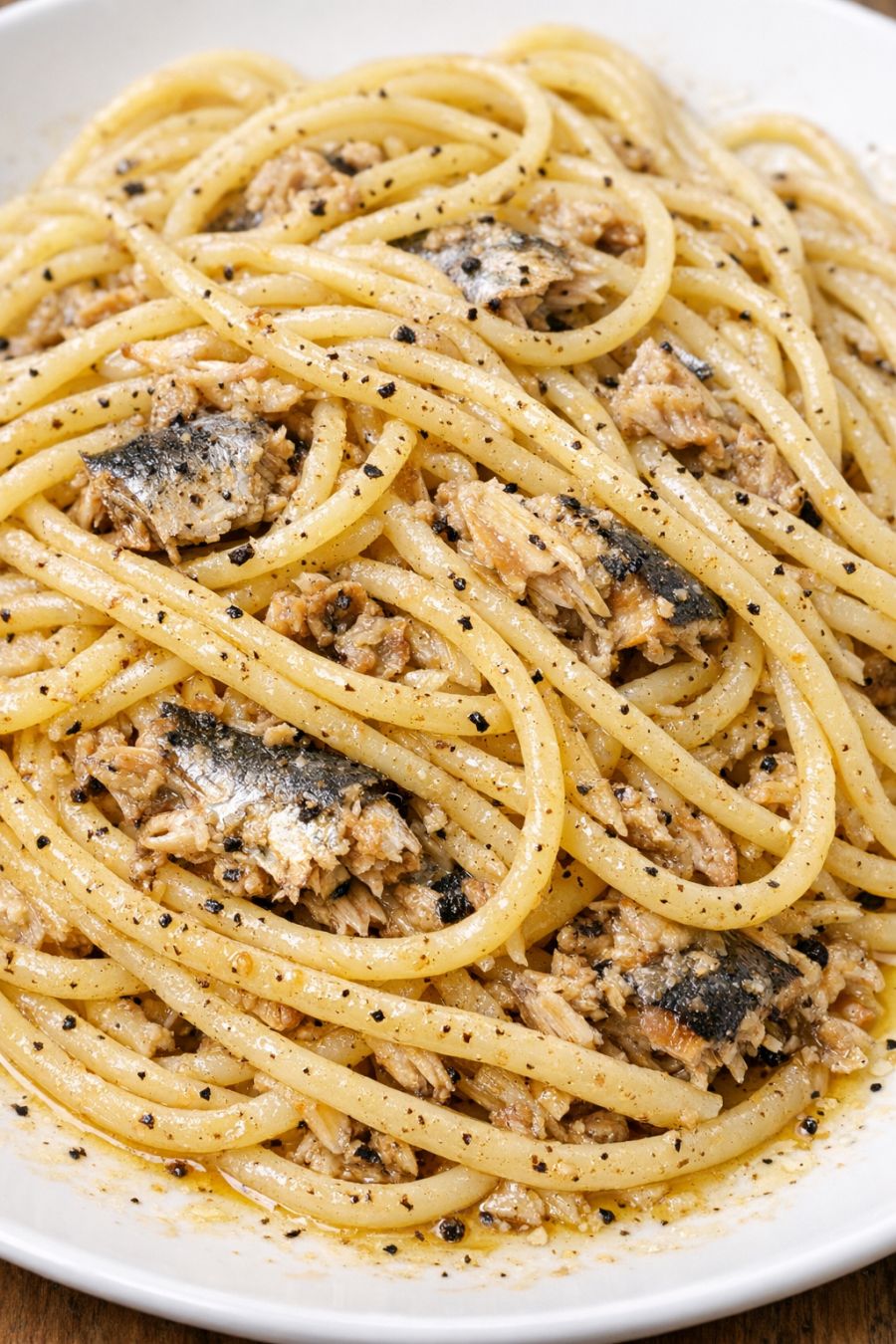
This slow cooker 3-ingredient sardine spaghetti is one of those humble, old tin-box recipes that has more history than it does ingredients. My grandmother kept it written on a yellowed index card, tucked between casserole clippings and church supper favorites. It was her way of putting a rich, salty, ocean-inspired meal on the table when money was tight and time was short. Just spaghetti, canned sardines, and a bit of seasoned oil from the can turn into a glossy, deeply savory dish that feels far more special than its price tag. The slow cooker keeps the pasta soft and the fish tender, letting everything mingle into a comforting bowl that tastes like it’s been fussed over, even when it hasn’t.
Serve this sardine spaghetti in warm shallow bowls with a generous grind of black pepper over the top. A simple green salad with a tangy vinaigrette helps cut through the richness, and a slice of crusty bread or a soft dinner roll is perfect for soaking up the seasoned oil left on the plate. If you enjoy wine, a chilled dry white or a light red pairs nicely with the salty, savory flavors. Even a glass of cold lemonade or iced tea works well, the brightness balancing the deep, ocean-kissed taste of the dish.
Slow Cooker 3-Ingredient Sardine SpaghettiServings: 4
Ingredients
12 oz (340 g) dry spaghetti
3 cans (3.75 oz/106 g each) sardines in olive oil, undrained
2 cups (480 ml) water
Directions
Lightly oil the inside of a small slow cooker (3–4 quart size works well) with a bit of the oil from one sardine can to help keep the pasta from sticking.
Break the dry spaghetti in half so it fits into the slow cooker. Lay the spaghetti in the crock in a crisscross pattern, fanning it out a bit so it doesn’t clump together too much.
Open all three cans of sardines. Pour all of the sardines and their seasoned oil over the dry spaghetti, spreading the fish and oil as evenly as you can. The oil is what gives the pasta its rich, glossy coating and salty ocean flavor.
Pour in the water, making sure most of the spaghetti is moistened. Gently press the pasta down with the back of a spoon so it’s as submerged as possible, but don’t worry if a few strands stick up; they’ll soften as they cook.
Cover the slow cooker and cook on HIGH for 1 hour. After 30 minutes, open the lid and gently stir and turn the pasta with tongs or a fork, breaking up the sardines into tender flakes and loosening any strands that want to stick together. Replace the lid quickly so you don’t lose too much heat.
Continue cooking on HIGH for another 30–45 minutes, stirring once more if needed. The spaghetti is done when it’s soft, coated in a glossy layer of seasoned oil, and the sardines are fully broken into moist, silvery flakes that cling to the pasta. If it looks too dry before the pasta is tender, add 2–4 tablespoons of hot water and stir.
Turn off the heat and let the spaghetti sit, covered, for 5 minutes to allow the starch from the pasta to thicken the cooking liquid into a silky, lightly oily sauce. Give it a final gentle toss to coat every strand.
Serve the sardine spaghetti hot on warmed plates, making sure to spoon any remaining seasoned oil and fish flakes from the bottom of the slow cooker over the top for extra flavor. Finish with freshly cracked black pepper if you like, and enjoy right away while it’s soft and glossy.
Variations & Tips
If you like a bit of heat, add a pinch of crushed red pepper flakes when you first stir the pasta and sardines together. For a brighter flavor, stir in a squeeze of fresh lemon juice right before serving, or top with a small handful of chopped fresh parsley if you have it on hand. You can also swap part of the water for a light chicken or vegetable broth for a slightly deeper, rounder taste while still keeping the ingredient list simple. If you prefer a firmer bite to your spaghetti, check it at the 45-minute mark and stop cooking when it reaches the texture you like, adding just a splash more water if needed to keep it from drying out. Use sardines packed in olive oil for the best, richest flavor; if you only have sardines in water, drain them and add 2–3 tablespoons of your own olive oil so the pasta still gets that glossy, seasoned coating. For food safety, always use canned sardines that are within their expiration date, with cans that are not bulging, rusted, or badly dented. Once cooked, refrigerate leftovers within 2 hours in a shallow container and eat within 2 days, reheating gently until steaming hot. Because this dish is quite rich and salty, taste before adding any extra salt; the seasoned oil from the sardines usually provides all the seasoning you need.