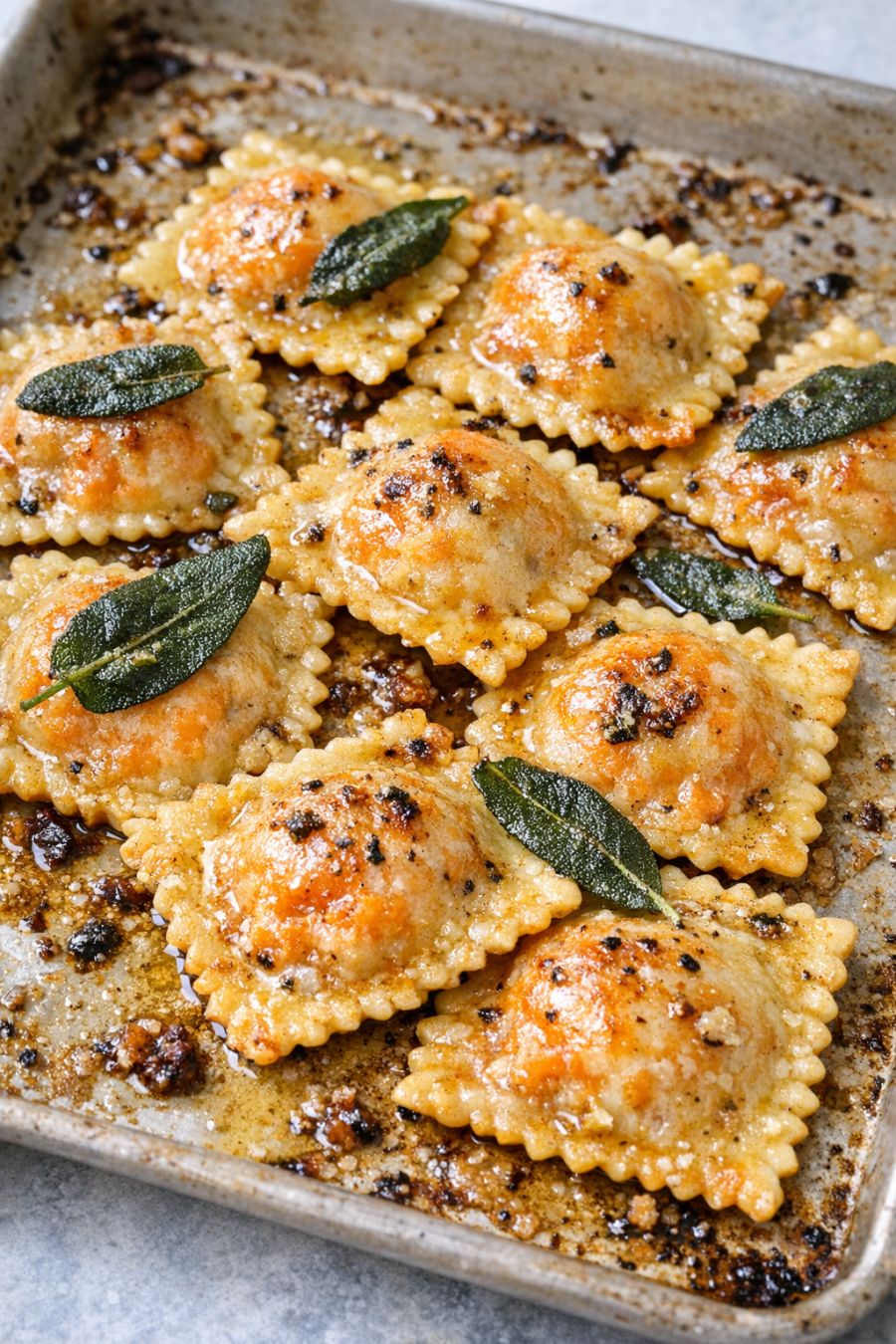
I learned this little 3‑ingredient trick from my roommate years ago, back when money was tight and we needed something warm and filling after long days. It’s become one of those weeknight comfort foods that feels a lot fancier than it is. Instead of making pasta from scratch, we lean on store‑bought sweet potato ravioli, a stick of butter, and a handful of fresh sage. Everything bakes together on one sheet pan in the oven, so you get tender orange‑filled pasta pillows with toasty edges, crisp green sage leaves, and a nutty brown‑butter glaze that puddles in all the corners. It’s the kind of easy, cozy supper that fits right in with the simple, hearty cooking I grew up with in the Midwest.
Serve these sheet pan sweet potato ravioli straight from the baking sheet with a big spoon for scooping up the brown butter and sage leaves. A simple green salad with a tangy vinaigrette helps cut through the richness, and a side of steamed green beans or roasted Brussels sprouts makes it feel like a full supper. Warm crusty bread or dinner rolls are nice for mopping up any extra butter in the pan, and if you enjoy wine, a light white or a not‑too‑heavy red pairs nicely with the sweet, earthy filling.
Oven-Baked 3-Ingredient Sheet Pan Sweet Potato RavioliServings: 3–4
Ingredients
18–20 ounces refrigerated sweet potato ravioli (family-size package)
8 tablespoons (1 stick) unsalted butter
12–15 fresh sage leaves
Directions
Preheat your oven to 400°F (200°C). Line a large rimmed baking sheet with parchment paper for easier cleanup, if you like.
Scatter the sweet potato ravioli in a single layer over the baking sheet. It’s fine if a few edges touch, but try not to pile them on top of each other so they bake evenly.
Cut the butter into small cubes and dot them evenly over and around the ravioli on the sheet pan. As the butter melts, it will coat the pasta and help it brown.
Rinse the sage leaves, pat them very dry with a clean towel, and lay them over and around the ravioli. They will crisp up and flavor the butter as everything bakes.
Place the sheet pan on the middle rack of the preheated oven and bake for 10 minutes. At this point the butter should be melted and starting to sizzle.
Carefully slide out the pan and tilt it slightly so the melted butter pools in one corner. Use a spoon to baste the ravioli with the hot butter, then gently turn a few pieces so they brown on both sides.
Return the pan to the oven and bake another 8–12 minutes, or until the ravioli edges are lightly golden, the sage leaves are crisp and toasted, and the butter has turned a light nutty brown. Watch closely near the end so the butter doesn’t burn.
Remove the pan from the oven and let the ravioli rest for 2–3 minutes; the butter will settle into a glossy glaze. Gently spoon the browned butter and toasted sage leaves over the top of the ravioli before serving.
Taste and, if you like, add a pinch of salt at the table. Serve warm, straight from the sheet pan or transferred to a warm serving dish, making sure everyone gets some of the sage and browned butter.
Variations & Tips
If your store only has frozen sweet potato ravioli, you can use it, but don’t thaw it first; just spread the frozen ravioli on the pan and add a few extra minutes of baking time, watching to be sure they cook through and the butter browns without burning. If you prefer, you can swap in butternut squash or pumpkin ravioli—the method stays the same. For a little extra richness without adding more ingredients, grate a bit of hard cheese you already have on hand—Parmesan or similar—over the hot ravioli right before serving. To stretch this dish for more people, serve the baked ravioli over a bed of lightly dressed spinach or arugula so the warm brown butter wilts the greens. If you’d like some crunch, sprinkle toasted nuts (like walnuts or pecans) over the top, though that would make it more than three ingredients. For food safety, always keep the ravioli refrigerated until you are ready to bake, and follow the “use by” date on the package. Make sure the ravioli are heated through and steaming in the center before serving—especially if they were frozen—to ensure they reach a safe temperature. Use a rimmed baking sheet so the hot butter doesn’t spill, and handle the pan carefully when tilting it to baste, as the butter will be very hot. Store any leftovers in the refrigerator and reheat thoroughly in the oven or a skillet until hot all the way through.