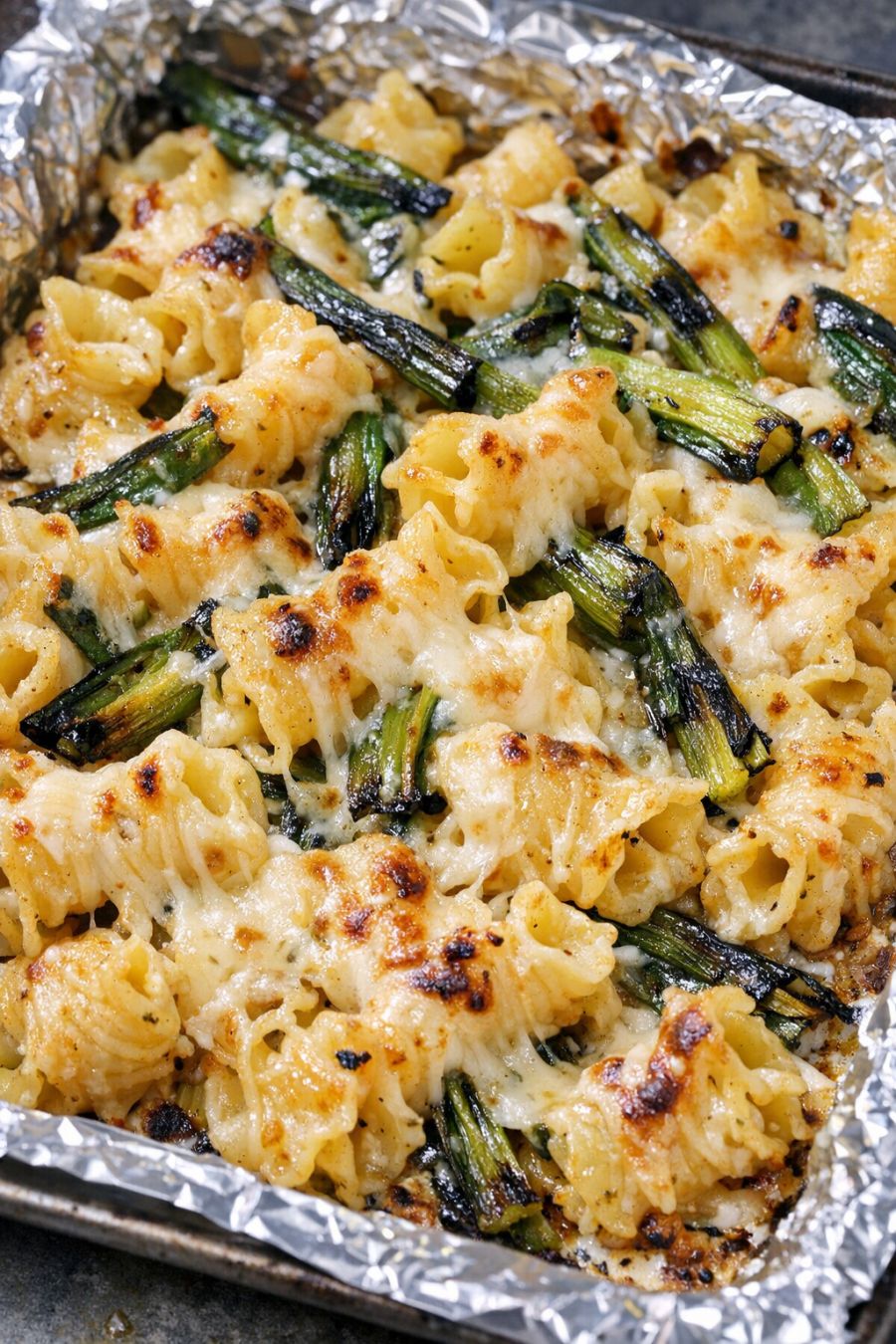
Every April, when the ditches green up and the first spring onions show their skinny faces at our little farm stand, I remember my college roommate, Lynn. She was from a big Italian-Midwestern family and one night, in our cramped dorm kitchen, she pulled out a foil-lined pan, a bag of pasta, a bundle of green onions, a block of white cheese, and a carton of cream. That was it. No fancy steps, no long list of ingredients—just four things and a hot oven. The pasta baked up tender, the cheese went all gooey, and the onions turned sweet and charred at the tips. I’ve been making this simple sheet pan campanelle every single April since, and it still feels like the first taste of spring.
I like to serve this oven baked spring onion campanelle with a simple green salad—just lettuce, a splash of vinegar, and a drizzle of good oil—to cut through the richness. Warm crusty bread or buttered toast soldiers are handy for scooping up any creamy, cheesy bits left on the foil. A side of roasted asparagus or peas is lovely when they’re in season, and if you enjoy wine, a small glass of crisp white pairs nicely without overpowering the gentle onion flavor.
Oven-Baked 4-Ingredient Sheet Pan Spring Onion CampanelleServings: 4
Ingredients
12 oz dry campanelle pasta
1 bunch spring onions (about 6–8 small bulbs with greens), trimmed and cut into 2-inch pieces
2 cups shredded mild white cheese (such as mozzarella or Monterey Jack, lightly packed)
2 cups heavy cream
Directions
Preheat your oven to 400°F (200°C). Line a large rimmed sheet pan with heavy-duty aluminum foil, making sure the foil comes up the sides to catch the cream.
Spread the dry campanelle pasta evenly over the foil-lined sheet pan in a single, fairly even layer. It’s fine if a few pieces overlap, but don’t pile it too deep or it won’t cook evenly.
Scatter the spring onion pieces over and around the pasta, tucking some of the white bulbs down into the pasta and letting most of the green tops sit more on the surface so they can char and crisp in the oven.
Sprinkle the shredded white cheese evenly over the pasta and onions, making sure to cover as much of the surface as you can. Try to keep most of the cheese on top rather than directly on the foil to prevent sticking.
Slowly pour the heavy cream over the pasta and onions, moving your hand around the pan so the cream seeps down and around the pasta. You want most of the pasta to be moistened by the cream, with just a few edges peeking out for a bit of chew. Gently shake or tilt the pan to help the cream distribute without stirring.
Carefully cover the sheet pan tightly with another layer of foil, crimping the edges all the way around to seal in the steam. Slide the pan into the preheated oven and bake, covered, for 30 minutes.
After 30 minutes, remove the top layer of foil, being careful of the hot steam. Check that the cream is bubbling around the pasta. Return the uncovered pan to the oven and bake for another 15–20 minutes, or until the pasta is tender when you bite into a piece, the cheese is melted and gooey, and the spring onion tops are lightly charred around the edges.
If you’d like deeper browning on the onions and cheese, move the pan to the top rack for the last 3–5 minutes of baking. Watch closely so the onions don’t burn.
Remove the pan from the oven and let it rest for 5–10 minutes. The sauce will thicken slightly as it cools, and the pasta will soak up a bit more of the creamy goodness.
Use a spatula or large spoon to scoop generous portions of pasta, making sure to grab some of the charred spring onions and gooey cheese with each serving. Serve straight from the foil-lined sheet pan for that relaxed, dorm-kitchen-meets-farmhouse feel.
Variations & Tips
If you’d like a touch more flavor while still honoring the four-ingredient spirit, choose a cheese with character, such as a young provolone, fontina, or a mild white cheddar, but keep the total ingredient count to the original four. For a lighter version, you can swap part of the heavy cream for whole milk, though the sauce will be thinner and less rich; keep at least half cream for best results. You can also adjust texture by baking a bit longer uncovered if the pasta seems too saucy, or adding a splash more cream midway if it looks dry at the edges. For smaller households, halve the recipe and bake on a smaller sheet pan, checking for doneness a few minutes earlier. Leftovers should be cooled quickly, then refrigerated in a covered container and eaten within 3–4 days; reheat covered in a 325°F oven with a spoonful of extra cream or milk to loosen. Because this recipe uses dry pasta baked in cream, make sure the cream is bubbling hot throughout and the pasta is fully tender before serving—this ensures it reaches a safe temperature and the starches are fully cooked. Always handle the foil carefully when uncovering to avoid steam burns, and use a sturdy sheet pan so the hot cream doesn’t slosh when moving it in and out of the oven.