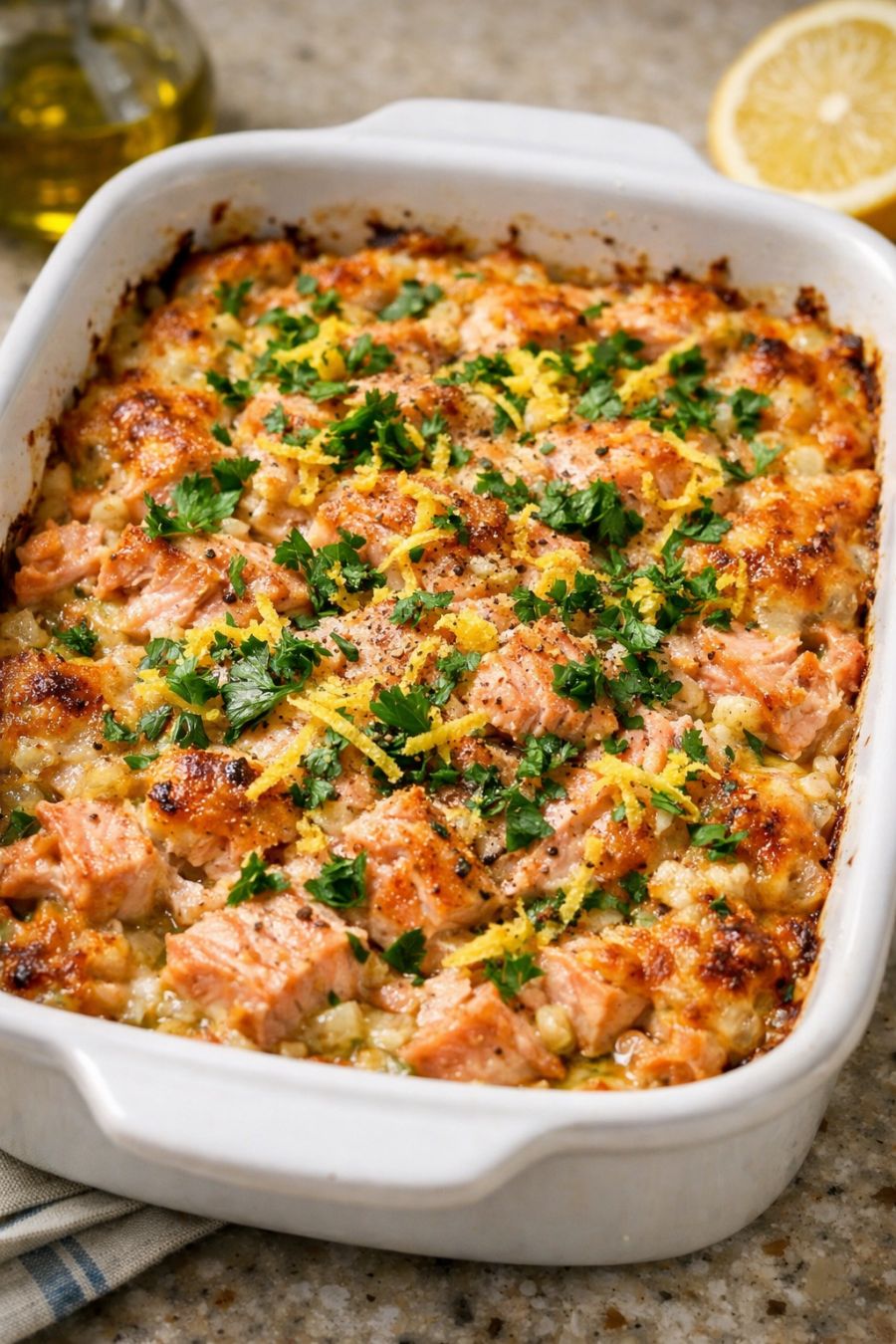
This 6-ingredient oven-baked canned pink salmon casserole is the kind of weeknight recipe I lean on when I want something comforting, fast, and surprisingly elegant. Instead of flaking and fussing with the salmon, we use the whole chilled block of canned pink salmon straight from the can, set into a casserole dish, then surround it with just five simple extras. It bakes up tender and richly flavored, with a golden top and creamy, lemony juices you’ll want to spoon over everything. Canned pink salmon became popular in American home kitchens in the mid-20th century as an affordable, shelf-stable way to enjoy wild-caught fish, and this recipe leans into that practicality while giving it a modern, clean-flavored twist.
Serve this baked canned salmon with a simple green salad dressed in lemon and olive oil, or alongside roasted or steamed vegetables such as asparagus, green beans, or broccoli. Buttered rice, quinoa, or crusty bread are perfect for soaking up the garlicky, lemon-infused juices from the casserole dish. A crisp white wine like Sauvignon Blanc, or iced tea with lemon, pairs nicely with the bright, citrusy flavors.
6-Ingredient Oven-Baked Canned Pink SalmonServings: 4
Ingredients
1 (14–15 oz) can pink salmon, chilled so it unmolds as a solid block
3 tbsp olive oil, divided
1 medium lemon, zested and juiced (about 2–3 tbsp juice)
2 cloves garlic, finely minced
1/2 tsp kosher salt (or to taste)
1/4 tsp freshly ground black pepper (or to taste
Directions
Preheat your oven to 400°F (200°C). Lightly oil the bottom of a small oven-safe ceramic casserole dish (just large enough to hold the salmon block with a little space around it) with about 1 teaspoon of the olive oil.
Chill the unopened can of pink salmon in the refrigerator for at least 1 hour so the contents firm up into a solid block. This helps the salmon slide out in one piece and hold its shape in the casserole dish.
Open the chilled can of salmon over the sink, draining off any excess liquid. Run a thin knife or small spatula around the inside edge of the can to loosen the salmon, then carefully invert the can directly into the center of the prepared casserole dish so the salmon comes out as one solid block. If it breaks slightly, gently press it back into a block shape with clean hands or a spoon.
In a small bowl, whisk together the remaining olive oil, lemon zest, lemon juice, minced garlic, kosher salt, and black pepper until well combined. This creates a bright, garlicky lemon oil that will season the salmon as it bakes.
Spoon the lemon-garlic mixture evenly over the top and sides of the salmon block, letting some run into the bottom of the dish. Use the back of the spoon to nudge the mixture so it coats as much of the exposed surface as possible. You should see a shallow pool of seasoned oil and lemon juice around the base of the salmon.
Transfer the casserole dish to the preheated oven and bake, uncovered, for 18–22 minutes, or until the salmon is heated through, the top looks slightly golden in spots, and the juices around the fish are gently bubbling. The internal temperature of the salmon should reach at least 145°F (63°C).
Remove the dish from the oven and let the salmon rest for 3–5 minutes. During this time, the flavors settle and the juices thicken slightly. Serve the salmon block whole at the table and let guests spoon off portions, basting each serving with the lemon-garlic pan juices from the bottom of the casserole dish.
Variations & Tips
For a herb-forward version, sprinkle 1–2 tablespoons of chopped fresh herbs (such as parsley, dill, or chives) over the salmon after baking, or add 1 teaspoon dried Italian seasoning to the lemon-garlic mixture before it goes into the oven. To make it a more substantial one-pan meal, scatter 1–2 cups of halved cherry tomatoes or thinly sliced zucchini around the salmon block before baking; they’ll roast in the lemony juices and become a built-in side. If you enjoy a richer dish, dot the top of the salmon with 1–2 tablespoons of softened butter before baking, or finish with a light grating of Parmesan in the last 5 minutes of cooking. For a mild heat, add a pinch of red pepper flakes to the seasoning mix. If sodium is a concern, choose low-sodium canned salmon and reduce or omit the added salt, seasoning lightly at the end if needed.
Food safety tips: Always check the can of salmon before use—discard it if the can is bulging, rusted through, badly dented at the seams, or if it spurts or smells off when opened. Keep the canned salmon chilled only for firming; do not leave it at room temperature for more than 2 hours (or 1 hour if your kitchen is above 90°F/32°C). Bake until the salmon reaches at least 145°F (63°C) in the center, measured with an instant-read thermometer. Refrigerate leftovers in a covered container within 2 hours of baking and consume within 2–3 days, reheating gently until steaming hot before serving.