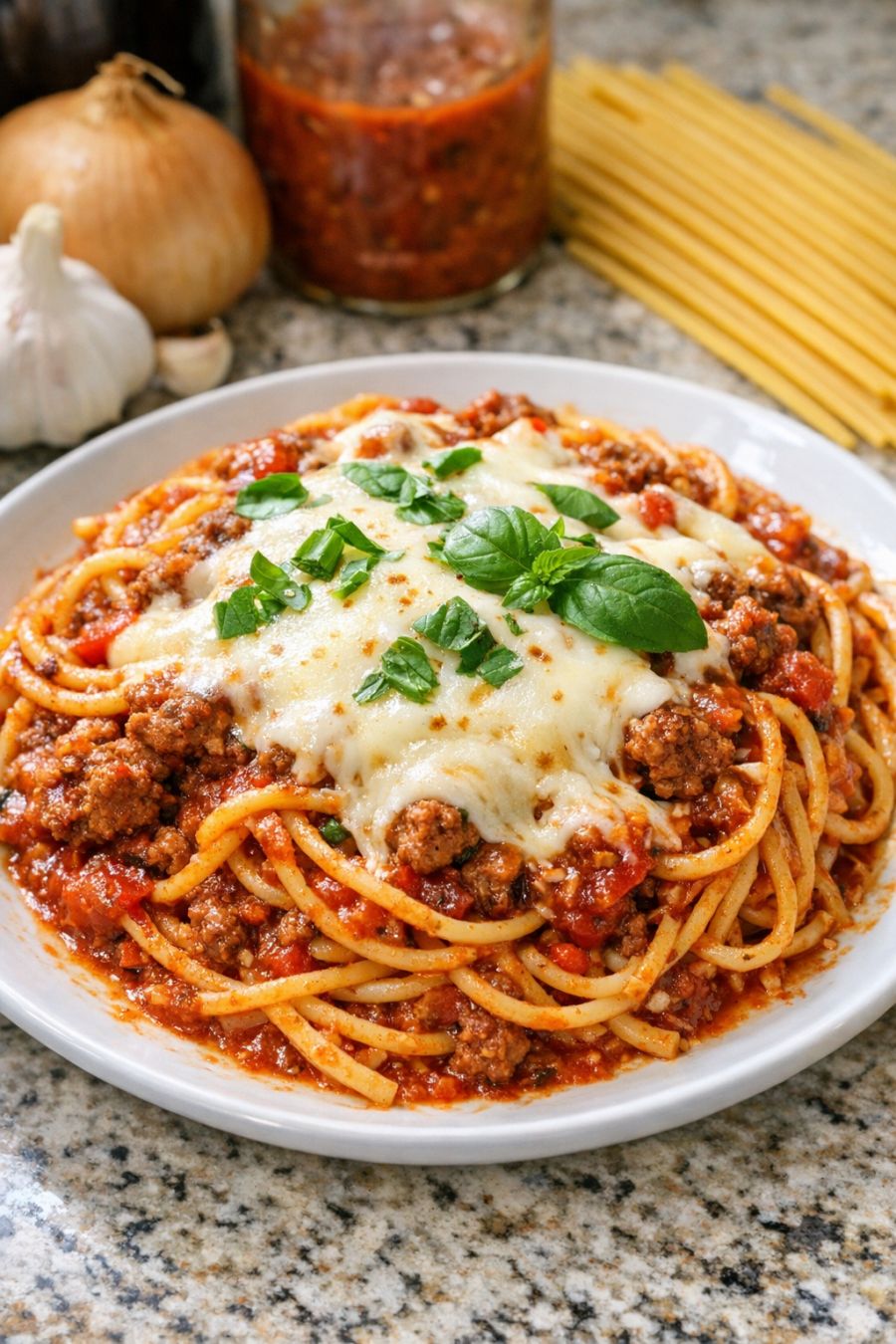
This 5-ingredient slow cooker April Showers Spaghetti takes me right back to those drizzly spring evenings on the farm, when the fields were too muddy to work and everyone came in hungry at once. Instead of fussing over boiling water and juggling pots, you simply scatter raw, unbroken spaghetti right into the slow cooker, pour on a few pantry staples, and let it gently simmer into a cozy, saucy tangle of noodles. It’s the kind of practical, stick-to-your-ribs Midwestern meal that keeps everyone warm, fed, and asking for seconds with hardly any work from you.
Serve this slow cooker spaghetti straight from the crock with a generous sprinkle of extra Parmesan if you have it. A simple green salad with bottled Italian dressing and a basket of garlic bread or buttered toast soldiers makes a fine, no-fuss supper. If you’re feeding a crowd, set the slow cooker on warm and let folks help themselves, with a dish of cottage cheese or a small bowl of mixed pickles on the side, just like we did after church potlucks back in the day.
5-Ingredient Slow Cooker April Showers SpaghettiServings: 6
Ingredients
12 ounces raw unbroken spaghetti noodles
1 (24-ounce) jar prepared spaghetti sauce
3 cups low-sodium chicken broth (or water)
1 pound ground beef, browned and drained
1 cup shredded mozzarella cheese (plus a little extra for serving, optional)
Directions
Scatter the raw, unbroken spaghetti noodles evenly over the bottom of a 5- to 6-quart slow cooker, letting them crisscross and overlap a bit but keeping them mostly in a flat layer so they cook evenly.
In a separate skillet over medium heat, cook the ground beef until fully browned and no pink remains, breaking it up into small crumbles as it cooks. Drain off any excess fat so the sauce in the slow cooker doesn’t become greasy.
In a large bowl or measuring pitcher, whisk together the jar of spaghetti sauce and the chicken broth (or water) until well combined. This thinned sauce is what will gently soften and cook the dry noodles.
Sprinkle the browned, drained ground beef evenly over the dry spaghetti in the slow cooker, trying not to disturb the noodle layer too much.
Slowly pour the sauce-and-broth mixture over the noodles and beef, making sure all the spaghetti is moistened. If any noodles are sticking up dry, gently press them down with the back of a spoon so they’re submerged in liquid.
Cover the slow cooker with the lid and cook on HIGH for 1 1/2 to 2 hours, or on LOW for 3 to 3 1/2 hours, until the spaghetti is tender but not mushy. About halfway through, give everything a gentle stir, lifting from the bottom so the noodles separate and cook evenly, then replace the lid quickly.
Once the spaghetti is cooked to your liking and most of the liquid has been absorbed into a thick sauce, sprinkle the shredded mozzarella evenly over the top. Cover again and let sit on LOW or WARM for about 10 minutes, just until the cheese melts into a soft, gooey layer.
Give the spaghetti one more gentle toss to mix some of the melted cheese into the noodles, then taste and add salt and pepper if needed. Serve hot straight from the slow cooker, with extra mozzarella on top if you like.
Variations & Tips
You can swap the ground beef for Italian sausage, ground turkey, or even cooked crumbled meatloaf leftovers for a thrifty twist. If you prefer a creamier sauce, stir in 1/2 cup of cream cheese cubes or a splash of heavy cream right after the pasta turns tender, then let it warm through before adding the mozzarella on top. A handful of dried Italian seasoning or a pinch of red pepper flakes can deepen the flavor without adding extra fuss. For a lighter version, use whole-wheat spaghetti and lean ground meat, and top each serving with a spoonful of cottage cheese instead of extra mozzarella, a very Midwestern touch. Food safety tips: Always brown and fully cook ground beef to at least 160°F before adding it to the slow cooker, and drain off excess grease so the dish doesn’t become oily or unsafe from too much fat pooling. Make sure your slow cooker starts hot—don’t add frozen meat directly, as it can linger too long in the temperature “danger zone.” Leftovers should be cooled promptly, stored in shallow containers in the refrigerator, and eaten within 3–4 days or frozen for longer keeping.