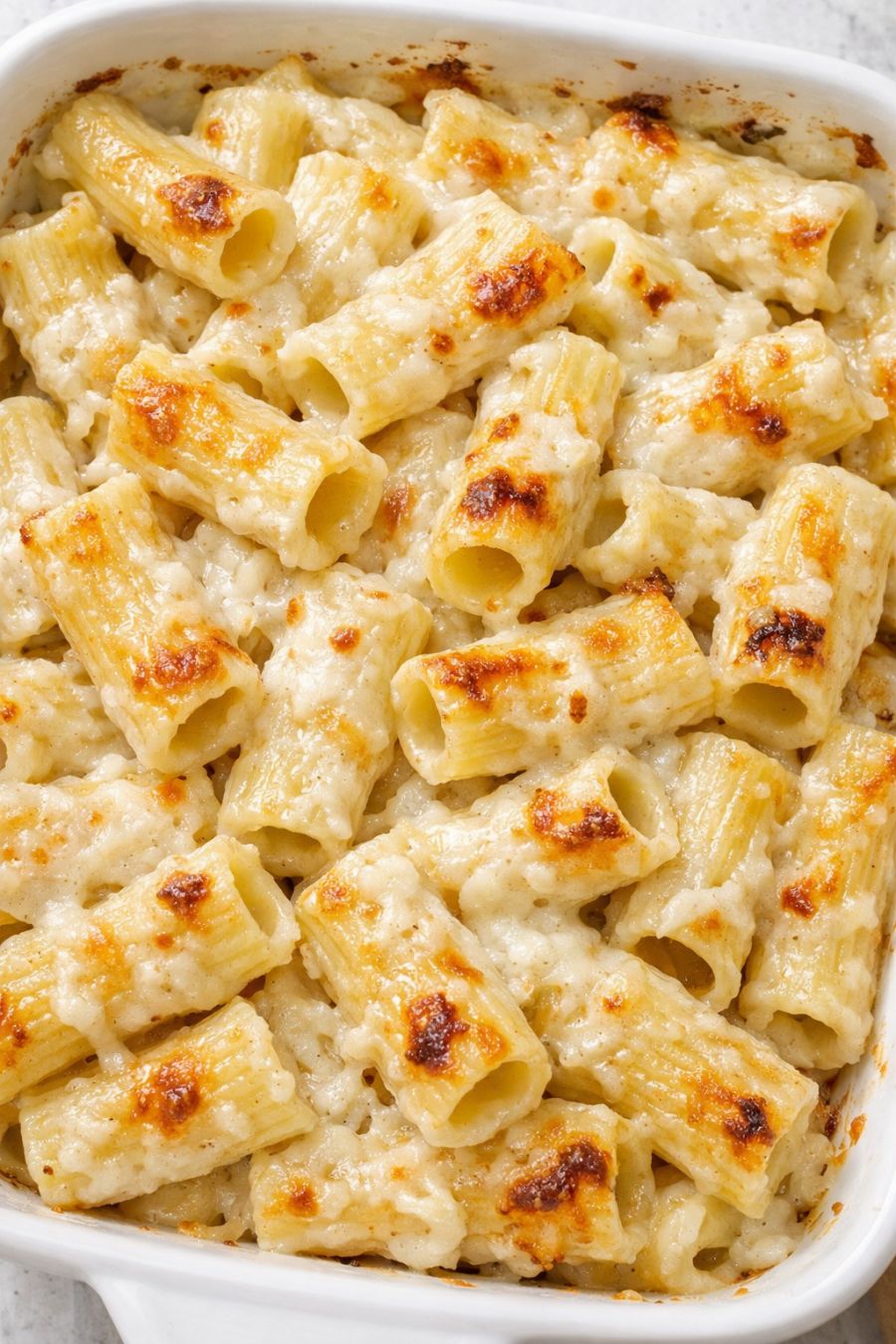
This oven baked 4-ingredients creamy Asiago rigatoni is exactly the kind of weeknight dinner my uncle swears by: minimal effort, comforting, and just special enough to feel like you planned ahead. It leans on the Italian-American tradition of baked pasta—think of it as a stripped-down, white-sauce cousin to baked ziti. The rigatoni bakes right in a simple Asiago cream, so the pasta turns tender, the edges crisp and golden, and the sauce bubbles up into all those ridges. It’s perfect for those lazy spring nights when you’d rather crack a window, pour a glass of wine, and let the oven do the work.
Serve this creamy Asiago rigatoni straight from the baking dish with a big green salad—something crisp and lightly dressed, like romaine or arugula with lemon and olive oil—to balance the richness. Warm crusty bread or a baguette is ideal for swiping up the extra sauce around the edges. A light, zesty white wine such as Pinot Grigio or Sauvignon Blanc pairs nicely, or sparkling water with lemon if you’re keeping it alcohol-free. If you want to round it out further without much effort, add a side of roasted asparagus or green beans tossed with olive oil and salt and baked on a sheet pan alongside the pasta.
Oven Baked Creamy Asiago RigatoniServings: 4
Ingredients
12 oz dried rigatoni pasta
2 cups heavy cream
2 cups finely shredded Asiago cheese, divided
1 tsp kosher salt, plus more for pasta water
Directions
Heat the oven to 375°F (190°C). Lightly grease a medium (about 2-quart) white ceramic baking dish and set aside.
Bring a large pot of well-salted water to a boil. Add the rigatoni and cook 2 minutes less than the package directions for al dente; the pasta will finish cooking in the oven. Drain well but do not rinse.
While the pasta cooks, pour the heavy cream into a medium saucepan. Warm it over low to medium-low heat just until it’s steaming around the edges, stirring occasionally so it doesn’t scorch. Do not let it boil.
Remove the warm cream from the heat and immediately stir in 1 1/2 cups of the shredded Asiago cheese and the kosher salt. Stir until the cheese is mostly melted and the sauce looks smooth and slightly thickened. Taste and adjust the salt if needed, keeping in mind the pasta was cooked in salted water.
Add the drained rigatoni to the saucepan with the Asiago cream sauce. Gently fold and stir until every piece of pasta is well coated and the sauce seeps into the tubes and ridges.
Transfer the sauced rigatoni to the prepared baking dish, spreading it into an even layer. Sprinkle the remaining 1/2 cup Asiago evenly over the top for a golden, cheesy crust.
Bake uncovered for 18–22 minutes, or until the edges are bubbling, the top is lightly golden, and a few pieces of pasta on top are just starting to crisp.
For extra golden edges, move the dish to the upper third of the oven and broil on high for 1–2 minutes, watching closely so the cheese doesn’t burn.
Remove from the oven and let the rigatoni rest for 5–10 minutes. This short rest helps the sauce thicken slightly and cling to the pasta. Serve warm, scooping down through the crispy top into the creamy center.
Variations & Tips
For a bit of color and freshness without adding more core ingredients, finish the baked rigatoni with a shower of freshly ground black pepper or a handful of torn fresh herbs like parsley or basil if you have them on hand. If you prefer a slightly lighter sauce, you can swap up to 1/2 cup of the heavy cream with whole milk, though the sauce will be a touch less rich. For those who like a sharper flavor, use aged Asiago and grate it very finely so it melts smoothly; for a milder dish, choose a younger Asiago. You can also assemble the dish a few hours ahead: cook the pasta, mix with the sauce, transfer to the baking dish, cover and refrigerate, then bake straight from the fridge, adding 5–10 extra minutes and watching that the top doesn’t over-brown. If the top is browning too quickly at any point, loosely tent with foil. Food safety tips: Keep the heavy cream refrigerated until you’re ready to use it, and avoid leaving the assembled, unbaked casserole at room temperature for more than 1–2 hours. Leftovers should be cooled, covered, and refrigerated within 2 hours of baking and eaten within 3–4 days; reheat thoroughly until the center is hot and steaming. Because this dish is rich, small portions go a long way, and pairing it with vegetables or salad keeps the meal balanced.