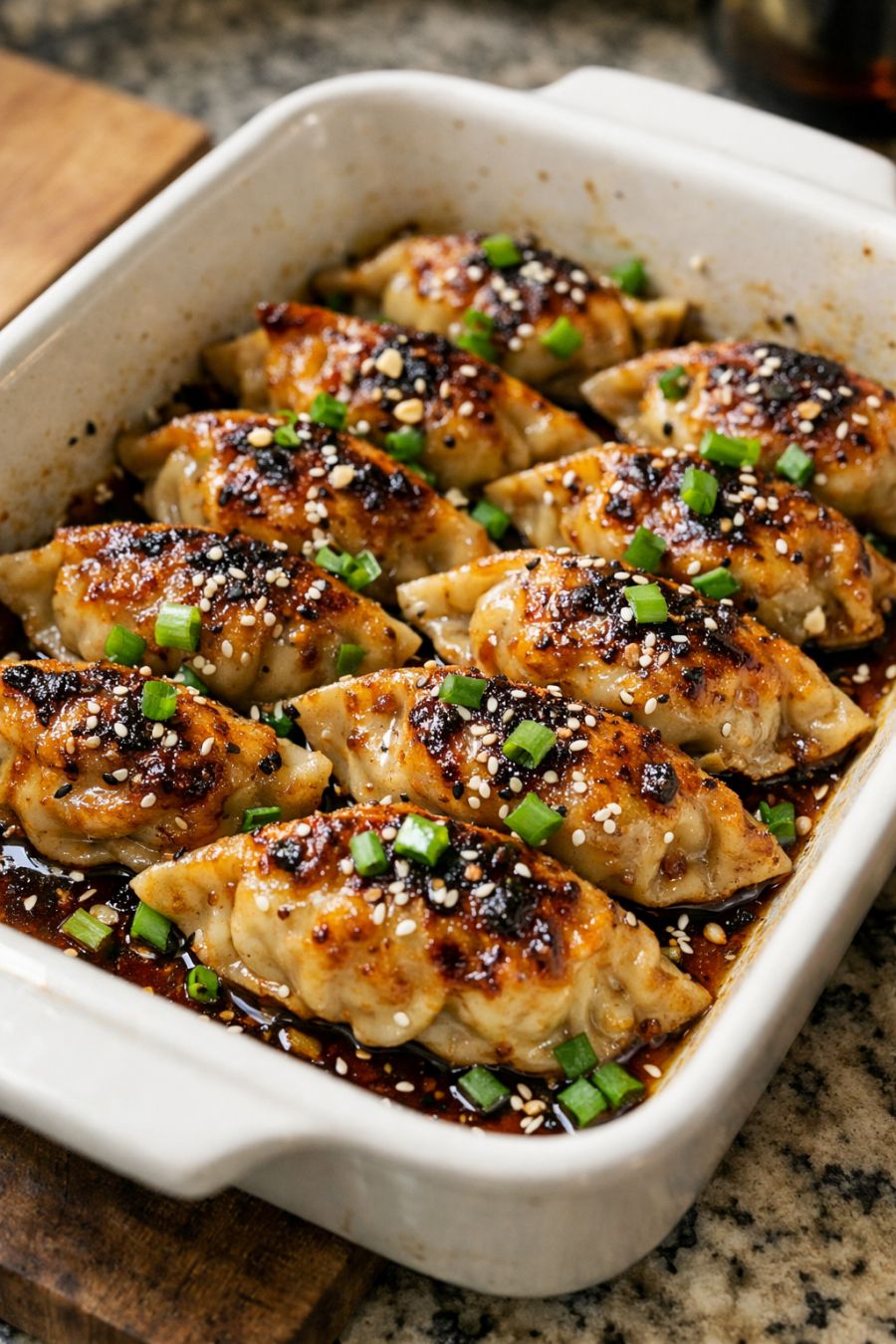
This 5-ingredient oven baked pork gyoza dish is what I lean on when I want something cozy, a little bit fun, and absolutely effortless. Instead of standing over a skillet to pan-fry batch after batch, we take completely frozen raw pork gyoza straight from the bag, scatter them into a baking dish, and let the oven do the work with just four pantry staples. Gyoza, the Japanese cousin of Chinese jiaozi, are traditionally pan-fried and steamed, but here we shortcut the technique by creating a savory, slightly sticky sauce that bakes around the dumplings. The result is crisp-edged, tender-centered gyoza that come to the table in one bubbling dish—and they tend to disappear fast enough that people really do angle for the last piece.
Serve these oven baked pork gyoza straight from the baking dish with a simple bowl of steamed rice or microwaveable jasmine rice to catch the extra sauce. A quick side of sliced cucumbers tossed with rice vinegar and a pinch of salt adds crunch and brightness. If you’d like to round it out further, pair with miso soup or a bagged Asian-style salad mix dressed lightly. For drinks, green tea, cold beer, or a crisp, dry white wine all work nicely with the savory-sweet, garlicky flavors of the baked dumplings.
5-Ingredient Oven Baked Pork GyozaServings: 4
Ingredients
1 (24–32 oz) bag completely frozen raw pork gyoza (no thawing)
1/3 cup low-sodium soy sauce
3 tablespoons neutral oil (such as canola, vegetable, or light olive oil)
2 tablespoons rice vinegar (or distilled white vinegar in a pinch)
1–2 tablespoons honey or brown sugar, to taste
Directions
Preheat your oven to 400°F (200°C). Lightly oil a medium baking dish (about 9x13 inches or similar) using a bit of the neutral oil or a quick spray; this helps keep the gyoza from sticking as they bake.
Open the bag of completely frozen raw pork gyoza and scatter them in a single, mostly even layer in the prepared baking dish. It’s fine if they touch or overlap slightly, but avoid stacking them on top of each other for the most even cooking.
In a small bowl or liquid measuring cup, whisk together the soy sauce, neutral oil, rice vinegar, and honey or brown sugar until the honey or sugar is fully dissolved and the mixture looks glossy and unified.
Pour the sauce evenly over the frozen gyoza, tilting the baking dish gently if needed so some of the liquid runs underneath and around the dumplings. You want each gyoza to have at least a light coating of the sauce.
Cover the baking dish tightly with aluminum foil. Bake, covered, for 20 minutes. This covered time allows the gyoza to steam in the sauce and cook through from frozen without drying out.
After 20 minutes, carefully remove the foil (watch for hot steam). Gently stir or nudge the gyoza with a spatula or tongs to re-coat them in the sauce and loosen any that are sticking to the bottom of the dish.
Return the uncovered baking dish to the oven and continue baking for 10–15 minutes, or until the gyoza are cooked through, the edges look lightly crisped, and the sauce has thickened slightly and is bubbling. If your gyoza are on the larger side or very tightly packed, you may need an extra 5 minutes.
To check doneness, cut one gyoza in half: the pork filling should be hot all the way through with no pink remaining, and the internal temperature should reach at least 165°F (74°C) if you use a thermometer.
Once done, let the gyoza rest in the baking dish for 3–5 minutes. The sauce will thicken a bit more as it cools. Serve the gyoza directly from the dish, spooning extra sauce over the top so everyone can grab a few—and possibly argue over that last piece.
Variations & Tips
You can tweak this 5-ingredient base in a number of ways while keeping the spirit of the recipe. For a spicier version, whisk in 1–2 teaspoons of chili-garlic sauce, sriracha, or a pinch of red pepper flakes to the sauce before pouring it over the frozen gyoza (this would count as an optional extra ingredient beyond the core five). If you prefer a slightly thicker, more glaze-like finish, add an extra teaspoon or two of honey or brown sugar and let the dish bake uncovered toward the end until the sauce reduces a bit more. For a lighter, tangier flavor, increase the rice vinegar to 3 tablespoons and use the lower end of the honey or sugar. You can also use this method with chicken or vegetable gyoza; just follow the same timing and always confirm the internal temperature reaches at least 165°F (74°C) for meat-filled dumplings. If you’re cooking from a different brand or a much smaller or larger size of gyoza, start checking doneness a few minutes early and adjust as needed. For easier cleanup, line the baking dish with parchment before adding the oil and gyoza, but still give it a light oiling so the dumplings don’t stick. Food safety tips: keep the gyoza frozen until you’re ready to bake so they don’t sit in the danger zone (40°F–140°F) for long; never refreeze gyoza that have fully thawed; and avoid tasting the sauce once it has touched raw dumplings until it has been fully cooked in the oven. Leftovers should be cooled quickly, refrigerated within 2 hours, and reheated until steaming hot before serving.