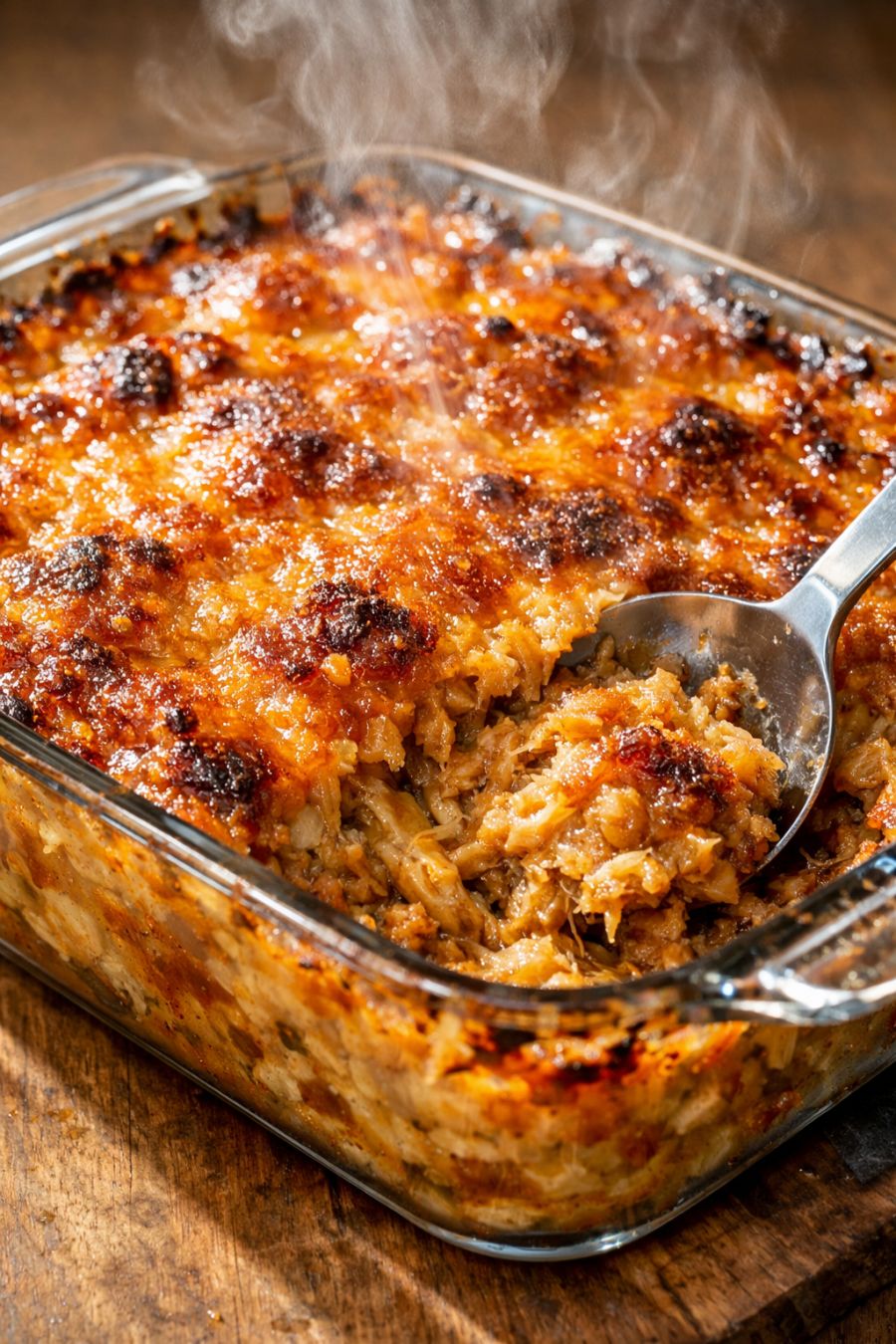
This is my kind of weekend recipe: four ingredients, almost no prep, and the kind of slow, cozy aroma that makes everyone wander into the kitchen asking when dinner will be ready. Think of it as a Midwestern-style baked chicken and onions that behaves like a casserole—everything tucks into one glass dish, then bakes until the protein is concealed under bubbling, caramelized onions and pan juices. The concept isn’t tied to one specific cuisine; it borrows from French onion-style slow caramelization and the practicality of American baked chicken dinners. You get a deeply golden, slightly sticky top, tender protein underneath, and a house that smells like you’ve been cooking all day, even though the oven did almost all the work.
Serve generous spoonfuls of the bubbling caramelized chicken and onions over a bed of buttery mashed potatoes, egg noodles, or simple steamed rice to catch all the savory juices. A crisp green salad with a tangy vinaigrette or lightly roasted green beans balances the richness nicely. If you want to lean into weekend comfort, add warm crusty bread for swiping through the glass baking dish to capture every last bit of the golden, onion-streaked sauce.
4-Ingredient Weekend Warmth BakeServings: 4
Ingredients
2 pounds bone-in, skin-on chicken thighs (about 4–6 pieces)
2 large yellow onions, thinly sliced
3 tablespoons salted butter, melted
1 teaspoon kosher salt (plus a pinch more if needed, to taste)
Directions
Preheat your oven to 350°F (175°C). Place a rack in the center of the oven so the heat can circulate evenly around the baking dish.
Lightly grease a 9x13-inch glass baking dish (or similar size) with a small swipe of the melted butter to prevent sticking and encourage browning along the edges.
Peel and thinly slice the onions from root to tip. Aim for slices about 1/8–1/4 inch thick; thinner slices soften and caramelize more evenly, creating that golden, fibrous layer you’ll see when you scoop into the finished dish.
Scatter the sliced onions evenly over the bottom of the prepared glass baking dish. Sprinkle with 1/2 teaspoon of the kosher salt, tossing lightly with your hands or a fork so the salt is distributed and the onions start to release a bit of moisture.
Pat the chicken thighs dry with paper towels. This simple step helps the skin render more cleanly and crisp around the edges instead of steaming.
Nestle the chicken thighs, skin-side up, directly on top of the bed of onions. It’s fine if they’re snug; as they cook, the fat will render and the onions will collapse underneath, almost disguising the protein under a bubbling layer.
Brush or spoon the remaining melted butter evenly over the chicken skin and exposed onions. Sprinkle the remaining 1/2 teaspoon kosher salt over the chicken and onions, focusing a bit more on the chicken skin. This modest amount of seasoning works because the onions concentrate and sweeten as they cook.
Cover the baking dish tightly with foil. Bake for 45 minutes, allowing the chicken to gently cook through while the onions soften and begin to turn pale gold in the trapped steam.
After 45 minutes, carefully remove the foil (watch for steam). Increase the oven temperature to 400°F (200°C). Return the uncovered dish to the oven and continue baking for 30–40 minutes, or until the top is a deep golden amber, the edges are bubbling vigorously, and the onions around the sides are caramelized and slightly crisp. The chicken skin should be bronzed with glistening patches of rendered fat.
Check for doneness: the thickest part of the chicken thighs should reach at least 165°F (74°C) on an instant-read thermometer, and the juices should run clear when pierced. If the top isn’t as caramelized as you’d like, leave it in for an additional 5–10 minutes, watching closely so it doesn’t burn.
Let the casserole rest on the counter for 5–10 minutes. This brief pause allows the bubbling juices to settle and thicken slightly, so when you break through the surface with a serving spoon you’ll see the fibrous strands of onion and tender chicken instead of thin liquid.
To serve, use a large spoon to break through the caramelized top, scooping both chicken and a generous amount of the soft, golden onions and pan juices into each bowl or plate. Taste a bit of the onion mixture and add a pinch more salt at the table if needed.
Variations & Tips
To keep the four-ingredient spirit, think in terms of subtle swaps rather than additions. You can substitute bone-in, skin-on chicken drumsticks or a mix of thighs and drumsticks for the thighs; just keep the total weight around 2 pounds and check internal temperature, as smaller pieces may cook slightly faster. If you prefer a slightly lighter dish, use bone-in, skin-on chicken breasts and start checking for doneness 10 minutes earlier to avoid overcooking. For a deeper, more robust flavor, try using red onions or a mix of yellow and sweet onions—both will caramelize beautifully and create slightly different sweetness levels. If you’re cooking for someone watching sodium, reduce the kosher salt to 3/4 teaspoon and let everyone adjust at the table. For a make-ahead option, you can slice the onions and arrange everything in the glass baking dish several hours in advance, cover, and refrigerate; remove from the fridge while the oven preheats so the dish isn’t ice-cold when it goes in, which helps it cook more evenly. Food safety tips: Always keep raw chicken refrigerated until you’re ready to cook and avoid letting it sit at room temperature for more than 30 minutes. Use separate cutting boards and knives for raw poultry and vegetables, or wash thoroughly with hot, soapy water between tasks. Cook chicken to an internal temperature of at least 165°F (74°C) in the thickest part, away from the bone, to ensure it’s safe to eat. Refrigerate leftovers within 2 hours of baking, and reheat until steaming hot before serving.