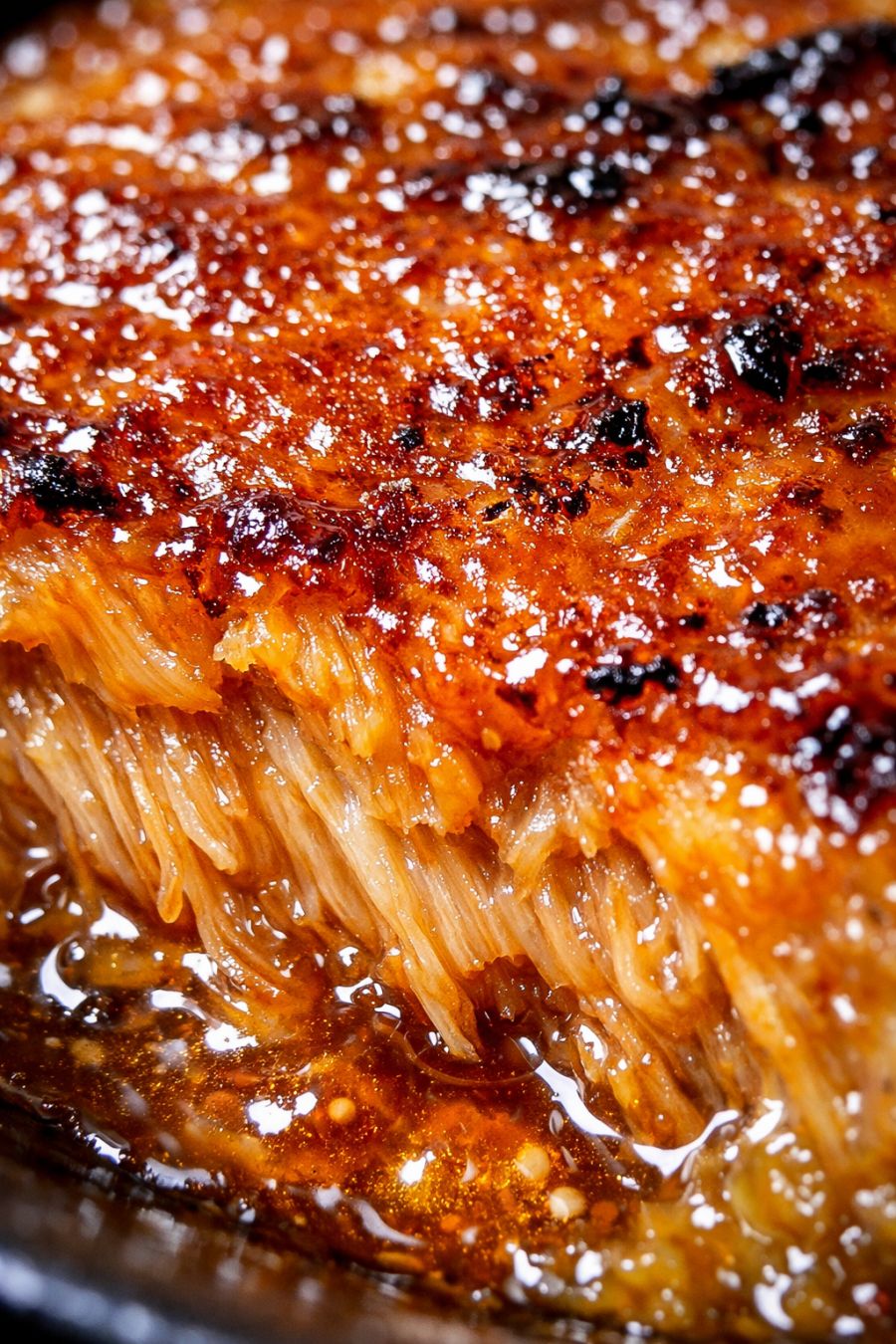
This slow cooker burnt orange pudding is my kind of weeknight dessert: just four ingredients, five minutes of hands-on time, and it quietly does its thing while you’re at work or shuttling kids to practice. Think of it as a cross between a soft custard and a citrusy bread pudding, with a deeply caramelized, almost brûléed orange top that gets glossy and just a little bit bitter in the best way. The idea came from wanting that fancy restaurant burnt-orange dessert vibe without babysitting a saucepan or turning on the oven. Everything goes into the slow cooker in the afternoon, and by the time the evening rush hits, dessert is already done and waiting.
Serve the pudding warm, straight from the slow cooker, so the caramelized burnt orange top stays glossy and the edges are softly set and spoonable. It’s lovely on its own, but a small scoop of vanilla ice cream or a spoonful of lightly sweetened whipped cream melts into the hot pudding and makes it feel restaurant-level special. For something lighter, pair it with plain Greek yogurt and a sprinkle of granola. A cup of hot coffee, black tea, or a citrusy herbal tea balances the sweetness and the gentle bitterness from the burnt orange.
4-Ingredient Slow Cooker Burnt Orange PuddingServings: 6
Ingredients
4 large navel oranges, divided (about 3 for zest/juice, 1 for topping slices)
1 cup granulated sugar, divided (3/4 cup for pudding, 1/4 cup for burnt orange topping)
4 large eggs
2 cups whole milk
Directions
Lightly grease the inside of a 4- to 6-quart slow cooker crock with a thin layer of neutral oil or softened butter to help the pudding release and prevent sticking.
Zest 2 of the oranges finely, avoiding the bitter white pith, and place the zest in a large mixing bowl. Juice those 2 oranges plus 1 more, straining out any seeds. You want about 3/4 cup of fresh orange juice; if you’re a little short, top it off with water or a bit more juice from the remaining orange.
To the bowl with the orange zest, add 3/4 cup granulated sugar. Use your fingers to rub the zest into the sugar until it feels slightly damp and very fragrant; this helps release the orange oils and gives the pudding a stronger citrus flavor.
Crack the 4 eggs into the bowl with the orange sugar and whisk until the mixture is smooth and slightly thickened, about 30 to 60 seconds. Whisk in the orange juice until fully combined.
Slowly pour in the 2 cups of whole milk while whisking gently, mixing just until everything is smooth and evenly combined. The mixture will be thin, like a loose custard base.
Pour the orange custard mixture into the greased slow cooker crock. Gently tap the crock on the counter a few times to pop any large air bubbles, which helps the pudding set with a smoother texture.
Thinly slice the remaining orange into round slices about 1/8-inch thick, discarding the ends and any seeds. Lay these slices in a single, mostly even layer over the surface of the custard in the slow cooker. It’s fine if they overlap slightly; this will become the caramelized burnt orange top.
Sprinkle the remaining 1/4 cup granulated sugar evenly over the orange slices, aiming to cover as much of the exposed fruit and surface as possible. This sugar will melt and caramelize as it cooks, forming that glistening, slightly burnt orange layer.
Cover the slow cooker with its lid. Cook on LOW for 3 to 4 hours, or until the edges of the pudding are set and lightly pulling away from the sides, the center has a gentle wobble when you jiggle the crock, and a thin knife inserted about 1 inch from the edge comes out mostly clean. Avoid lifting the lid before the 2 1/2-hour mark so the pudding doesn’t cool and sink.
Once the pudding is set, turn off the slow cooker and let it stand, covered, for 15 to 20 minutes. During this rest, the residual heat will continue to thicken the pudding and the orange-sugar topping will deepen in color, becoming glossy with a slightly burnt, caramelized look and gelatinous edges around the fruit.
For a more dramatic caramelized surface, carefully tilt the crock slightly and spoon a bit of the hot syrupy juices from the edges over the orange slices, letting them pool and cling to the top. The fibrous orange slices should look tender and almost translucent, with a dark golden to deep amber color in spots.
Serve the burnt orange pudding warm, scooping down through the caramelized orange layer to get both the glossy top and the soft custard beneath in each serving. Store any leftovers tightly covered in the refrigerator for up to 3 days, and reheat gently in the microwave or on LOW in the slow cooker until warmed through.
Variations & Tips
For a slightly richer texture, you can swap 1/2 cup of the whole milk for heavy cream, keeping the total liquid at 2 cups. If you prefer a stronger bitter-orange note (more like marmalade), use 1 blood orange or a Seville orange for part of the zest and juice, but be aware the flavor will be more intense and less sweet. To lean into spring flavors, add a very small pinch of ground cardamom or cinnamon to the orange sugar before whisking in the eggs; this keeps the ingredient count simple at home, but technically makes it a 5-ingredient variation. If you want a firmer, sliceable pudding, cook closer to 4 hours and chill completely before serving; the top will still look glossy and caramelized, but the custard beneath will be more set. Safety tips: Always cook the pudding on LOW, not WARM, to ensure the eggs reach a safe temperature (at least 160°F/71°C in the center). If you’re unsure, use an instant-read thermometer inserted into the middle of the pudding to check. Do not leave the finished pudding at room temperature for more than 2 hours; refrigerate leftovers promptly in a shallow container so they cool faster. When reheating, warm only what you plan to eat and avoid reheating multiple times, as repeated temperature swings can affect both food safety and texture. If any portion develops an off smell, unusual color, or mold, discard it rather than tasting.