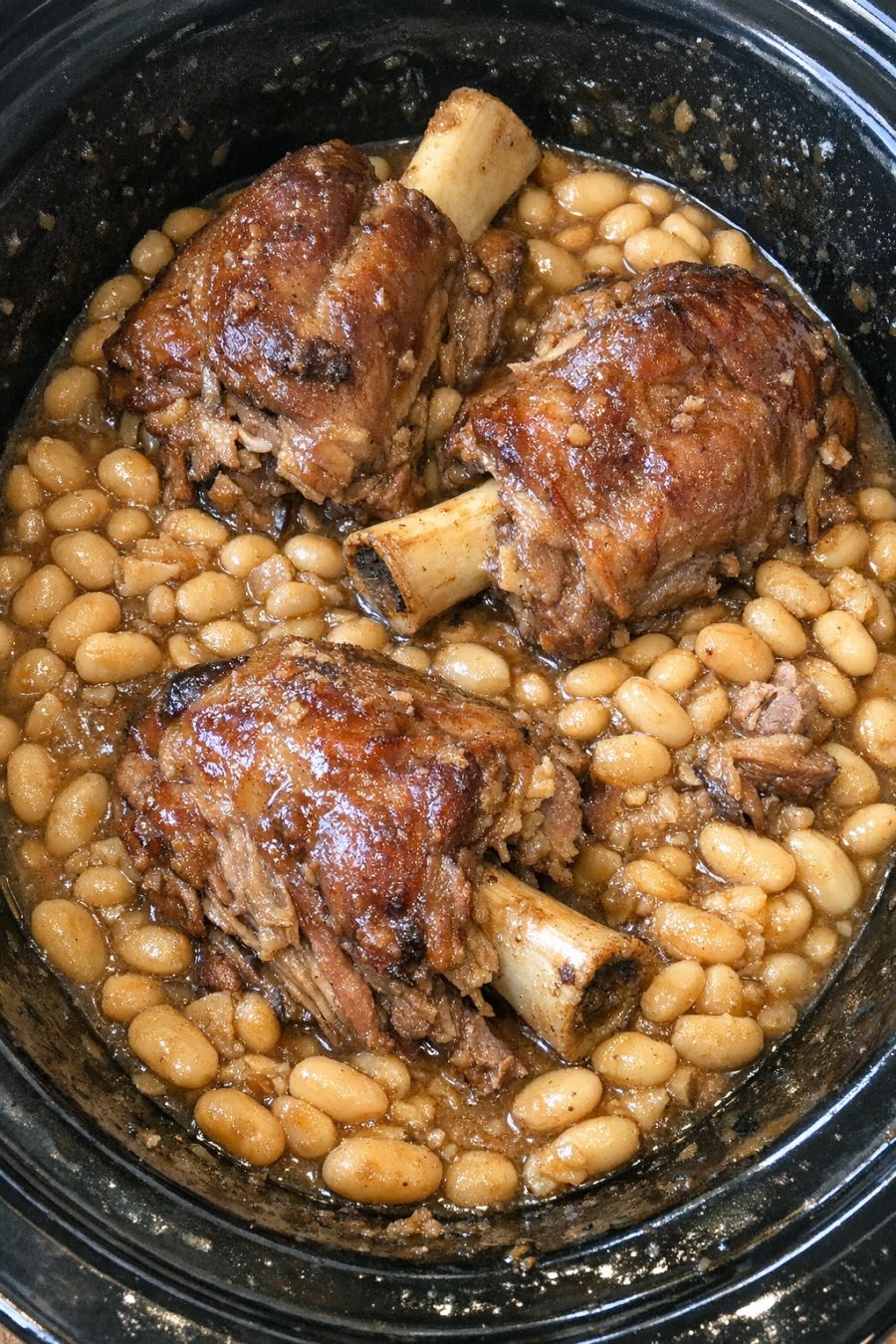
This slow cooker 4-ingredient depression era pork shanks and navy beans is the kind of resourceful, rib-sticking meal my great aunt swore by every spring when money was tight but appetites were big. It leans on one tough, inexpensive cut—pork shanks—and a bag of humble navy beans, then lets time and gentle heat transform them into something deeply tender and comforting. The method is very much in the spirit of Depression-era cooking: a short ingredient list, long simmer, and a glossy, collagen-rich broth that feels far more luxurious than its budget would suggest.
Serve the pork shanks and navy beans ladled straight from the slow cooker into wide bowls, making sure each portion gets a shank or generous chunks of meat and plenty of creamy beans and sauce. A simple green side—steamed cabbage, sautéed greens, or a basic lettuce salad—adds freshness. Crusty bread, cornbread, or even plain toast is perfect for soaking up the thick, savory liquid. If you like, offer black pepper, a splash of vinegar, or a sprinkle of chopped raw onion at the table for a little bite against the rich, silky broth.
Slow Cooker Depression Era Pork Shanks and Navy BeansServings: 4
Ingredients
2 pounds pork shanks, bone-in (about 2–4 shanks, depending on size)
1 pound dried navy beans, rinsed and picked over
6 cups water (or enough to cover beans and shanks by about 1 inch)
2 teaspoons kosher salt (or 1 1/2 teaspoons table salt), plus more to taste
Directions
Rinse the dried navy beans under cool running water and pick through them, discarding any broken beans or small stones. Set aside.
Pat the pork shanks dry with a clean towel. This helps them brown better and develop that rich, deep color and flavor on the outside.
In a large skillet over medium-high heat (or using the stovetop-safe insert of your slow cooker, if you have one), sear the pork shanks on all sides until they are well browned, 3–4 minutes per side. You don’t need oil if the pan is hot enough and the shanks are fatty; if they start to stick badly, add just a teaspoon or two of neutral oil. This browning step is key to getting that glossy, brown braised exterior and a more flavorful cooking liquid.
Place the rinsed navy beans in the bottom of a 5- to 6-quart slow cooker. Nestle the browned pork shanks on top of the beans, arranging them so they sit snugly among the beans rather than stacked on top of each other.
Pour in the water, starting with 6 cups, making sure the beans are fully submerged and the shanks are mostly covered, with the bone ends peeking out if they’re tall. Add the salt and gently stir around the beans (it’s fine if you don’t move the shanks much). The liquid will look thin now but will thicken into a silky, collagen-rich sauce as the shanks slowly cook and the beans release starch.
Cover the slow cooker with the lid and cook on LOW for 8–10 hours, or until the navy beans are very tender and the pork shanks are fall-off-the-bone soft. The meat should pull away easily with a fork and the beans should be creamy inside, not chalky.
About halfway through cooking (around the 4–5 hour mark), check the level of liquid. If the beans are no longer submerged, add just enough hot water to cover them again by about 1/2 inch. Avoid adding too much—this dish should finish with a thick, stew-like consistency rather than a thin soup.
Once the beans are tender and the shanks are extremely soft, taste the liquid and add more salt if needed. If the sauce is thinner than you’d like, remove the lid and let the slow cooker run on HIGH for 20–30 minutes to reduce slightly, or use the back of a spoon to mash a small handful of beans against the side of the crock and stir them back in to help thicken the liquid.
To serve, carefully lift the pork shanks from the slow cooker—the meat may be so tender it slips off the bone. Spoon the navy beans and their glossy, savory cooking liquid into bowls, then nestle a whole shank or generous chunks of the meat on top. Spoon a bit more of the thickened liquid over everything so the beans and pork are well coated.
Cool any leftovers quickly and refrigerate within 2 hours of cooking. The beans and pork will continue to thicken and become even more flavorful by the next day; reheat gently on the stovetop or in the microwave with a splash of water if needed.
Variations & Tips
To stay true to the Depression-era spirit, this recipe keeps to four basic ingredients, but there are many small ways to adapt it while still leaning on economy and practicality. If you want a bit more savoriness without adding extra ingredients, brown the shanks very deeply and let any browned bits on the pan’s bottom cook off into the water before adding it to the slow cooker; those caramelized bits intensify flavor. If you have access to other inexpensive cuts, pork hocks or neck bones can be swapped in for some or all of the shanks, though shanks provide the best combination of meat, bone, and collagen for that glossy sauce. For a slightly smokier version, you can replace part of the salt with a small piece of smoked pork (like a ham hock) in place of one shank, but this technically adds an ingredient. To make this more broth-like, add up to 2 extra cups of water and serve as a soup over day-old bread. For a thicker, almost baked-bean texture, cook uncovered on HIGH at the end until the liquid reduces to your liking.
Food safety and practicality tips: Always rinse and pick through dried beans to remove any debris or tiny stones. For the most reliable soft texture, avoid very old beans, which may never fully soften. Because this recipe uses dried beans, do not cook them on the WARM setting; use LOW or HIGH so they reach a safe temperature. If you live at high altitude, beans can take longer to cook; plan on the upper end of the cooking time and check for tenderness. Cool leftovers quickly by transferring them to shallow containers, and refrigerate within 2 hours to minimize bacterial growth. Reheat leftovers to a gentle simmer, stirring so the beans don’t scorch on the bottom. If any portion smells off, looks unusually foamy or slimy, or has been left at room temperature for more than 2 hours, it’s safest to discard it. Finally, be cautious when removing the shanks from the hot liquid—the bones can slip out unexpectedly from the very tender meat, so use tongs and a wide spoon or spatula for support.