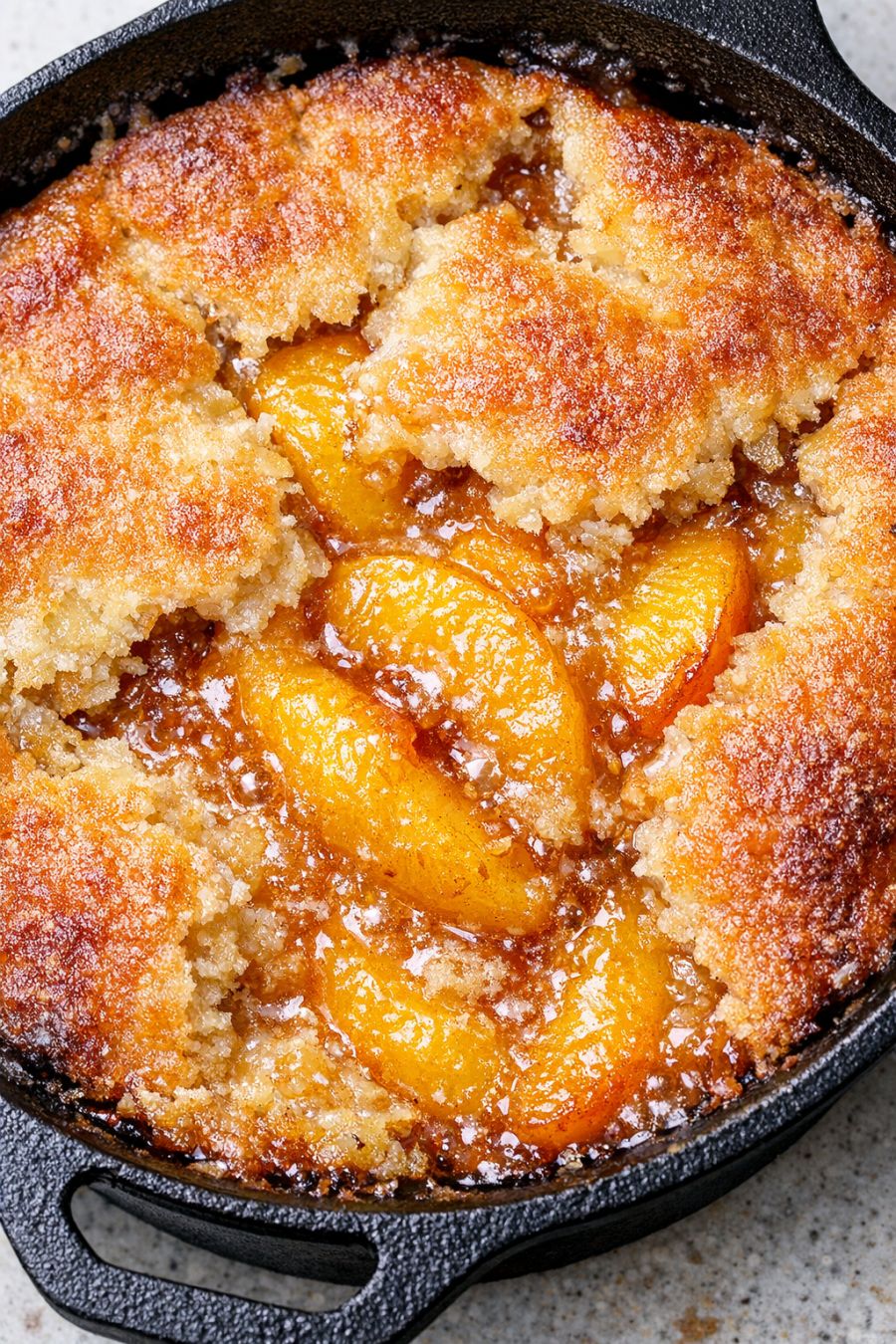
This southern 3-ingredient peach cobbler is the exact one my grandma baked every Mother’s Day, and now my kids ask for it the minute peaches show up in the store. It’s the definition of a busy-week dessert: pantry-friendly, no mixer, and it all bakes together in one cast iron skillet into a golden, buttery crust with syrupy peaches bubbling up around the edges. This is that old-school Southern-style “magic” cobbler where a simple self-rising flour batter rises up around the fruit as it bakes—no fancy techniques, just honest comfort food you can throw together after work.
Serve the cobbler warm right out of the cast iron skillet, giving it 10–15 minutes to cool so the peach juices thicken a bit. It’s perfect with a scoop of vanilla ice cream or a dollop of whipped cream, but it’s also great on its own with a cup of coffee or tea. For a brunch-y twist, I’ll sometimes pair leftovers with crispy bacon or sausage and scrambled eggs. If you’re feeding a crowd, set the skillet in the middle of the table with small bowls and let everyone scoop their own rustic serving.
Southern 3-Ingredient Peach CobblerServings: 6-8
Ingredients
2 (29-ounce) cans sliced peaches in heavy syrup, undrained
1 1/2 cups self-rising flour
1 1/2 cups granulated sugar
Directions
Preheat your oven to 375°F (190°C). Place a 10–12 inch cast iron skillet on the middle rack while the oven heats so it gets hot. This helps the crust get nicely crisp around the edges.
In a medium bowl, whisk together the self-rising flour and granulated sugar until evenly combined. This is your simple cobbler batter base.
Carefully remove the hot cast iron skillet from the oven and set it on a heat-safe surface. Pour the undrained canned peaches (fruit and heavy syrup) directly into the hot skillet and spread them out evenly with a spoon.
Sprinkle the flour-sugar mixture evenly over the peaches in the skillet. Try to cover most of the surface, but don’t stress about a few gaps—those become delicious caramelized peach pockets.
Using the back of a spoon or spatula, gently tap and level the dry mixture so it sits in an even layer on top of the peaches, but do not stir. You want the flour-sugar layer to sit mostly on top; it will pull in moisture and form the crust as it bakes.
Place the skillet back in the oven and bake for 35–45 minutes, or until the top is deeply golden, the edges are crisp, and the peach filling is bubbling up through cracks in the crust. If your oven runs hot, start checking around 30 minutes.
Carefully remove the cobbler from the oven and let it cool on a trivet or cooling rack for at least 10–15 minutes. The filling will be very hot and will thicken slightly as it cools. Serve warm, scooping down through the crust to get both peaches and syrup in each serving.
Variations & Tips
If you don’t have self-rising flour, you can make a quick substitute by whisking together 1 1/2 cups all-purpose flour, 2 1/4 teaspoons baking powder, and 3/4 teaspoon fine salt; this will keep you at the same 3-ingredient count if you measure and mix it ahead as your one dry ingredient. For a slightly less sweet cobbler, use peaches in juice instead of heavy syrup and reduce the sugar to 1 cup. You can also swap in 2 (15-ounce) cans of peaches if that’s what you have; just know the cobbler will be a bit crust-heavier and less saucy. If fresh peaches are in season and you really want to use them, you’ll need to cook them briefly with sugar to create a syrupy mixture similar to canned in heavy syrup before using, and you may need to add a splash of water or extra sugar to mimic the canned texture. For a little extra flavor without adding more ingredients, let the cobbler bake until the very edges are a deep golden brown—those caramelized bits taste almost like browned butter, even though there’s no butter in the recipe. Food safety tips: Always handle the hot cast iron skillet with thick oven mitts and keep handles turned away from the edge of the stove or counter so no one bumps into it. Let the cobbler cool before serving to avoid burns from the bubbling fruit. If you have leftovers, cool them to room temperature (no more than 1–2 hours), then cover the skillet or transfer to an airtight container and refrigerate for up to 3 days. Reheat portions gently in the microwave or warm the whole skillet in a 300°F oven until heated through.