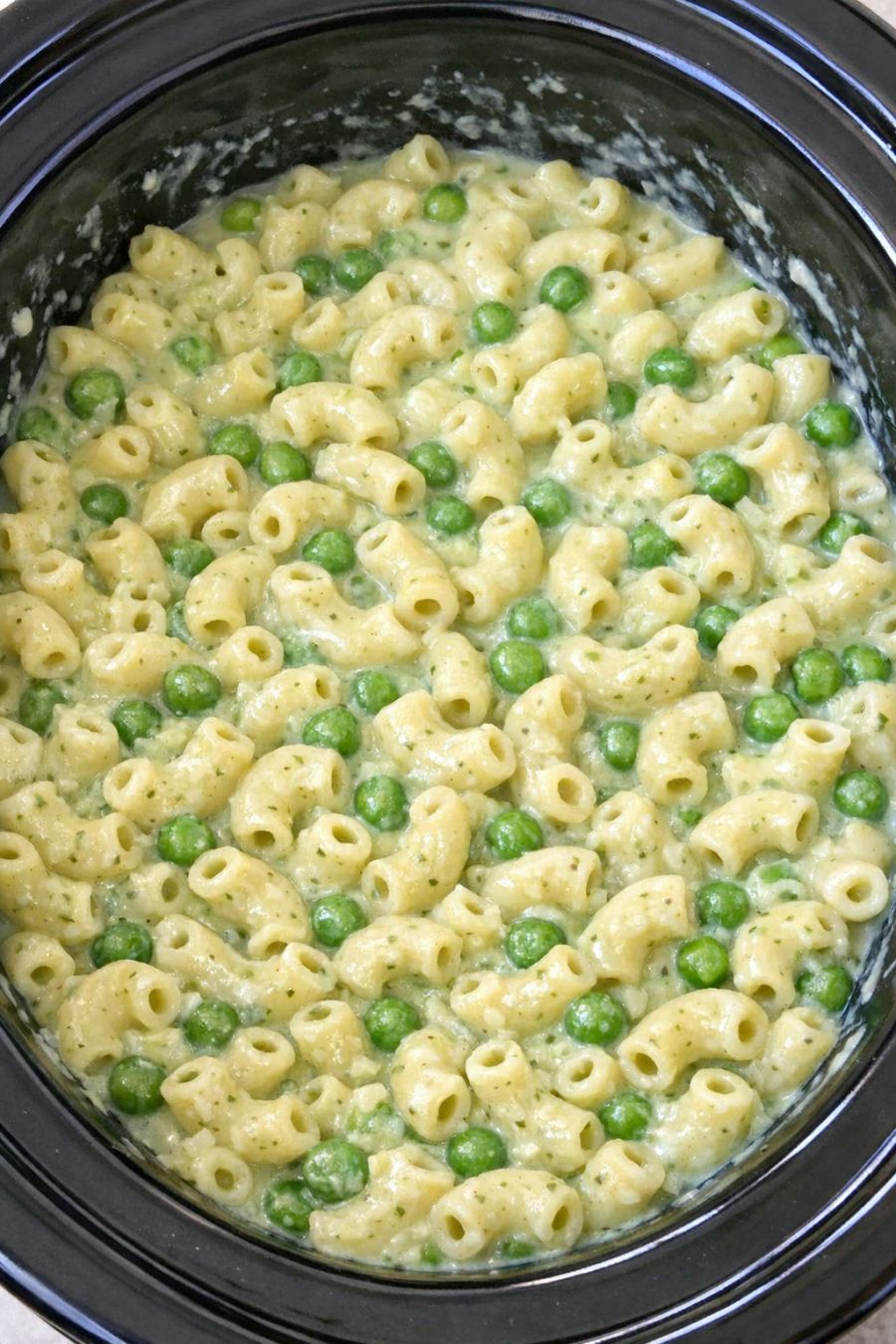
This slow cooker 4-ingredient depression era creamed pea pasta is my modern spin on a trick my great aunt used to stretch one humble can of peas into dinner for six hungry kids. It’s creamy, filling, and built for the tightest grocery budget, but still feels comforting after a long workday. Everything cooks right in the slow cooker, so you can toss it together, walk away, and come back to a pot of elbow macaroni in a pale green, velvety sauce with soft sweet peas throughout. It’s the kind of recipe that reminds you how far a few pantry staples can really go.
Serve this creamed pea pasta straight from the slow cooker with a generous sprinkle of black pepper. If you have them on hand, add a simple side like sliced apples, carrot sticks, or a green salad to round things out. Buttered toast or day-old bread warmed in the oven is very true to its depression era roots and helps stretch the meal even further. For more protein, you can pair it with hard-boiled eggs or leftover roasted chicken on the side, but it’s satisfying enough on its own when you’re keeping things simple.
Slow Cooker Depression Era Creamed Pea PastaServings: 4-6
Ingredients
1 (15-ounce) can peas, undrained
3 cups milk (whole or 2%)
12 ounces elbow macaroni, uncooked (about 3 cups dry)
1 teaspoon salt (plus more to taste)
Directions
Lightly grease the inside of a 4- to 6-quart slow cooker with a little oil or cooking spray to help prevent sticking.
Pour the entire can of peas, including the liquid, into the slow cooker. Use the back of a spoon or a potato masher to gently mash about half of the peas right in the pot. This helps create that pale green, creamy base while still leaving some whole peas for texture.
Add the milk and salt to the mashed peas and stir well until everything is evenly combined and the mixture looks pale green and smooth with bits of peas.
Stir in the uncooked elbow macaroni, making sure all the pasta is submerged in the liquid so it cooks evenly. If a few pieces are peeking out, press them down gently with the back of a spoon.
Cover the slow cooker with the lid and cook on LOW for 1 1/2 to 2 1/2 hours, stirring once or twice if you are home. The pasta is done when the elbows are tender and the sauce has thickened into a creamy, velvety coating. Slow cookers vary, so start checking around the 1 1/2-hour mark.
If the pasta looks too thick when it’s done, stir in a splash more milk until you reach your desired creaminess. Taste and add a pinch more salt if needed.
Serve the creamed pea pasta hot straight from the slow cooker, making sure to scoop from the bottom so each serving has plenty of peas and sauce.
Variations & Tips
To keep this close to its depression era roots, the base recipe uses only four ingredients, but there are easy ways to adapt it if you have a bit more in your pantry. For extra richness, stir in 1 to 2 tablespoons of butter or a handful of shredded cheese at the end until melted. A pinch of black pepper, garlic powder, or onion powder adds more flavor without changing the budget much. If you need to stretch it for more people, you can add up to 4 more ounces of pasta and an extra 1/2 to 1 cup of milk, but be sure the pasta is fully covered before cooking. For a bit of protein, fold in diced leftover ham, cooked chicken, or crumbled bacon after the pasta is tender, then heat just until warmed through. If you’re cooking dairy-free, you can use an unsweetened plant-based milk, but choose one that’s neutral and higher in fat (like oat or soy) for the creamiest texture.
Food safety tips: Keep milk refrigerated until you’re ready to add it to the slow cooker, and don’t leave the finished pasta sitting on the warm setting for more than 2 hours to avoid bacterial growth. If you add any cooked meat, make sure it was cooled and stored properly beforehand and that it’s reheated to at least 165°F in the pasta before serving. Leftovers should be cooled quickly, transferred to shallow containers, and refrigerated within 2 hours. Eat leftovers within 3 to 4 days, reheating only the portion you plan to eat and adding a splash of milk if the pasta has thickened in the fridge.