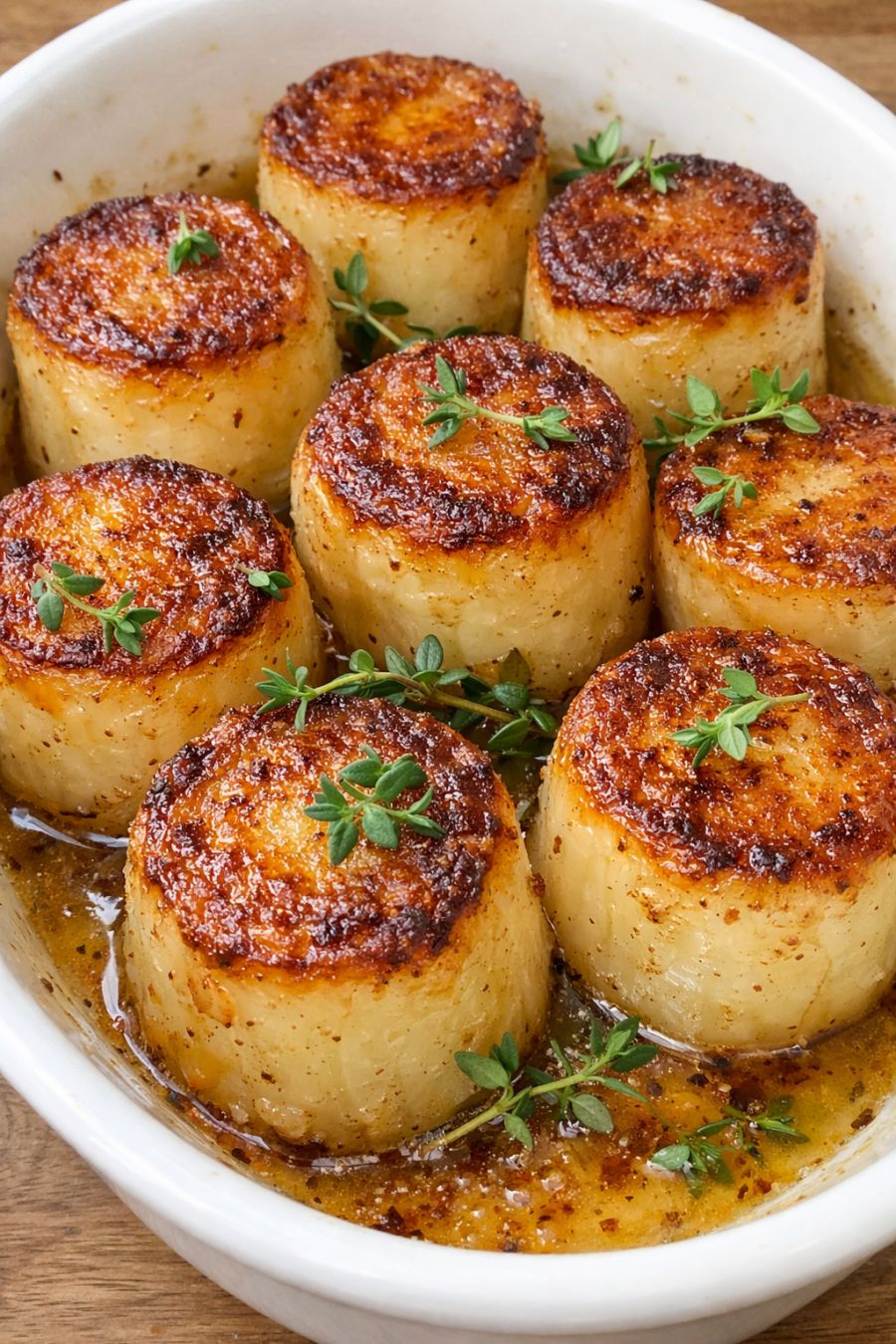
These oven baked 4-ingredient crispy potato fondants are my cozy, Sunday-dinner version of the classic French side dish. My aunt has been making something just like this since the 80s, and everyone always asks how she gets that shattering golden crust with a center that tastes almost like mashed potatoes tucked inside. The secret is simple: good russet potatoes, plenty of salted butter, a bit of broth, and patience in the oven. No fancy equipment, no hard-to-find ingredients—just a white casserole dish and a little time. They’re the kind of side that makes even a simple roast chicken feel like a special occasion, and they hold up beautifully for family-style serving.
Serve these potato fondants straight from the casserole dish while they’re still sizzling and golden, with a spoon to scoop up the buttery juices from the bottom. They’re perfect alongside roast chicken, pork loin, or a simple pan-seared steak, and they pair nicely with green vegetables like roasted broccoli, green beans, or a simple side salad with a tangy vinaigrette to cut through the richness. For Sunday dinners, I like to set them in the center of the table with a small bowl of sour cream or plain Greek yogurt and a sprinkle of extra salt so everyone can dress their own. They also reheat well, so don’t be afraid to make a double batch for leftovers.
Oven Baked 4-Ingredient Crispy Potato FondantServings: 6
Ingredients
3 pounds russet potatoes (about 6–8 medium, well-shaped)
6 tablespoons salted butter, melted (plus a little extra for greasing the dish, if needed)
1 1/2 cups low-sodium chicken broth (or vegetable broth)
1 teaspoon kosher salt (plus more to taste at the table)
Directions
Preheat your oven to 400°F (200°C). Lightly butter or oil a white oval casserole dish just large enough to hold the potatoes in a single snug layer. A tighter fit helps them stay creamy in the center while the tops brown.
Peel the russet potatoes, trimming off any eyes or blemishes. Slice each potato crosswise into thick cylinders, about 1 1/2 inches tall. If a potato is very wide, you can cut it in half lengthwise first, then into cylinders so they’re all roughly the same size. Save the trimmed ends for another use (they’re great for hash browns).
Rinse the potato cylinders under cool water to remove excess surface starch, then pat them very dry with a clean kitchen towel or paper towels. This helps the tops and bottoms crisp instead of steaming.
Arrange the potato cylinders standing upright in the prepared casserole dish, cut side down, in a single layer. Pack them in fairly close so they support each other and cook evenly, but leave just a little space for the butter and broth to move around.
Brush or spoon the melted salted butter evenly over the tops and down the sides of the potatoes, letting some butter drip to the bottom of the dish. Sprinkle the kosher salt evenly over the tops. This first hit of salt is important for that nostalgic, Sunday-dinner flavor.
Place the casserole dish on the middle rack of the preheated oven and bake, uncovered, for 25–30 minutes, until the bottoms are starting to brown and the tops look slightly dry and matte. If your oven has hot spots, rotate the dish halfway through so they brown evenly.
Carefully remove the dish from the oven. Pour the chicken broth around the potatoes (not over the tops), letting it fill the bottom of the dish to about 1/3–1/2 the height of the potatoes. You want the broth to braise the bottoms and centers while the tops stay above the liquid so they crisp.
Return the dish to the oven and continue baking, uncovered, for another 30–40 minutes, or until the potatoes are deeply golden on top, the broth has mostly reduced to a buttery, syrupy glaze around the potatoes, and a knife slides in and out of the center with almost no resistance. If the tops are browning faster than the centers are softening, loosely tent just the top of the dish with foil for the last 10–15 minutes.
Once tender and golden, remove the dish from the oven and let the potatoes rest for at least 5–10 minutes. This short rest helps the centers settle into that ultra-creamy texture and lets the buttery juices thicken slightly at the bottom.
Before serving, spoon a little of the buttery broth from the bottom of the dish over the tops of the potatoes for extra shine and flavor. Taste one and sprinkle with a pinch more salt if needed. Serve warm, right from the casserole dish, making sure everyone gets some of the caramelized bits and buttery juices at the bottom.
Variations & Tips
For picky eaters, you can keep the seasoning very simple—just the salted butter and kosher salt—and let everyone add their own touches at the table, like a little shredded cheese, sour cream, or ketchup for kids who love to dip. If you’d like a little extra aroma without adding more ingredients to the shopping list, you can brown the salted butter in a small saucepan first (cook over medium heat, stirring, until it smells nutty and turns golden), then use it as directed; this gives an almost roasted-nut flavor that makes the potatoes taste even richer. For a slightly lighter version, you can swap half the butter for olive oil, though the crust will be a bit softer. To make them vegetarian, simply use vegetable broth instead of chicken broth. For make-ahead dinners, you can par-bake the potatoes through the first oven step, cool them, then finish with the broth just before serving; add about 5–10 extra minutes of baking time if starting from chilled. Food safety tips: Always refrigerate leftovers within 2 hours in a shallow container so they cool quickly, and reheat them thoroughly in the oven at 350°F (175°C) until steaming hot in the center before serving again. Use clean utensils when basting or tasting to avoid cross-contamination, and if you’re using homemade broth, be sure it has been fully boiled and cooled properly before using. Because this dish is rich, keep it out of the “danger zone” (40–140°F / 4–60°C) for long stretches; don’t leave it on the counter all afternoon after Sunday dinner—get leftovers into the fridge promptly.