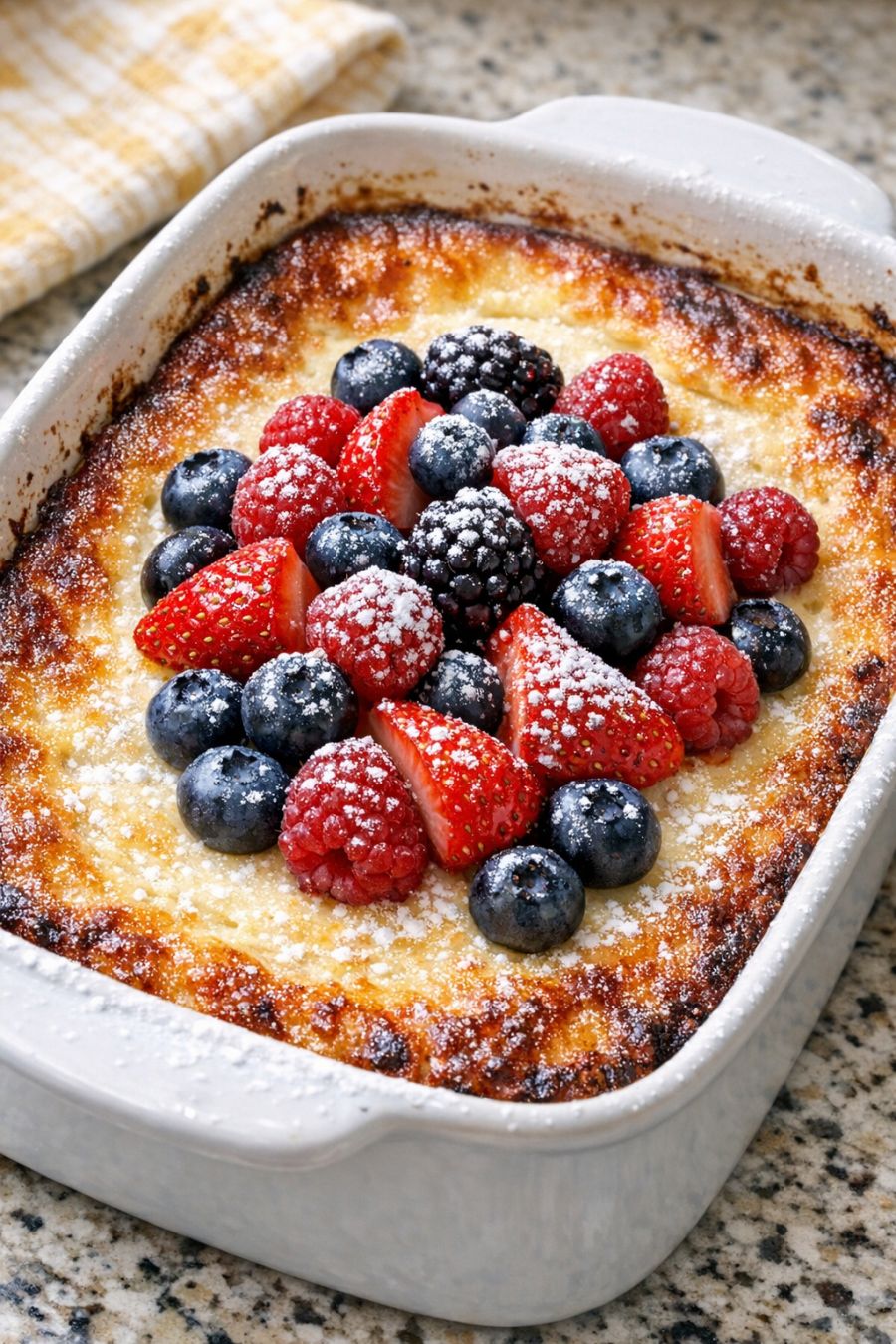
This is a wonderfully simple, 5-ingredient baked sour cream dessert that feels a bit like a cross between a crustless cheesecake and a custard. You literally pour raw sour cream straight into an oven-safe baking dish, whisk in four pantry ingredients, and bake until just set. Dishes like this have cousins in Eastern European and Russian kitchens, where sour cream often anchors baked sweets, but this version is streamlined for a busy home cook. It’s the kind of recipe you can pull together on a weeknight and still serve proudly to guests—especially because no one ever believes something this silky came from such a casual stir-and-bake method.
Serve this baked sour cream dessert chilled or at cool room temperature, cut into squares or scooped like a soft pudding. It pairs beautifully with fresh berries, a quick berry compote, or sliced stone fruit. A drizzle of honey or warm fruit jam adds a nice contrast to the tangy creaminess. For something a little more indulgent, add a spoonful of whipped cream and a sprinkle of toasted nuts. Coffee, black tea, or a small glass of dessert wine all play nicely with its gentle sweetness.
5-Ingredient Baked Sour Cream DessertServings: 6
Ingredients
2 cups raw sour cream (full-fat, well chilled)
1/2 cup granulated sugar
2 large eggs, at room temperature
2 teaspoons pure vanilla extract
1 tablespoon all-purpose flour (or cornstarch for gluten-free)
Directions
Preheat your oven to 325°F (165°C). Place an oven rack in the center position so the dessert bakes evenly.
Lightly grease an 8-inch square or similar 1 1/2- to 2-quart oven-safe stoneware baking dish with a thin film of butter or neutral oil. This keeps the edges from sticking but still lets you pour the sour cream in directly.
Spoon or pour the raw sour cream straight into the prepared baking dish. The sour cream should sit in a relatively even layer; use a spatula or the back of a spoon to level it slightly if needed.
Sprinkle the granulated sugar evenly over the sour cream in the dish. Let it sit for 1–2 minutes; the sugar will begin to dissolve on contact, which makes it easier to mix right in the baking dish.
Add the eggs, vanilla extract, and flour directly into the same dish with the sour cream and sugar. There is no separate mixing bowl here—everything happens in the baking dish to keep with the pour-and-bake spirit.
Using a whisk or a sturdy fork, gently but thoroughly whisk the mixture right in the baking dish until completely smooth and uniform, scraping into the corners as you go. Take your time to break up any streaks of sour cream or flour; the mixture should look like a thick, glossy custard base.
Tap the baking dish firmly but gently on the counter a few times to release any large air bubbles. Smooth the top with a spatula or the back of a spoon so it bakes evenly.
Place the baking dish on the center rack of the preheated oven. Bake for 30–40 minutes, or until the edges are set and lightly puffed, and the center is mostly set but still has a slight jiggle when you gently shake the dish. It should not be liquid in the middle.
Remove the dish from the oven and place it on a cooling rack. Let the dessert cool to room temperature in the dish; it will continue to set as it cools and the surface may settle slightly, which is normal.
Once cooled to room temperature, cover the baking dish and chill in the refrigerator for at least 2 hours, or until fully cold and sliceable. To serve, cut into squares or spoon into bowls directly from the baking dish. Garnish with berries, honey, or your favorite topping, if desired.
Variations & Tips
For a citrus note, add 1–2 teaspoons of finely grated lemon or orange zest along with the vanilla. For a slightly richer, more cheesecake-like texture, increase the sour cream to 2 1/2 cups and add an extra tablespoon of sugar. If you prefer it less sweet, reduce the sugar to 1/3 cup; the tang of the sour cream will stand out more. To make this gluten-free, replace the flour with 1 tablespoon of cornstarch or potato starch; mix thoroughly so no lumps remain. You can also stir in 1/4 teaspoon of ground cinnamon or cardamom for a subtle spice. For a firmer, sliceable dessert, bake closer to 40 minutes, watching carefully so it doesn’t brown too deeply; for a softer, more pudding-like texture, pull it from the oven as soon as the center barely jiggles. Food safety tips: Always use fresh, pasteurized sour cream and keep it refrigerated until you’re ready to bake. Bring the eggs to room temperature quickly by placing them (in their shells) in a bowl of lukewarm—not hot—water for 5–10 minutes; this helps them blend smoothly without risking any partial cooking. Bake until the custard reaches a safe internal temperature of about 160–165°F (71–74°C) in the center if you’re concerned about doneness. Refrigerate leftovers within 2 hours of baking and consume within 3–4 days, keeping the dish covered to prevent off-flavors from the fridge.