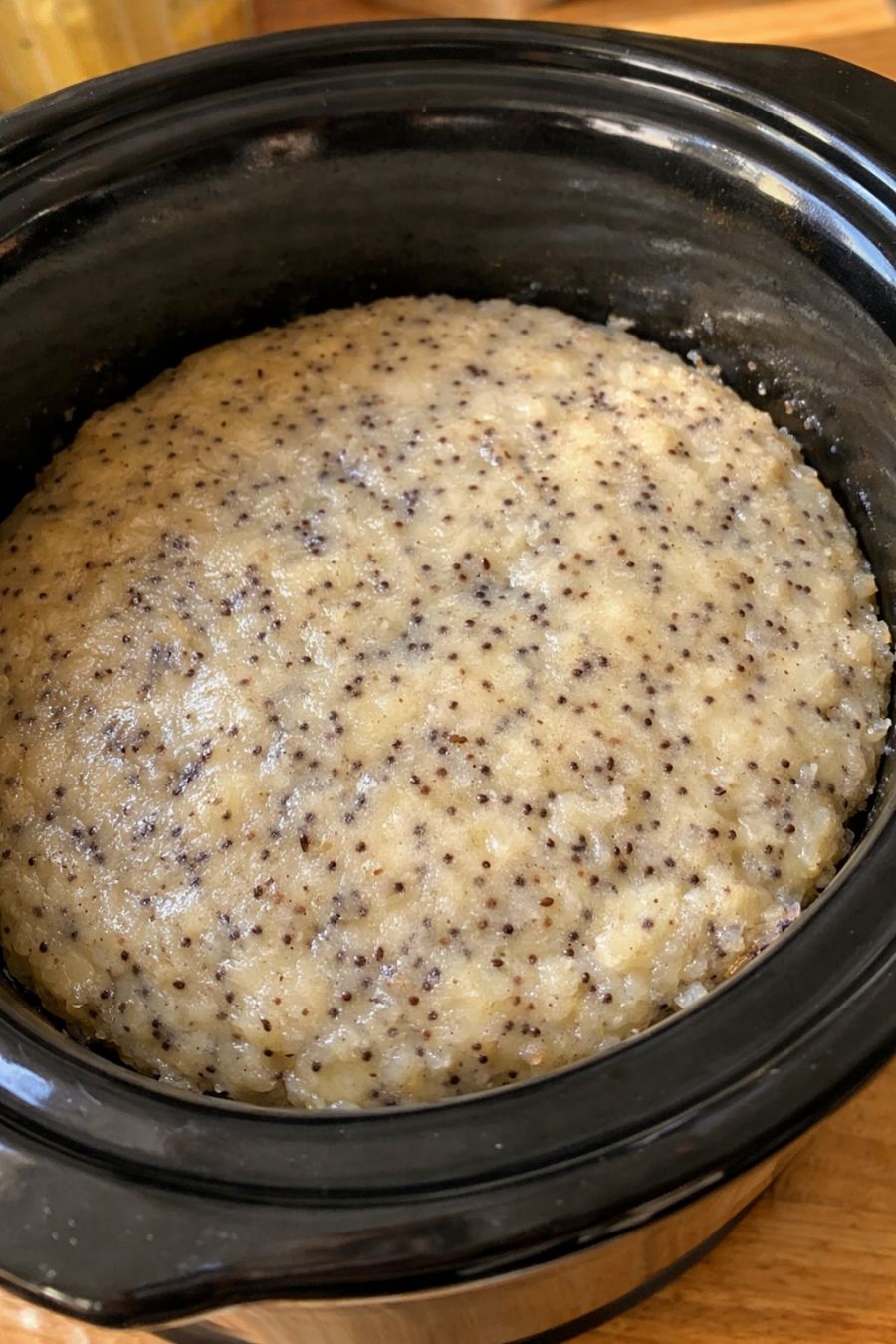
This slow cooker poppy seed pudding cake is my pared‑down take on a vintage Midwestern dessert my grandmother made every May. It walks the line between a tender cake and a soft custard, speckled all the way through with poppy seeds. With just five pantry ingredients and a slow cooker doing the work, it’s the kind of recipe you can slip together on a Saturday afternoon and let it quietly transform into something that tastes far more nostalgic and special than the effort suggests. The texture is pale and creamy with darker flecks from the seeds, simple enough for everyday but elegant enough for spring gatherings.
Serve the pudding cake warm, scooped straight from the slow cooker into shallow bowls so you catch the soft edges and custardy center. A spoonful of lightly sweetened whipped cream or a small scoop of vanilla ice cream plays nicely against the warm, eggy richness and the gentle crunch of the poppy seeds. Fresh berries, especially strawberries or raspberries, add a bright, tart counterpoint if you want to lean into the spring theme. Coffee, black tea, or a lightly sweet dessert wine all pair well with the subtle vanilla and butter notes.
5-Ingredient Slow Cooker Poppy Seed Pudding CakeServings: 6
Ingredients
1 cup granulated sugar
4 large eggs, at room temperature
2 cups whole milk
1 cup all-purpose flour
1/4 cup poppy seeds
Directions
Lightly grease the insert of a 4- to 6-quart slow cooker with butter or neutral oil to prevent sticking, making sure to coat the bottom and sides.
In a medium bowl, whisk the sugar and eggs together until the mixture is thickened, pale, and slightly frothy, about 1 to 2 minutes by hand. This helps create the pudding-like texture.
Slowly whisk in the milk, a little at a time, until fully blended and smooth. Take your time here so the sugar dissolves and the mixture stays silky.
Sprinkle the flour over the egg-milk mixture and whisk just until no dry streaks remain. Scrape the sides and bottom of the bowl so all the flour is incorporated, but avoid overmixing.
Stir in the poppy seeds until they are evenly distributed throughout the batter. The mixture will be pourable and slightly thin, more like a loose custard than a cake batter.
Pour the batter into the prepared slow cooker insert, smoothing the top lightly with a spatula so the seeds are evenly spread and the surface is level.
Cover the slow cooker with its lid. Cook on LOW for 2 1/2 to 3 1/2 hours, or until the edges are set, the center is just barely wobbly like soft pudding, and a thin knife inserted near the edge comes out mostly clean. The surface will look matte with a few glossy spots of custard.
Once done, turn off the slow cooker and let the pudding cake rest, covered, for 15 to 20 minutes. It will firm up slightly as it cools while staying soft and spoonable in the center.
Serve the pudding cake warm, scooping it gently from the slow cooker with a large spoon. Store any leftovers, once completely cooled, covered in the refrigerator for up to 3 days, and rewarm individual portions gently in the microwave or enjoy chilled.
Variations & Tips
To lean sweeter and more dessert-like, increase the sugar to 1 1/4 cups; for a more restrained, brunch-appropriate sweetness, reduce it to 3/4 cup. If you prefer a richer, more custardy texture, replace 1/2 cup of the milk with heavy cream. A teaspoon of vanilla extract or finely grated lemon zest (stirred in with the milk) adds a fragrant note without adding to the ingredient count if you consider them pantry staples, but the recipe is designed to stand on its own with just the five listed ingredients. For a slightly firmer, more cake-like result, add an extra 2 tablespoons of flour and cook toward the longer end of the time range. If your slow cooker runs hot, start checking at 2 hours to avoid overcooking; the edges should be set but not dry or browned deeply. Always use pasteurized eggs and keep the mixture refrigerated if you need to hold it before cooking. Once cooked, do not leave the pudding cake at room temperature for more than 2 hours; cool leftovers promptly and refrigerate in shallow containers for even chilling. Reheat gently to avoid curdling—short bursts in the microwave or a covered dish in a low oven work best. For a gluten-free version, you can substitute a 1:1 gluten-free baking blend for the all-purpose flour, understanding that the texture may be slightly more delicate and custard-forward.