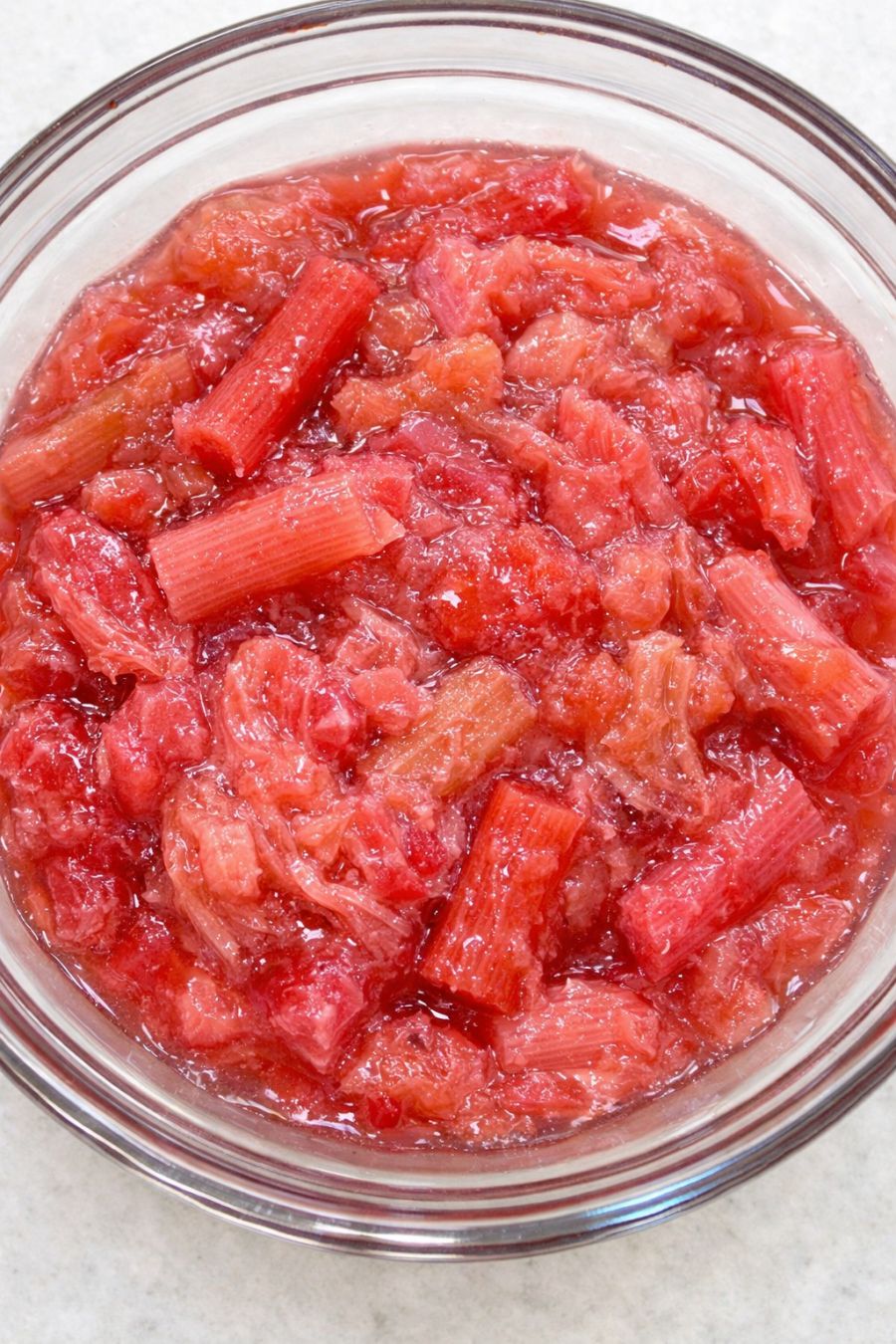
Every May, just as the garden finally shook off the last chill of winter, my great aunt would head out with a knife and a colander to gather the first ruby-red rhubarb stalks. This 3-ingredient stewed rhubarb was always the very first taste of spring at our farmhouse table: sweet, tart, and bright as a sunrise. It’s an old Midwestern way to make use of those early rhubarb stalks—nothing fancy, just rhubarb, sugar, and a splash of water, simmered until soft and jammy. The result is a glossy, pink-red spoonful of nostalgia that comes together in minutes and keeps well in the fridge for easy breakfasts and simple desserts all week long.
Serve this stewed rhubarb slightly warm or chilled in a small glass bowl so you can admire the rosy color. It’s wonderful spooned over vanilla ice cream, plain yogurt, cottage cheese, or a simple bowl of oatmeal. For a very old-fashioned Midwestern dessert, my great aunt would pour it over slices of plain yellow cake or angel food cake. It also pairs nicely with pancakes, waffles, or alongside a slice of pound cake and a dollop of whipped cream. If you enjoy cheese boards, try a spoonful next to a mild, creamy cheese and some buttered toast for a sweet-tart contrast.
3-Ingredient Stewed RhubarbServings: 4
Ingredients
4 cups chopped fresh rhubarb (about 1 pound, trimmed)
1/2 to 3/4 cup granulated sugar (to taste)
1/4 cup water
Directions
Rinse the rhubarb stalks under cool running water and pat them dry. Trim off and discard any leaves (they are not edible) and the very dry ends of the stalks. Cut the stalks into 1/2-inch to 3/4-inch pieces until you have about 4 cups.
Place the chopped rhubarb in a medium, heavy-bottomed saucepan. Sprinkle the granulated sugar over the top, starting with 1/2 cup. Pour in the water.
Stir gently to combine, then let the mixture sit for 5 to 10 minutes. The sugar will start to draw out some of the rhubarb’s juices, which helps it cook evenly and keeps it from scorching.
Set the saucepan over medium heat and bring the mixture to a gentle simmer, stirring occasionally. Once you see bubbles around the edges and the rhubarb has released more liquid, reduce the heat to low.
Simmer on low, uncovered, for 10 to 15 minutes, stirring every few minutes. The rhubarb will soften, break down, and turn a glossy, jammy mixture with tender chunks still visible. If it seems too dry or starts to stick, add a tablespoon or two of extra water as needed.
Taste the stewed rhubarb carefully (it will be hot). If you prefer it sweeter, stir in an extra tablespoon or two of sugar while it’s still warm, letting it dissolve completely.
Once the rhubarb is soft and the syrup is slightly thickened, remove the pan from the heat. The mixture will continue to thicken a bit as it cools.
Let the stewed rhubarb cool until just warm, then spoon it into a glass serving bowl to show off the bright pink and red color. Serve warm, at room temperature, or chilled. Store leftovers in a covered container in the refrigerator for up to 5 days.
Variations & Tips
You can easily adjust this simple recipe to suit your own kitchen and memories. For a softer, more sauce-like texture, cook the rhubarb a few minutes longer and stir more vigorously to break up the pieces. For a chunkier, more rustic look (like my great aunt’s), stop simmering as soon as the stalks are tender but still hold some shape. If your rhubarb is very tart, use the full 3/4 cup sugar; if it’s milder or you prefer a sharper flavor, stick closer to 1/2 cup. A small pinch of salt can deepen the flavor without making it taste salty. If you’d like a gentle twist without adding more ingredients to the pot, serve the stewed rhubarb with a sprinkle of ground cinnamon or nutmeg on top, or a little vanilla extract stirred into the finished, still-warm mixture. For canning or long-term storage, this simple version is not tested for safety, so keep it refrigerated and enjoy within about 5 days, or freeze in small containers for up to 3 months. Always discard any rhubarb leaves, as they are toxic and not safe to eat, and avoid using rhubarb that looks slimy, moldy, or has an off smell. When reheating, warm gently over low heat, stirring often, and cool before returning to the refrigerator.