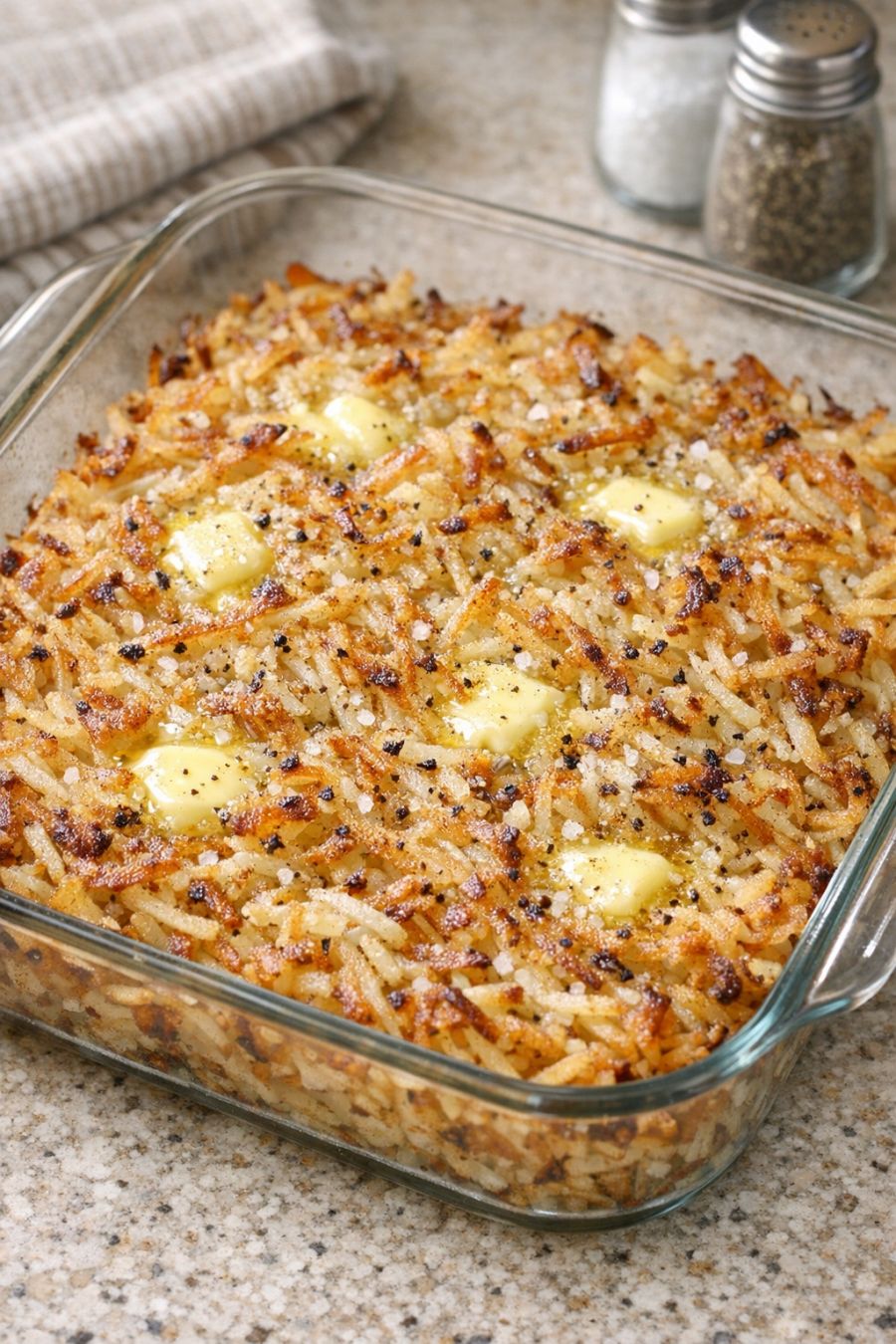
This little 4-ingredient potato bake comes straight out of the Depression-era playbook, when folks had to stretch what they had and still fill a table. Raw potatoes, a splash of milk, a bit of fat, and a good shake of salt were enough to make a pan that disappeared as fast as it came out of the oven. You simply toss the raw shreds right into a glass casserole with three other pantry staples, slide it in the oven, and let the heat do the work. It’s humble, comforting, and tastes like something your grandmother might’ve pulled together on a lean night—simple food that somehow makes everyone go back for seconds.
Serve these oven-baked shredded potatoes alongside roast chicken, meatloaf, or pork chops, with a green vegetable like peas or green beans to round out the plate. They’re also wonderful with fried eggs and toast for a hearty breakfast-for-supper. A little black pepper at the table and maybe a spoonful of applesauce on the side keeps the meal firmly in that old Midwestern farmhouse spirit.
4-Ingredient Oven Depression-Era Shredded PotatoesServings: 4
Ingredients
2 pounds raw russet potatoes, scrubbed and unpeeled or peeled, then shredded
1 1/2 cups whole milk (or any milk you have on hand)
3 tablespoons neutral oil or melted bacon grease
1 1/2 teaspoons salt (plus more to taste after baking)
Directions
Preheat your oven to 375°F (190°C). Lightly grease a 2-quart glass casserole dish with a little of the oil or bacon grease so the potatoes don’t stick.
Shred the raw potatoes on the large holes of a box grater. Work quickly so they don’t darken too much. It’s fine if some starch and moisture collect on the shreds—that helps the casserole hold together.
Toss the raw potato shreds loosely into the greased glass casserole dish, spreading them out in an even layer but without packing them down. You want a fluffy pile with little pockets for the milk to seep through, just like in an old farmhouse kitchen.
In a small bowl or measuring cup, stir together the milk, remaining oil or melted bacon grease, and salt until the salt is mostly dissolved. Pour this mixture evenly over the potatoes, letting it soak down into all the nooks and crannies.
Use a fork to gently lift and toss the top layer of potatoes in the dish so the liquid and fat are lightly distributed without mashing the shreds. The surface will look moist and a bit starchy, which is exactly what you want.
Cover the casserole tightly with foil and bake for 30 minutes so the raw potatoes can steam and soften in the milk.
Remove the foil and continue baking for another 25–35 minutes, or until the potatoes are tender all the way through and the top is lightly golden in spots with little bubbles of starchy moisture around the edges.
Let the casserole rest for 5–10 minutes before serving so it can set up slightly. Taste and sprinkle on a pinch more salt if needed. Scoop out generous spoonfuls right from the glass dish and watch those plates get cleaned twice over.
Variations & Tips
To stay true to the Depression-era spirit, think in terms of using what you already have. If you don’t have russet potatoes, any starchy white or yellow potato will do; just avoid waxy salad potatoes if you can, as they don’t soften quite the same. You can swap part of the milk for water if supplies are low, or use evaporated milk diluted with a bit of water—both were common pantry staples in lean years. For a heartier flavor, use bacon grease or reserved drippings instead of oil; it adds a smokiness that feels very old-fashioned. A pinch of black pepper, onion powder, or dried herbs can be added to the milk mixture if you want a touch more seasoning while still keeping the ingredient list short. If you like a crisper top, bake uncovered for the last 10–15 minutes at 400°F (200°C) to brown the edges. For food safety, always keep raw, shredded potatoes either moving along in the recipe or covered and chilled; don’t let them sit out at room temperature for long periods. Be sure the potatoes are baked until fully tender and steaming hot in the center—an internal temperature of at least 165°F (74°C)—before serving. Refrigerate leftovers within 2 hours, store them in a covered container, and reheat thoroughly before eating.