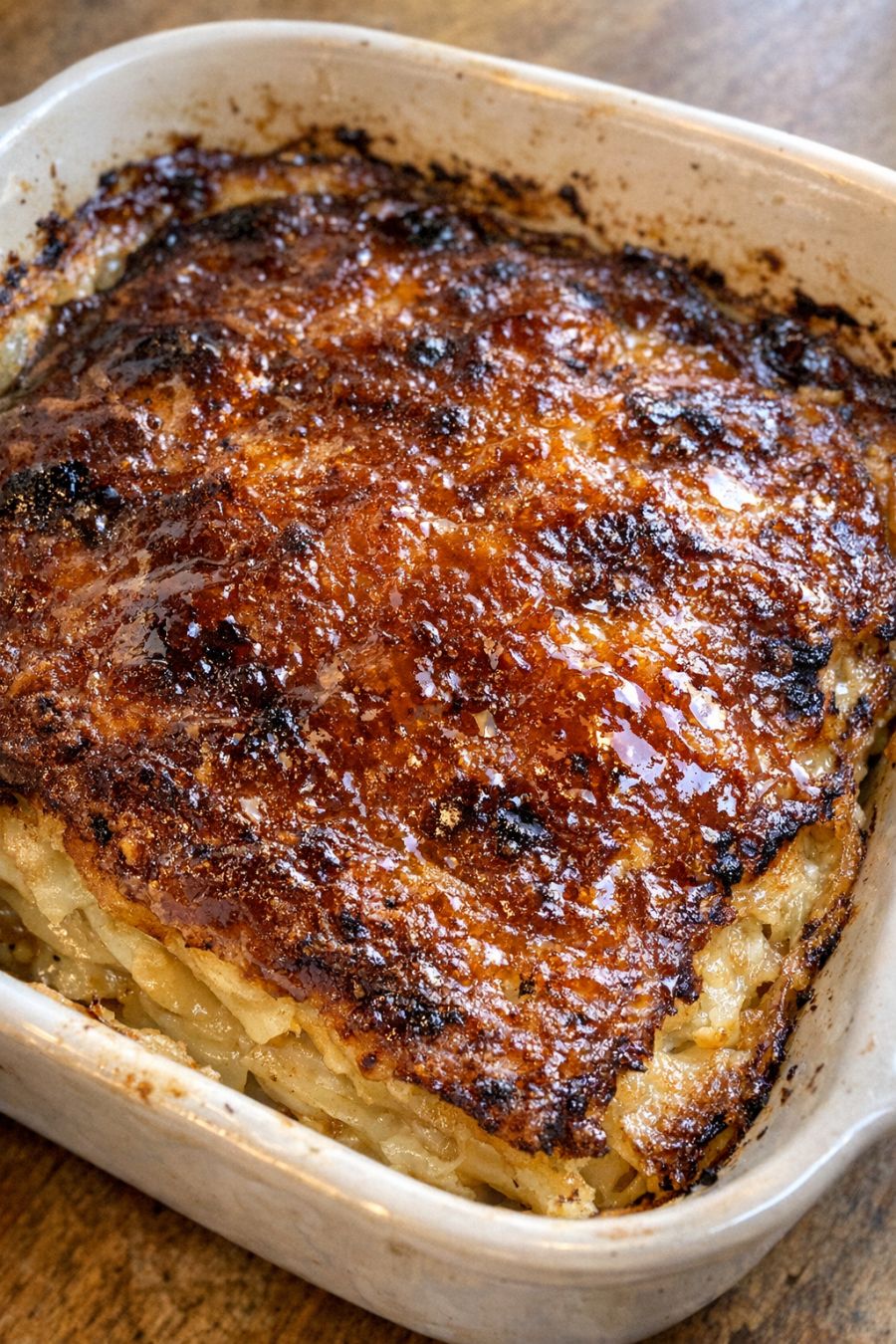
This cozy little bake is the kind of thing my grandma would pull together when money was tight but she still wanted something warm and special on the table. It uses just four pantry ingredients and turns them into a bronzed, crackly-topped, layered potato dish that feels like a hug in a pan. The thinly sliced potatoes soften into tender layers underneath while the top gets deeply caramelized and crisp in the oven. It’s simple, practical, and perfect for Mother’s Day or any day you want to show a little love with what you’ve got on hand.
Serve this warm right out of the baking dish with a big green salad or simple cooked vegetables to balance the richness. It’s wonderful alongside roast chicken, meatloaf, or even just fried eggs for a budget-friendly brunch. A spoonful of applesauce or some sliced tomatoes on the side adds a fresh, bright note. If you like, put a small dish of extra salt and pepper on the table so everyone can season their own portion to taste.
4-Ingredient Heritage Potato BakeServings: 4–6
Ingredients
2 1/2 pounds russet or Yukon Gold potatoes, peeled (optional) and very thinly sliced
1/2 cup granulated sugar
1/2 cup unsalted butter (1 stick), melted, plus a little extra for greasing the dish
1 cup whole milk (or 2% in a pinch)
1/2 teaspoon salt (optional but recommended, does not count toward 4 core ingredients)
Directions
Preheat your oven to 375°F (190°C). Lightly grease a medium ceramic or glass baking dish (about 8x8 inches or similar) with a bit of butter so the potatoes don’t stick and the edges can caramelize nicely.
Peel the potatoes if you like a smoother texture, or leave the skins on for a more rustic feel. Using a sharp knife or mandoline, slice the potatoes as thinly as you can, about 1/8 inch thick. The thinner the slices, the more tender and layered the bake will be.
In a small bowl or measuring cup, whisk together the sugar, melted butter, milk, and salt (if using) until the sugar is mostly dissolved and the mixture looks creamy and smooth.
Layer about one-third of the sliced potatoes evenly in the bottom of the greased dish, overlapping them slightly like shingles. Give the sugar-milk-butter mixture a quick stir, then drizzle about one-third of it over the potatoes, making sure to moisten as much of the surface as you can.
Repeat with another third of the potatoes, then another third of the liquid mixture. Finish with the remaining potatoes and pour the rest of the mixture over the top, gently pressing down on the potatoes with your hands or the back of a spoon so they settle into an even, compact layer.
Cover the baking dish tightly with foil. Bake covered for 40 minutes, until the potatoes are starting to turn tender when pierced with the tip of a knife and the liquid is gently bubbling around the edges.
Remove the foil carefully (watch for steam). Increase the oven temperature to 400°F (200°C). Return the dish to the oven, uncovered, and bake for another 25–35 minutes, or until the top is a deep golden brown with glossy, caramelized, crackly spots and the edges have pulled slightly away from the sides of the dish.
If the top is browning too quickly before the potatoes are fully tender, you can loosely lay the foil back over the dish for the last 10 minutes. If it isn’t browning enough, move the dish up one rack or switch to broil for 1–3 minutes at the very end, watching closely so it doesn’t burn.
Once the top is deeply bronzed and a knife slides through the center easily, remove the dish from the oven. Let the bake rest on the counter for at least 10–15 minutes. This rest time lets the layers set up so you can cut neat squares and also keeps you from burning your mouth on the hot sugar.
To serve, use a sharp knife to cut into squares or wedges, then lift out with a spatula, making sure to get some of the crispy, caramelized top and the soft layers underneath in every scoop.
Variations & Tips
For a slightly less sweet, more savory feel, reduce the sugar to 1/3 cup and add a few grinds of black pepper or a pinch of dried thyme or rosemary to the milk mixture. If you have it in the pantry, you can sprinkle a tablespoon or two of flour between layers to thicken the sauce a bit more, though the original version relies just on the starch from the potatoes. For picky eaters who don’t love browned bits, you can keep the foil on a little longer and only uncover for the last 10–15 minutes so the top is less dark and crunchy. If your family prefers more dessert-like dishes, serve this warm with a drizzle of cream or a scoop of vanilla ice cream, almost like a crustless potato custard pie. To stretch the recipe further for a crowd, add one extra potato and a splash more milk; the bake will be slightly thicker and still cook up nicely with just a few extra minutes in the oven. Food safety tips: Keep the milk refrigerated until you’re ready to mix it, and don’t leave the finished bake at room temperature for more than 2 hours; refrigerate leftovers promptly in a shallow container. Reheat leftovers thoroughly in a 350°F (175°C) oven until steaming hot in the center (about 15–20 minutes for a small portion). Always use a sharp, clean knife and a stable cutting board when slicing potatoes, and take your time if you’re not used to cutting them very thin.