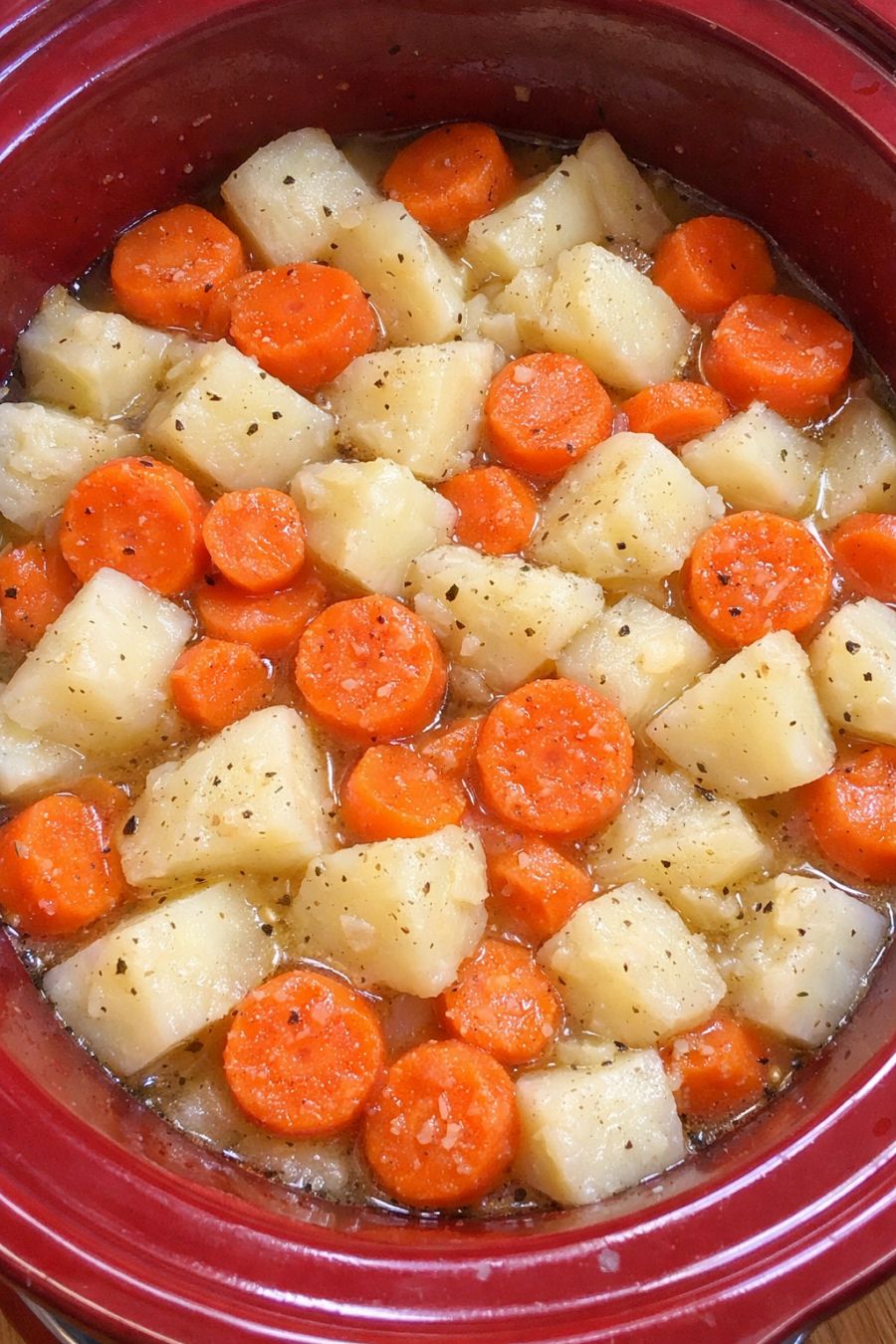
This slow cooker 4-ingredient poor man’s potato and canned carrots dish is the kind of food my dad grew up on in rural Kentucky—simple, filling, and made from what was on hand. It’s built from pantry basics that cost very little but stretch to feed a family, especially when money is tight and the weather is cold. The potatoes and canned carrots simmer in a light, buttery broth until everything is soft and comforting, exactly the sort of humble bowl that kept families going through hard winters. This is not fancy cooking; it’s practical, honest food that asks almost nothing of the cook and gives back warmth and fullness in return.
Serve this straight from the slow cooker in deep bowls, with plenty of the buttery cooking liquid ladled over the top. It’s especially good with sliced white bread, cornbread, or biscuits to soak up the broth. If you’d like to round it out a bit more, you can add a simple pot of beans on the side or a fried egg on top of each bowl. For those who want a touch of freshness, a spoonful of chopped green onion or a sprinkle of black pepper right before serving works well, but the dish stands on its own as a plain, satisfying meal.
Slow Cooker Poor Man’s Potatoes and Canned CarrotsServings: 4
Ingredients
2 pounds russet or white potatoes, peeled and cut into 1-inch chunks
2 (14.5-ounce) cans sliced carrots, drained
3 cups water
4 tablespoons salted butter, cut into pieces
1 teaspoon salt (optional, to taste)
1/2 teaspoon black pepper (optional, to taste)
Directions
Peel the potatoes and cut them into roughly 1-inch chunks so they cook evenly and become tender without falling completely apart.
Drain the canned carrots well to keep the cooking liquid from becoming too watery or metallic-tasting.
Place the potato chunks in the bottom of a slow cooker, spreading them into an even layer so they cook at the same rate.
Add the drained canned carrot slices on top of the potatoes, distributing them evenly throughout the slow cooker.
Pour the water over the potatoes and carrots. The liquid should just come up around the vegetables without completely submerging them; this creates a light, brothy cooking environment rather than a soup.
Dot the top with the pieces of salted butter, spacing them out so the butter melts and flavors the entire pot as it cooks.
Cover the slow cooker with the lid and cook on LOW for 6 to 7 hours, or on HIGH for about 3 to 4 hours, until the potatoes are very tender and the carrots are soft but still hold their shape.
Once the vegetables are tender, gently stir the pot to mix the potatoes, carrots, and buttery liquid together. Taste and season with salt and black pepper if desired, stirring carefully so the potatoes stay in chunky pieces.
Ladle the potatoes, carrots, and some of the buttery broth into bowls and serve hot straight from the slow cooker.
Variations & Tips
Because this recipe is so simple, small changes can make it feel a bit different while still staying true to its roots. If you’d like a slightly richer broth without adding more ingredients, use less water (about 2 1/2 cups) so the butter flavor is more concentrated. For a touch of smokiness that would still be realistic for a rural pantry, you can add a small piece of salt pork or a slice or two of bacon if you have it; just lay it on top of the potatoes before cooking and remove any large pieces before serving. If you prefer a creamier texture, lightly mash some of the cooked potatoes against the side of the slow cooker at the end, then stir them back in to thicken the liquid. You can also swap in red potatoes and leave the skins on to save time and add a bit more texture.
Food safety tips: Store any leftovers in a shallow container and refrigerate within 2 hours of cooking. Use leftovers within 3 to 4 days, reheating only the portion you plan to eat until it is steaming hot throughout. If you choose to add any meat (such as bacon or salt pork), make sure it is fully cooked and that the dish reaches a safe internal temperature of at least 165°F (74°C) before serving. Always discard any canned vegetables that have bulging lids, rust, leakage, or an off smell, as these can indicate spoilage.